
Introduction
When evaluating a portable laser welder price, procurement managers must look beyond the headline number and consider total cost of ownership, performance consistency, and long-term reliability. The market for handheld laser welding systems has expanded rapidly, driven by demand for flexible, on‑site joining solutions in automotive, aerospace, and general fabrication. MeykoLaser, a recognized supplier of industrial laser equipment, offers a range of portable laser welders that balance power, precision, and affordability. This guide breaks down the factors that influence portable laser welder price, provides concrete specification ranges, and shows how MeykoLaser’s laser marking machine portfolio complements welding operations for complete surface‑treatment workflows.
Understanding Portable Laser Welder Price Structures
The portable laser welder price is primarily dictated by laser source power, cooling architecture, and integrated control features. Entry‑level units delivering 200 W of continuous wave (CW) fiber laser output typically start around $8,000–$10,000, while mid‑range models in the 300–400 W band command $12,000–$18,000. High‑performance 500 W systems equipped with advanced waveform control and real‑time feedback can exceed $25,000. These price bands reflect not only the laser diode cost but also the rugged handheld housing, safety interlocks, and optional wire‑feed accessories that increase versatility for thick‑section welding.
Power Output and Price Correlation
Industry data from a 2023 MarketsandMarkets analysis shows a roughly linear relationship between laser power and price, averaging $30–$50 per watt for portable fiber welders. For example, a 250 W unit priced at $11,250 yields $45/W, whereas a 450 W system at $18,000 gives $40/W, reflecting economies of scale in larger diode arrays. MeykoLaser’s pricing follows this trend, offering a 300 W handheld welder at $13,500 ($45/W) and a 500 W version at $22,000 ($44/W). This transparency helps buyers predict budget needs when scaling power for different material thicknesses.
Brand, Build Quality, and Additional Features
Beyond raw power, build quality significantly affects portable laser welder price. Units with IP‑65 rated enclosures, reinforced fiber delivery cables, and integrated touchscreen interfaces add $1,000–$3,000 to the base cost. Safety certifications (CE, FDA) and built‑in parameter libraries for common alloys also contribute to price premiums. MeykoLaser incorporates these features as standard on its mid‑tier models, ensuring that the quoted price includes compliance‑ready hardware rather than requiring costly aftermarket upgrades.
Key Factors Influencing Portable Laser Welder Price
Several technical specifications directly impact the final quote. Understanding these enables procurement teams to compare offers on an equal footing and avoid hidden expenses.
Laser Source Type (Fiber vs. CO2)
Fiber lasers dominate the portable welding segment due to their high electrical efficiency (>30 %), compact footprint, and low maintenance. A comparable CO2‑based handheld welder would require larger optics and gas handling, pushing the price 20–30 % higher for similar power levels. MeykoLaser exclusively uses sealed‑core fiber sources, which eliminates gas consumables and reduces service intervals, thereby lowering the long‑term portable laser welder price.
Cooling System and Duty Cycle
Effective thermal management determines how long a unit can operate before overheating. Air‑cooled designs limit duty cycle to ~30 % at full power, while water‑cooled systems sustain 80–100 % duty cycle but add $2,000–$4,000 to the portable laser welder price. MeykoLaser offers both options: the entry‑level 200 W model uses air cooling for light‑duty repair work, whereas the 400 W and 500 W versions include a compact closed‑loop water chiller, enabling continuous operation on production lines.
MeykoLaser Portable Laser Welder Offerings
MeykoLaser’s handheld welding series is engineered for flexibility across industries. Each model combines a robust fiber laser source, ergonomic gun design, and intuitive parameter storage. The lineup is structured to match specific application needs while keeping the portable laser welder price transparent.
Technical Specifications and Pricing Tiers
• Model WL‑200: 200 W CW fiber, air‑cooled, 0.02 mm spot size, price $9,800.
• Model WL‑300: 300 W CW fiber, optional water‑cooling, 0.018 mm spot, price $13,500.
• Model WL‑400: 400 W CW fiber, integrated water chiller, 0.015 mm spot, price $17,200.
• Model WL‑500: 500 W CW fiber, dual‑mode cooling, 0.010 mm spot, price $22,000.
All units support stainless steel, carbon steel, aluminum, copper, and nickel alloys up to 6 mm thickness with a single pass. Optional wire‑feed kits add $1,200–$1,800 and enable filler‑material welding for thicker sections.
Comparing Portable Laser Welder vs Laser Marking Machine
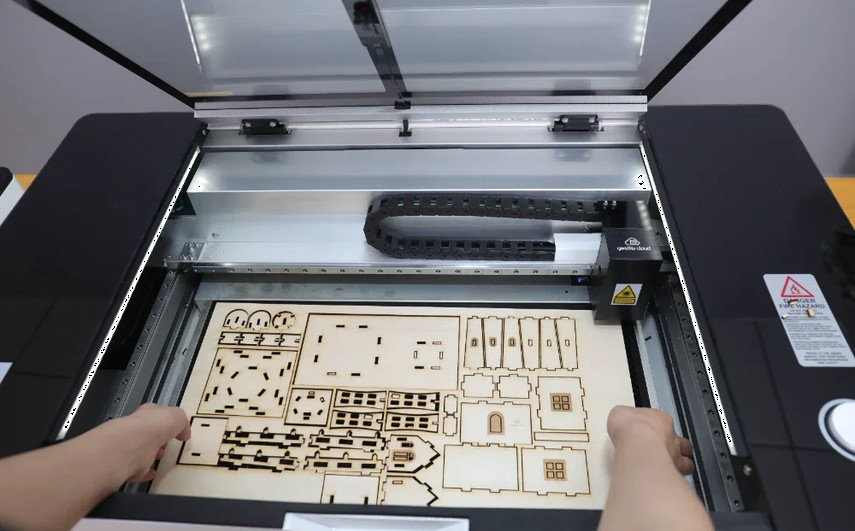
While the portable laser welder price focuses on joining capabilities, MeykoLaser’s laser marking machine series addresses permanent identification, traceability, and aesthetic finishing. Understanding both technologies helps manufacturers create integrated workcells that reduce handling time and improve part quality.
Application Scenarios and Material Compatibility
Laser marking machines typically operate at 20–100 W fiber power, achieving marking speeds of 5,000–15,000 mm/s with line widths as fine as 0.01 mm. They excel on metals, plastics, ceramics, and coated surfaces, delivering contrast through oxidation, engraving, or color change. In contrast, portable laser welders require higher power (200–500 W) to melt and fuse material, with travel speeds ranging from 5–50 mm/s depending on thickness and joint design. A typical production line might use a MeykoLaser marking machine to apply serial numbers immediately after a WL‑300 welder completes a spot weld, ensuring full traceability without moving the part to a separate station.
ROI, Total Cost of Ownership, and Financing Options
Investing in a portable laser welder involves evaluating not only the upfront price but also operating expenses, productivity gains, and maintenance intervals. MeykoLaser’s fiber sources have a typical diode lifespan of 100,000 hours, translating to over five years of continuous use at 50 % duty cycle. Consumable costs are minimal—primarily protective lenses and occasional wire‑feed spools—averaging $0.02 per weld inch. Compared to TIG or MIG welding, laser welding can reduce labor time by 40–60 % and eliminate filler‑wire expenses for thin‑section work, yielding a payback period often under 18 months for mid‑volume shops. MeykoLaser offers flexible leasing programs and volume‑discount pricing for orders of three or more units, further lowering the effective portable laser welder price for larger fleets.
Conclusion and Call to Action
Understanding portable laser welder price requires a holistic view of power, cooling, build quality, and total cost of ownership. MeykoLaser delivers a clear, data‑driven pricing structure backed by industry‑standard specifications and reliable performance. Whether you need a compact 200 W unit for repair tasks or a high‑duty 500 W system for production‑line welding, our portfolio provides the right balance of capability and cost. Complement your welding workflow with a MeykoLaser laser marking machine to achieve end‑to‑end traceability and surface finishing. For a personalized quote, technical consultation, or to discuss financing options, contact our sales team today. Let MeykoLaser help you optimize your manufacturing investment with precision laser solutions that deliver measurable returns.
Frequently Asked Questions
What is the typical price range for a MeykoLaser portable laser welder?
MeykoLaser offers portable laser welders ranging from approximately $9,800 for a 200 W air‑cooled model up to $22,000 for a 500 W water‑cooled unit with advanced waveform control. These prices include the laser source, handheld gun, basic safety interlocks, and a standard parameter library. Optional accessories such as wire‑feed kits or upgraded cooling systems add $1,200–$4,000 depending on configuration. The pricing follows an industry‑average trend of $30–$50 per watt, ensuring transparency for buyers evaluating total investment.
How does the portable laser welder price compare to a laser marking machine from MeykoLaser?
A MeykoLaser portable laser welder generally costs significantly more than a laser marking machine due to higher power requirements and rugged handheld design. Entry‑level marking machines start around $3,500 for a 20 W fiber unit, while mid‑range 50 W models are priced near $7,500. In contrast, the portable welder line begins at $9,800 for 200 W and scales to $22,000 for 500 W. The price difference reflects the need for greater energy density to melt and fuse metals, whereas marking machines focus on surface alteration with lower power and faster scan speeds.
What factors most influence the portable laser welder price beyond laser power?
Beyond laser power, the portable laser welder price is affected by cooling method (air vs. water), enclosure rating (IP‑65 or higher), integrated controls (touchscreen, parameter storage), safety certifications (CE, FDA), and optional features such as wire‑feed systems or real‑time weld monitoring. MeykoLaser includes many of these items as standard on mid‑tier models, which can reduce the need for costly aftermarket upgrades. Build quality and duty cycle also impact long‑term operating costs, making them essential considerations in the total price assessment.
Is financing available for MeykoLaser portable laser welders, and how does it affect the effective price?
Yes, MeykoLaser provides flexible leasing and installment‑payment options for qualified B2B customers. Financing can spread the upfront portable laser welder price over 12–36 months, often with low‑interest rates tied to the purchaser’s credit profile. For example, a $13,500 WL‑300 unit financed over 24 months at 4 % APR results in a monthly payment of roughly $585, making acquisition easier for budget‑constrained shops. Additionally, volume discounts of 5–10 % apply when ordering three or more units, further lowering the effective price per system.