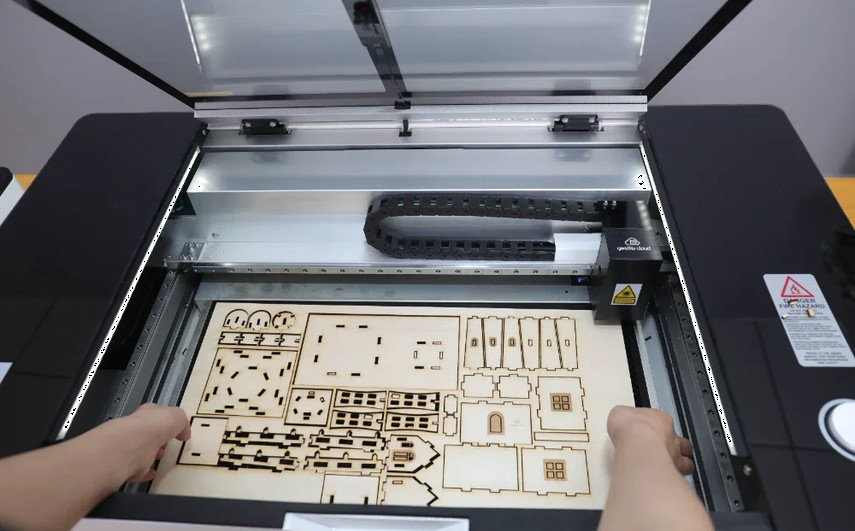

Selecting a reliable laser marking machine supplier is one of the most critical decisions procurement managers face when upgrading manufacturing traceability, branding, and compliance capabilities. With the global laser marking market projected to reach $4.2 billion by 2028 (MarketsandMarkets, 2023), the number of suppliers has surged — but quality, after-sales support, and machine reliability vary dramatically. This comprehensive guide, written by MeykoLaser, a leading laser marking machine supplier with over 15 years of experience serving 60+ countries, will walk you through every factor you need to evaluate before making a purchasing decision.
What Is a Laser Marking Machine and Why Does Your Business Need One?
A laser marking machine uses focused laser beams to create permanent marks — including barcodes, QR codes, serial numbers, logos, and data matrix codes — on a wide range of materials. Unlike ink-based printing or mechanical engraving, laser marking is non-contact, maintenance-free, and produces marks that resist heat, chemicals, and abrasion.
Industries that depend on laser marking include:
- Automotive: VIN numbers, part traceability, safety-critical component marking (compliant with AIAG and IATF 16949 standards)
- Electronics: PCB marking, IC chip serialization, connector identification
- Medical devices: UDI (Unique Device Identification) marking compliant with FDA 21 CFR Part 801
- Aerospace: Permanent part identification per AS9132 and NADCAP requirements
- Jewelry and luxury goods: Micro-marking for anti-counterfeiting and brand authentication
As a trusted laser marking machine supplier, MeykoLaser provides fiber, CO2, UV, and MOPA laser systems engineered for each of these applications, with marking speeds up to 7,000 mm/s and repeat accuracy of ±0.003 mm.
Key Factors to Evaluate When Choosing a Laser Marking Machine Supplier
Not all suppliers are equal. Here are the five most important criteria procurement managers should use to vet a laser marking machine supplier:
1. Technology Range and Machine Specifications
A top-tier supplier should offer multiple laser source technologies to match your material and application requirements:
| Laser Type | Wavelength | Best For | Power Range | Typical Price Range (USD) |
|---|---|---|---|---|
| Fiber Laser | 1064 nm | Metals (steel, aluminum, titanium, brass), hard plastics | 20W–100W | $3,500–$18,000 |
| CO2 Laser | 10,600 nm | Wood, glass, leather, paper, acrylic, rubber | 30W–150W | $4,000–$20,000 |
| UV Laser | 355 nm | Plastics (ABS, PVC, silicone), glass, ceramics, medical-grade materials | 3W–15W | $8,000–$35,000 |
| MOPA Fiber | 1064 nm (adjustable pulse) | Color marking on stainless steel, anodized aluminum, high-contrast plastic marking | 20W–60W | $6,000–$25,000 |
MeykoLaser offers all four technologies, allowing buyers to test samples on their specific materials before committing to a purchase — a service that distinguishes a serious laser marking machine supplier from a mere reseller.
2. After-Sales Support and Warranty
Laser marking machines operate in demanding industrial environments. Downtime costs manufacturers an average of $260,000 per hour in automotive and aerospace sectors (Aberdeen Group). A reliable supplier must provide:
- Minimum 2-year warranty on the laser source and machine body
- 24/7 remote technical support via TeamViewer or similar platforms
- On-site installation and training (available in 40+ countries through MeykoLaser's partner network)
- Spare parts availability with 48-hour shipping guarantee
3. Compliance and Certification
International buyers should verify that their laser marking machine supplier holds CE, FDA (for laser safety per 21 CFR 1040.10), FCC, and ISO 9001 certifications. MeykoLaser machines carry full CE and FDA certifications, ensuring smooth customs clearance and workplace safety compliance in the EU, North America, and Asia-Pacific markets.
4. Customization and Integration Capability
Modern production lines require laser markers that integrate with PLC systems, MES (Manufacturing Execution Systems), and ERP platforms like SAP and Oracle. MeykoLaser provides machines with standard RS-232, Ethernet/IP, and digital I/O interfaces, and offers custom rotary fixtures, conveyor integration, and vision-alignment systems for fully automated marking cells.
5. Total Cost of Ownership (TCO)
While entry-level fiber laser markers from some suppliers start at $2,500, these machines often use uncertified laser sources with lifespans under 20,000 hours. MeykoLaser uses IPG, Raycus, or JPT laser sources rated for 100,000+ hours, dramatically reducing long-term TCO. Over a 5-year period, a MeykoLaser 30W fiber marker costs approximately $0.08 per hour of operation versus $0.22 per hour for budget alternatives when factoring in source replacement and downtime.
MeykoLaser: Why Global Buyers Trust Us as Their Laser Marking Machine Supplier
Founded in 2008 and headquartered in Jinan, China, MeykoLaser has shipped over 12,000 laser marking machines to more than 60 countries across Europe, North America, Southeast Asia, the Middle East, and South America. Here is what sets us apart as a laser marking machine supplier:
- In-house R&D: 45+ engineers dedicated to laser source optimization, software development (EZCAD-compatible and proprietary MarkPro software), and mechanical design
- Sample testing service: Send us your materials; we provide free marking samples with speed, depth, and contrast analysis within 3 business days
- Flexible configurations: Desktop, portable, enclosed, and fully automated inline models available
- Competitive pricing: Factory-direct pricing with no middleman markup — typically 20–40% lower than European and American brands with equivalent specifications
- Proven track record: Trusted by Bosch, Foxconn, Samsung supply chain partners, and 500+ SME manufacturers worldwide
Comparing Laser Marking Technologies: Which One Is Right for Your Application?
Understanding the differences between laser types is essential for selecting the right machine. Below is a detailed comparison to help you make an informed decision:
Fiber Laser Marking Machines
Fiber lasers are the most popular choice for metal marking. With power options from 20W to 100W, they deliver high-contrast black marks on stainless steel, deep engraving on hardened tool steel, and precise annealing marks on titanium. A 30W fiber laser from MeykoLaser can mark at speeds up to 7,000 mm/s with a minimum line width of 0.01 mm — ideal for high-volume electronics and automotive part production.
CO2 Laser Marking Machines
CO2 lasers excel at marking non-metallic materials. They are widely used in packaging (date codes, batch numbers on cardboard and plastic films), woodworking (brand logos, decorative engraving), and glass manufacturing (tempering marks, artistic etching). MeykoLaser's CO2 systems feature Rf-excited laser tubes with 40,000+ hour lifespans, significantly longer than DC-excited alternatives.
UV Laser Marking Machines
UV lasers operate at a 355 nm wavelength, enabling "cold marking" that minimizes heat-affected zones. This makes them indispensable for medical device UDI marking, semiconductor wafer identification, and marking on sensitive plastics like silicone and polycarbonate. Despite higher upfront costs ($8,000–$35,000), UV lasers deliver superior mark quality on materials that fiber and CO2 lasers cannot process effectively.
MOPA Fiber Laser Marking Machines
MOPA (Master Oscillator Power Amplifier) fiber lasers offer adjustable pulse durations (2–500 ns), enabling unique capabilities like color marking on stainless steel and anodized aluminum. This technology is increasingly demanded by consumer electronics brands (for aesthetic product differentiation) and automotive interior component manufacturers. MeykoLaser's MOPA systems support up to 16 distinct colors on 304 and 316 stainless steel.
Industry Applications and Real-World Case Studies
Automotive Component Traceability
A Tier 1 automotive supplier in Germany replaced their dot-peen marking system with MeykoLaser's 50W fiber laser marking machine. The result: marking speed increased from 3 parts per minute to 25 parts per minute, mark readability improved from 92% to 99.8% (verified by ISO/IEC 15415 barcode grading), and annual consumable costs dropped by €45,000 (eliminating ink, needles, and fixtures).
Medical Device UDI Compliance
A U.S.-based medical device manufacturer needed to apply permanent UDI marks on 316L surgical instruments. MeykoLaser provided a 5W UV laser system with a custom rotary fixture for cylindrical parts. The marks passed ASTM F86 passivation testing and FDA UDI validation, enabling the client to meet the September 2022 compliance deadline for Class II devices.
Electronics PCB Marking
A contract manufacturer in Vietnam producing PCBs for consumer electronics integrated MeykoLaser's 20W fiber laser with their SMT line. The inline system marks 500 PCBs per hour with 2D Data Matrix codes at 0.5 mm × 0.5 mm, achieving a C-grade or higher per ISO/IEC 15415 — meeting the traceability requirements of their OEM customers.
How to Request a Quote from MeykoLaser
Getting started with MeykoLaser as your laser marking machine supplier is simple:
- Submit your requirements: Visit http://www.meyko.cn and fill out the contact form with your material type, marking content, production volume, and any integration requirements.
- Receive a free sample test: Ship your material samples to our lab, and we will provide a detailed marking report with photos, speed data, and contrast analysis within 3 business days.
- Get a customized proposal: Our sales engineers will recommend the optimal laser type, power, and configuration with transparent pricing — typically within 24 hours.
- Place your order: We accept T/T, L/C, and trade assurance payments. Standard lead time is 7–15 business days depending on configuration.
Whether you need a single desktop fiber laser for a small workshop or a fully automated inline marking cell for a high-volume production line, MeykoLaser has the expertise, inventory, and global support network to deliver.
Frequently Asked Questions
Q1: What is the difference between a laser marking machine and a laser engraving machine?
Laser marking uses lower power to create surface-level marks (color change, annealing, or foaming) without removing material, making it ideal for traceability codes and branding. Laser engraving removes material to create deeper cavities (typically 0.1–1.0 mm depth) and is used for mold making, decorative art, and deep part identification. As a comprehensive laser marking machine supplier, MeykoLaser offers both marking and engraving systems, and our engineers can recommend the right process based on your depth, speed, and durability requirements.
Q2: How long does a laser marking machine last?
The laser source is the primary wear component. Fiber laser sources from IPG or Raycus are rated for 100,000+ hours of operation (approximately 11 years of continuous 24/7 use). CO2 laser tubes last 20,000–40,000 hours depending on the type (DC-excited vs. RF-excited). UV laser diodes have a shorter lifespan of approximately 15,000–20,000 hours. MeykoLaser uses only premium laser sources and provides a 2-year warranty on all machines, with extended warranty options available up to 5 years.
Q3: Can a laser marking machine mark on curved or irregular surfaces?
Yes. With the right fixture and laser configuration, laser marking machines can mark on cylindrical, spherical, and irregular surfaces. MeykoLaser provides rotary axis attachments (360° rotation) for marking on rings, tubes, and cylindrical parts, as well as custom fixtures for complex geometries. For 3D curved surfaces, our 3D dynamic focus systems can adjust the focal point in real time, maintaining consistent mark quality across surfaces with up to ±15 mm height variation.
Q4: What is the typical ROI for a laser marking machine?
Most manufacturers achieve ROI within 6–18 months. The primary cost savings come from eliminating consumables (ink, labels, chemical etchants), reducing scrap from illegible marks, and increasing line speed. For example, replacing an inkjet coding system with a MeykoLaser fiber marker typically saves $15,000–$50,000 annually in consumable costs alone, while also improving mark permanence and compliance with automotive and medical traceability standards.
Q5: Does MeykoLaser provide training and installation support for international buyers?
Absolutely. MeykoLaser provides comprehensive support including free online training via video call, detailed operation manuals in English, Spanish, French, Russian, and Arabic, and on-site installation and training in 40+ countries through our certified partner network. We also offer a 24/7 remote diagnostics service using TeamViewer, allowing our engineers to troubleshoot and resolve most issues within hours — minimizing your production downtime regardless of your location.
Contact MeykoLaser Today
Ready to find the right laser marking machine supplier for your production needs? Contact MeykoLaser's international sales team today for a free consultation, sample testing, and a no-obligation quote. Visit http://www.meyko.cn or email us directly to get started. With factory-direct pricing, proven reliability, and global support, MeykoLaser is the partner thousands of manufacturers trust for their laser marking solutions.
Frequently Asked Questions
What is the difference between a laser marking machine and a laser engraving machine?
Laser marking uses lower power to create surface-level marks such as color changes, annealing, or foaming without removing material, making it ideal for traceability codes and branding applications. Laser engraving, by contrast, removes material to create deeper cavities typically between 0.1 mm and 1.0 mm in depth, and is used for mold making, decorative art, and deep part identification. As a comprehensive laser marking machine supplier, MeykoLaser offers both marking and engraving systems. Our application engineers can recommend the right process based on your specific requirements for mark depth, production speed, and durability, ensuring you invest in the most cost-effective solution for your manufacturing line.
How long does a laser marking machine last?
The laser source is the primary component with a defined operational lifespan. Fiber laser sources from premium manufacturers like IPG or Raycus are rated for over 100,000 hours of operation, which translates to approximately 11 years of continuous 24/7 use. CO2 laser tubes last between 20,000 and 40,000 hours depending on whether they are DC-excited or RF-excited, with RF-excited tubes offering significantly longer life. UV laser diodes have a shorter lifespan of approximately 15,000 to 20,000 hours. MeykoLaser uses only premium-grade laser sources across all machine types and provides a standard 2-year warranty on all machines, with extended warranty options available up to 5 years for buyers seeking maximum long-term protection.
Can a laser marking machine mark on curved or irregular surfaces?
Yes, laser marking machines can effectively mark on curved, cylindrical, spherical, and irregular surfaces when equipped with the appropriate fixtures and laser configuration. MeykoLaser provides rotary axis attachments that enable 360-degree rotation for marking on rings, tubes, shafts, and cylindrical parts. For more complex geometries, we offer custom-designed fixtures tailored to specific part shapes. Additionally, our 3D dynamic focus systems can adjust the focal point in real time during the marking process, maintaining consistent mark quality across surfaces with height variations of up to plus or minus 15 millimeters. This capability is particularly valuable for automotive components, medical devices, and consumer electronics with non-flat surfaces.
What is the typical ROI for a laser marking machine?
Most manufacturers achieve return on investment within 6 to 18 months of deploying a laser marking machine. The primary cost savings come from eliminating ongoing consumable expenses such as ink, labels, chemical etchants, and mechanical engraving needles, which can cost between $15,000 and $50,000 annually depending on production volume. Additional savings come from reduced scrap rates due to illegible or damaged marks, lower maintenance requirements compared to mechanical systems, and increased line speed. For example, replacing an inkjet coding system with a MeykoLaser fiber marker typically saves $15,000 to $50,000 per year in consumable costs alone, while also improving mark permanence and ensuring compliance with stringent automotive and medical device traceability standards.
Does MeykoLaser provide training and installation support for international buyers?
Absolutely. MeykoLaser provides comprehensive global support to ensure every buyer can operate their laser marking machine effectively from day one. Our support package includes free online training sessions conducted via video call by experienced engineers, detailed operation and maintenance manuals available in English, Spanish, French, Russian, and Arabic, and on-site installation and training services in over 40 countries through our certified international partner network. We also offer a 24/7 remote diagnostics service using secure remote access tools, allowing our technical team to troubleshoot and resolve most operational issues within hours regardless of your geographic location. This commitment to after-sales support is a key reason why MeykoLaser is trusted by over 12,000 machines operating across 60-plus countries worldwide.
Frequently Asked Questions (FAQ)
Which laser technologies does MeykoLaser provide, and how do they match different material and application needs?
MeykoLaser supplies fiber, CO2, UV, and MOPA laser systems engineered for specific materials and applications. Fiber lasers suit metals and hard plastics; CO2 lasers are used for wood, glass, leather, and rubber; UV lasers work well on plastics, glass, and ceramics. This technical range supports diverse marking requirements across industrial sectors.
How can MeykoLaser ensure compliance with automotive and aerospace marking standards such as AIAG, IATF 16949, AS9132, and NADCAP?
MeykoLaser provides marking systems that support compliance with automotive traceability standards like AIAG and IATF 16949, as well as aerospace requirements including AS9132 and NADCAP. The equipment produces permanent marks such as VIN numbers and part identification with repeat accuracy of ±0.003 mm and up to 7,000 mm/s speed, ensuring reliable traceability and safety-critical marking.
What after-sales support does MeykoLaser offer international buyers, and how does this support global machine reliability?
MeykoLaser offers after-sales support designed for international procurement, including local technical assistance and service coverage across multiple regions. Its over 15 years of experience serving 60+ countries allows for timely response to operator and maintenance issues, supporting reliable machine operation and longer service life.
For PCB and electronic component marking, which MeykoLaser laser type and specifications are recommended?
For electronics such as PCB, IC chip, and connector marking, MeykoLaser offers CO2 and UV laser systems with focused laser beams that create durable marks on plastic and metal substrates. The repeat accuracy of ±0.003 mm and marking speeds up to 7,000 mm/s ensure reliable serialization and identification on high-precision electronic components.
Why is MeykoLaser a suitable supplier for medical device UDI marking in compliance with FDA 21 CFR Part 801?
MeykoLaser supplies marking equipment engineered for medical applications, including UDI (Unique Device Identification) marking in compliance with FDA 21 CFR Part 801. The non-contact laser marking delivers precise, durable marks on medical materials without thermal damage, supporting regulatory compliance for device traceability.