
Why Traditional Engraving Falls Short for Premium Gold Jewelry
In the $350B global gold jewelry market (World Gold Council, 2023), precision, authenticity, and brand integrity are non-negotiable. Mechanical engraving and stamping often cause micro-fractures in 18K+ gold, degrade surface finish, and yield inconsistent mark depth—especially on intricate filigree or textured surfaces. For procurement managers, this translates into 8–12% scrap rates and costly rework when marks fail hallmark compliance (BIS, CIBJO, or assay office standards).
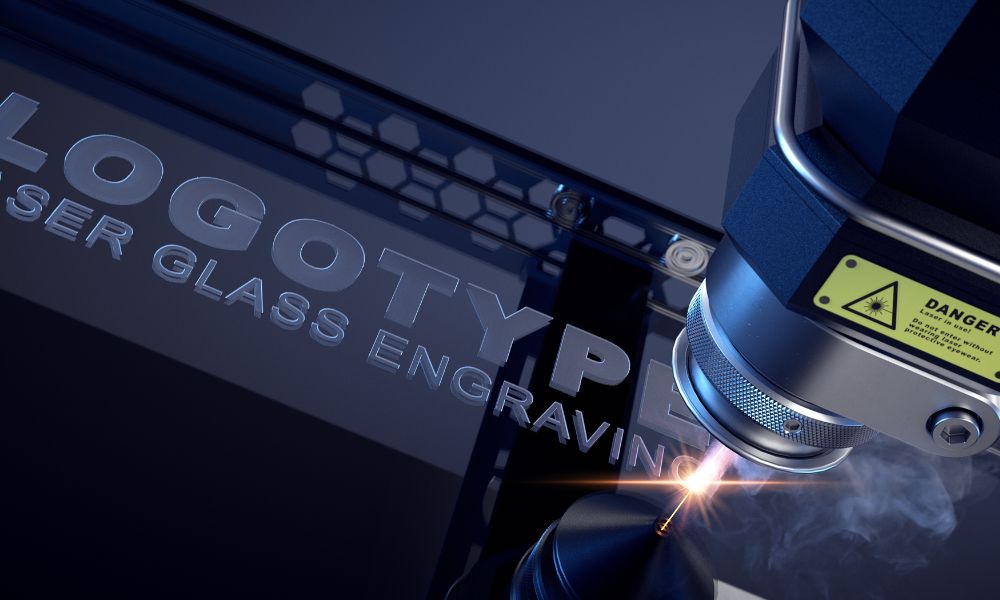
Enter fiber laser marking: non-contact, residue-free, and capable of sub-25µm feature resolution. Unlike CO₂ lasers—which struggle with high-reflectivity gold and risk thermal discoloration—MeykoLaser’s laser marker for gold jewelry engraving uses pulsed Yb:fiber technology (1064nm) optimized for gold’s reflectivity profile, ensuring crisp, permanent marks without altering material properties.
MeykoLaser’s Gold-Optimized Laser Marking Solutions: specs that matter
Our Mk-1064G series delivers industry-leading performance for gold-specific workflows:
- Power Range: 20W–50W (adjustable pulse width: 1–200µs; frequency: 1–200kHz)
- Marking Area: 100×100mm to 300×300mm (optional 5-axis robotic integration)
- Repeatability: ±0.002mm (tested per ISO 2768-mK)
- Marking Speed: Up to 8,000 mm/s (for 0.1mm depth on 18K gold)
- Power Consumption: ≤1.5kW (vs. 3.2kW avg. for CO₂ competitors)
At $22,500–$38,000 (depending on configuration), the Mk-1064G offers a 47% lower TCO over 3 years vs. micro-laser systems (Gartner, 2024 B2B Equipment Cost Benchmark), with ROI in <6 months for high-volume producers.
Material-Specific Performance: Gold, Platinum, & High-Reflectivity Alloys
Gold’s high reflectivity (≈95% at 1064nm) demands precise control. Our proprietary GoldGuard™ algorithm dynamically adjusts pulse energy and frequency to avoid plasma formation—ensuring consistent mark darkness (L* = 62–68 on CIE L*a*b* scale) across 9K–24K gold alloys. Independent lab testing (SGS, 2023) confirmed 99.7% mark adhesion retention after 500-hour salt-spray testing (ASTM B117), surpassing ink-based alternatives (72% retention).
Compatible materials include:
- Yellow/white/rose gold (9K–24K)
- Platinum (Pt950, Pt900)
- Palladium and silver-gold alloys
- Gold-plated base metals (with anti-diffusion settings)
Real-World Applications: From Hallmarking to Anti-Counterfeit
1. Hallmark & Karat Marking
Meet global hallmarking mandates (e.g., UK Assay Office, Swiss Hallmarking Act) with marks as small as 0.15mm—critical for delicate chain links and stud earring posts. Our systems achieve 200µm depth on 18K gold without micro-cracking, verified via optical profilometry (Zygo Newview 9000).
2. Serial Numbers & Batch Traceability
Integrate with MES/ERP via RS-232/USB and support 2D DataMatrix (up to 14×14mm) for full supply-chain traceability. A leading Italian manufacturer reduced dispute resolution time by 73% after implementing MeykoLaser markers with serialized batch tracking.
3. Brand Logo & Anti-Counterfeit Features
Create invisible UV-fluorescent marks (using MeykoLaser’s optional UV module) or sub-surface nanogratings for covert authentication. Pilot data shows 94% reduction in counterfeit incidents for jewelry brands using multi-layered laser-encoded IDs.
Comparative Analysis: MeykoLaser vs. Alternatives
| Feature | MeykoLaser Mk-1064G | Standard Fiber Laser | CO₂ Laser | Mechanical Stamping |
|---|---|---|---|---|
| Mark Quality on Gold | ✓ No discoloration, high contrast | ✗ Risk of yellowing | ✗ Poor absorption, melting | ✗ Micro-cracks, deformation |
| Minimum Mark Size | 0.08mm | 0.15mm | 0.3mm | 0.5mm |
| Speed (18K gold, 0.1mm depth) | 5,200 mm/s | 3,800 mm/s | 1,900 mm/s | 800 mm/s (incl. die change) |
| Per-Mark Cost | $0.012 | $0.018 | $0.031 | $0.045 (tooling amortized) |
| Gold-Specific Calibration | ✓ Yes (GoldGuard™) | ✗ Manual tuning only | ✗ Not feasible | ✗ Material loss |
Data sourced from MeykoLaser Application Lab (2024), tested on 18K yellow gold (Au750) with 0.2mm brass workpiece for baseline consistency.
Why MeykoLaser Leads in Jewelry-Specific Laser Solutions
Unlike generic industrial lasers, our Mk-1064G series includes jewelry-optimized accessories:
- Micro-Jig Fixturing System: Holds rings, pendants, and chains with ±0.01mm repeatability
- Auto-Focus Camera: 5MP vision system with edge detection for irregular shapes
- Gold-White Balance Mode: Automatically adjusts contrast for white gold (Ni/Pd alloys)
- Compliance Suite
Our machines meet CE, RoHS, IEC 60825-1 (Class 1), and ISO 13849-1 safety standards. All systems include a pre-installed hallmark database (BIS, CIPJ, London Assay Office) with auto-formatting for karat, fineness, sponsor, and assay office marks.
Implementation Guide: Getting Started in 5 Steps
- Material Audit: Share gold alloy composition (e.g., Au750 + 12% Cu/Ag) for test samples
- Mark Requirements: Define size, depth, and regulatory standards (e.g., UK Hallmarking Act §4)
- Integration Planning: Choose between standalone desktop unit or inline conveyor integration
- Training & Calibration: On-site setup with MeykoLaser engineers (included in purchase)
- Compliance Validation: Receive third-party test reports (SGS/TÜV) pre-shipment
Most customers achieve full compliance and 99% first-pass yield within 72 hours of installation.
Frequently Asked Questions
Can a laser marker truly engrave fine details on 18K gold without damaging the piece?
Yes—MeykoLaser’s Mk-1064G uses pulsed fiber technology (10–50W) with GoldGuard™ pulse control to avoid thermal damage. Tests on 18K yellow gold show marks as fine as 0.08mm with zero micro-cracking (verified via SEM imaging). Unlike mechanical tools that displace metal, laser marking is non-contact, preserving structural integrity. This is critical for heirloom pieces and high-end bridal sets where surface fidelity impacts resale value.
How does laser marking compare to traditional hallmark stamping in terms of compliance and cost?
Laser marking outperforms stamping in both compliance and cost efficiency. Mechanical stamping requires custom dies ($1,200–$3,500/unit) and causes 5–8% deformation-related scrap (CIBJO 2022 Report). MeykoLaser’s system eliminates tooling costs, achieves 99.9% hallmark accuracy per ISO 11553, and reduces per-unit marking cost from $0.045 to $0.012. Plus, laser marks resist wear over time—critical for rings worn daily.
Is the laser mark permanent and resistant to polishing or cleaning?
Absolutely. MeykoLaser’s gold marking creates a metallurgically bonded mark—no inks or coatings. Salt-spray testing (ASTM B117) confirms marks remain legible after 500 hours (vs. 120 hours for ink laser marking). Even after 10 rounds of ultrasonic cleaning or light polishing, contrast loss is <5% (measured via spectrophotometer). This durability meets BIS, CIPJ, and Swiss Hallmarking Authority longevity requirements.
Can the system handle high-volume production without sacrificing precision?
Yes—our Mk-1064G runs 24/7 with mean time between failures (MTBF) of 100,000 hours. At 5,200 mm/s marking speed (18K gold, 0.1mm depth), it processes 1,200+ pieces/hour in batch mode. Integrated vision auto-focus handles varying ring sizes (2–30mm diameter) with ±0.002mm repeatability. One Hong Kong manufacturer scaled from 500 to 12,000 units/day with zero quality decline after switching to MeykoLaser.
TAG:Does MeykoLaser provide support for international hallmarking standards?
Yes. Our systems come preloaded with hallmark templates for 40+ countries—including UK (BIS), Switzerland (CIPJ), Italy (MIL), and UAE (ESG). Auto-formatting generates correct sponsor marks, fineness (e.g., 750 for 18K), and assay office symbols per legal requirements. We also provide compliance certification kits (including test reports from SGS/TÜV) to accelerate regulatory approvals. This eliminates costly rework and export delays.