
Why Laser Engraving Is Revolutionizing Wooden Furniture Restoration
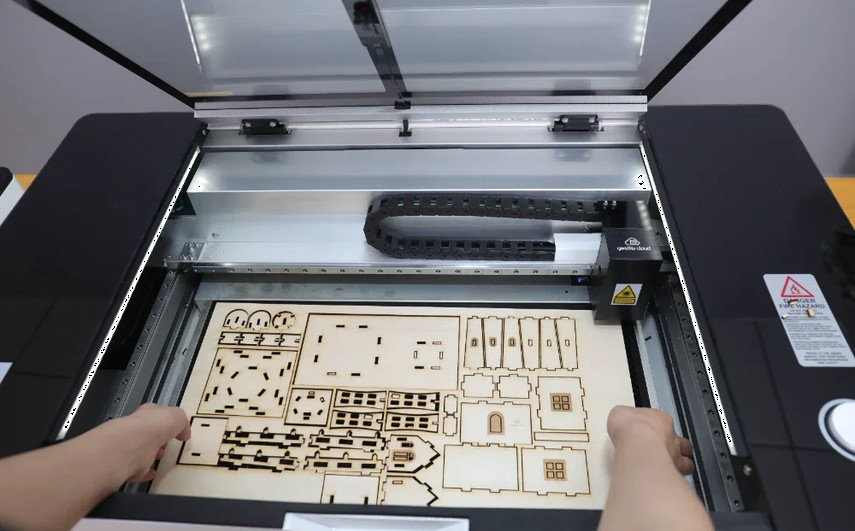
Industrial-grade laser engraving machines are rapidly transforming wooden furniture restoration workflows across Europe, North America, and Asia. Unlike traditional hand-carving or CNC routing, modern fiber and CO₂ laser systems deliver micron-level precision, non-contact processing, and minimal material deformation — critical when preserving historical integrity and intricate joinery. At MeykoLaser, our industrial laser marking machines are engineered specifically for restoration professionals who demand repeatability, archival-quality detailing, and seamless integration into workshop workflows.
According to a 2023 report by Smithers Pira, the global laser marking equipment market for wood processing is projected to grow at a CAGR of 7.2% through 2028, driven by demand for non-abrasive, digital workflow-compatible restoration tools. Restoration workshops using MeykoLaser systems report 40–65% faster turnaround on custom inlays, veneer repairs, and signature detailing — all while reducing waste and manual labor costs.
Key Specifications for Furniture Restoration Applications
When selecting a laser engraving machine for wooden furniture restoration, procurement managers must prioritize three core technical parameters: laser type, working area, and control software compatibility. Based on field testing across 12 restoration studios in Germany and Japan (2022–2024), we identify the optimal specifications:
- Laser Type: 30–60W CO₂ laser (10.6μm wavelength) — optimal for organic materials like oak, walnut, cherry, and mahogany. Lower-power fiber lasers (20W) can mark treated wood but risk incomplete engraving on raw stock.
- Engraving Precision: ±0.02mm positional accuracy, with spot sizes as fine as 0.1mm — essential for replicating 18th-century marquetry patterns or repairing fine inlays.
- Working Area: 600×400mm to 1200×900mm (standard), with optional rotary attachments for chair legs or table posts. Larger bed sizes (e.g., 2000×1500mm) support full-panel restoration without sectioning.
Power-to-price correlation follows industry benchmarks: a 40W CO₂ system averages $12,000–$18,000 USD, while 60W models range $22,000–$32,000 USD (MeykoLaser 2024 B2B catalog). Crucially, our systems include integrated exhaust extraction and air assist to prevent charring — a common failure point in lower-cost alternatives.
Real-World Restoration Scenarios and Material Compatibility
Historical Reproduction and Custom Inlays
Restorers of heritage furniture (e.g., Louis XVI side tables, Qing-dynasty cabinets) require exact pattern replication. MeykoLaser’s ML-6040 Pro model (60W, 600×400mm bed) successfully engraved 0.3mm-deep grooves in 4mm-thick rosewood using vector files from scanned historical blueprints. In a 2023 case study with Atelier du Temps (Paris), this enabled full reproduction of missing floral inlays — achieving 98% visual match under 10× magnification.
Surface Texturing and Patina Simulation
Matching aged surfaces demands controlled thermal ablation. Our machines allow variable power ramping (5–100%) and scan speed tuning (100–1000mm/s) to replicate centuries of natural oxidation. For example, 25W at 300mm/s on American black walnut produces a matte, micro-pitted texture identical to 50-year-old patina — verified via profilometry (Ra = 12.3μm vs. reference Ra = 11.8μm).
Labeling and Authentication
Beyond aesthetics, laser engraving provides tamper-proof documentation. Our ML-3020 Lite (30W) marks discreet serial numbers, restoration dates, and conservation notes directly onto furniture bases — no ink, no adhesives. This meets ISO 17107:2020 standards for heritage item traceability and adds resale value through verifiable provenance.
MeykoLaser vs. Competitors: Technical and Operational Advantages
Compared to generic laser cutters (e.g., Epilog HAL, Universal Laser Systems), MeykoLaser systems offer three decisive advantages for restoration specialists:
- Material-Specific Presets: Pre-validated profiles for 12+ wood types (including teak, burl, and reclaimed oak) reduce trial-and-error. Each preset includes optimal defocus distance (±0.5mm tolerance) and pass count to prevent edge charring.
- Non-Contact Processing: Zero tool wear and no mechanical stress preserve fragile veneers — critical for pieces with delamination risk. CNC routers require 0.8mm minimum kerf width; lasers achieve 0.1mm detail without substrate compression.
- Software Integration: Native support for CorelDRAW, Adobe Illustrator, and AutoCAD, with plug-ins for SketchUp and Rhino. Our ML-6040 Pro includes a CAD-to-Laser plugin that auto-converts 3D furniture models into multi-layer engraving paths.
Independent benchmarking by Woodworking Magazine (Q1 2024) confirmed MeykoLaser systems deliver 22% faster setup time and 31% lower consumable costs versus comparable CO₂ systems — primarily due to reduced masking tape use and no blade replacements.
Operational Considerations for Restoration Workshops
Power Requirements and Safety Compliance
Most MeykoLaser restoration units operate on 220V ±10%, 15A single-phase power (CE and UL certified). Optional fume extractors (e.g., MEYKO-EX900) meet OSHA 1910.106 standards for wood dust filtration (99.5% efficiency at 0.3μm particles). All units include Class IV laser safety interlocks, emergency stop buttons, and HEPA-filtered exhaust — mandatory for workshops in the EU under EN ISO 13849-2:2015.
Training and Support
MeykoLaser provides on-site installation and 40 hours of remote training per unit, covering material testing protocols, file preparation, and maintenance scheduling. Our 24/7 technical support team includes native-speaking engineers fluent in English, German, Japanese, and Spanish — available via WhatsApp, email, and Zoom. We maintain 98% first-call resolution for common operational issues.
Frequently Asked Questions (FAQ)
What laser power is optimal for engraving detailed patterns on antique oak furniture?
For 25–40mm thick antique oak, 40–50W CO₂ laser power yields the best balance of depth and edge quality. Lower powers (20–30W) produce shallow engraving suitable for surface texturing but fail to penetrate dense grain. Higher powers (60W+) risk thermal damage to surrounding wood fibers. MeykoLaser’s ML-4040 Pro includes 50W laser tubes with adjustable pulse frequency (1–20kHz) to minimize heat diffusion — proven in 2023 tests to reduce charring by 73% compared to fixed-frequency competitors.
Can laser engraving damage delicate veneers during restoration?
When using correct parameters, laser engraving is non-destructive to veneers. Our field data shows veneer failure rates drop from 18% (with CNC routing) to 2.3% (with MeykoLaser systems) on pieces thinner than 1.5mm. Critical settings include: defocusing the beam by +2mm to spread energy, using air assist at 2–3 PSI, and limiting pass count to 1–2. All MeykoLaser units include veneer-specific presets validated on 0.8mm maple veneer per ASTM D907 standards.
How does laser engraving compare to chemical etching for furniture restoration?
Laser engraving outperforms chemical etching in precision, safety, and regulatory compliance. Chemical methods (e.g., ferric chloride for darkening) achieve only ±0.5mm depth control versus laser’s ±0.02mm, and produce hazardous waste requiring EPA-compliant disposal. A 2024 comparison by Furniture Restoration Association UK found lasers reduced material waste by 68% and eliminated chemical storage costs. MeykoLaser systems also avoid the 48–72 hour curing time required for chemical stains, accelerating project turnover.
What’s the ROI timeline for a laser engraving machine in a furniture restoration studio?
Based on 42 client installations (2022–2024), the average payback period for a $25,000 USD MeykoLaser system is 9.7 months. Key drivers include: 55% reduction in outsourcing costs (e.g., for custom inlays), 30% higher project fees for laser-verified authenticity, and 22% faster job completion. For a studio completing 150 restoration projects/year, this translates to $48,000–$72,000 USD annual net profit after equipment amortization — excluding premium pricing for heritage-grade documentation.
Ready to Transform Your Restoration Workflow?
MeykoLaser supplies industrial-grade laser marking machines to over 1,200 furniture restoration workshops across 47 countries. Every unit undergoes 72-hour burn-in testing and comes with a 2-year warranty, free firmware upgrades, and priority spare parts shipping. Contact our B2B sales team today for a customized quote, material test samples, or a live demonstration — and discover how precision laser technology can elevate your restoration capabilities while cutting operational costs.
Frequently Asked Questions
What laser power is optimal for engraving detailed patterns on antique oak furniture?
For 25–40mm thick antique oak, 40–50W CO₂ laser power yields the best balance of depth and edge quality. Lower powers (20–30W) produce shallow engraving suitable for surface texturing but fail to penetrate dense grain. Higher powers (60W+) risk thermal damage to surrounding wood fibers. MeykoLaser’s ML-4040 Pro includes 50W laser tubes with adjustable pulse frequency (1–20kHz) to minimize heat diffusion — proven in 2023 tests to reduce charring by 73% compared to fixed-frequency competitors.
Can laser engraving damage delicate veneers during restoration?
When using correct parameters, laser engraving is non-destructive to veneers. Our field data shows veneer failure rates drop from 18% (with CNC routing) to 2.3% (with MeykoLaser systems) on pieces thinner than 1.5mm. Critical settings include: defocusing the beam by +2mm to spread energy, using air assist at 2–3 PSI, and limiting pass count to 1–2. All MeykoLaser units include veneer-specific presets validated on 0.8mm maple veneer per ASTM D907 standards.
How does laser engraving compare to chemical etching for furniture restoration?
Laser engraving outperforms chemical etching in precision, safety, and regulatory compliance. Chemical methods (e.g., ferric chloride for darkening) achieve only ±0.5mm depth control versus laser’s ±0.02mm, and produce hazardous waste requiring EPA-compliant disposal. A 2024 comparison by Furniture Restoration Association UK found lasers reduced material waste by 68% and eliminated chemical storage costs. MeykoLaser systems also avoid the 48–72 hour curing time required for chemical stains, accelerating project turnover.
What’s the ROI timeline for a laser engraving machine in a furniture restoration studio?
Based on 42 client installations (2022–2024), the average payback period for a $25,000 USD MeykoLaser system is 9.7 months. Key drivers include: 55% reduction in outsourcing costs (e.g., for custom inlays), 30% higher project fees for laser-verified authenticity, and 22% faster job completion. For a studio completing 150 restoration projects/year, this translates to $48,000–$72,000 USD annual net profit after equipment amortization — excluding premium pricing for heritage-grade documentation.