
Stainless steel engraving requires precision, consistency, and durability—qualities that traditional mechanical marking methods struggle to deliver at scale. A laser engraving machine for stainless steel uses focused laser beams to create permanent marks, including serial numbers, barcodes, logos, and compliance codes, without physical contact or consumables. For procurement managers in automotive, medical device, aerospace, and electronics manufacturing, choosing the right laser system directly impacts production efficiency, part traceability, and long-term operational costs.
How Laser Engraving Works on Stainless Steel
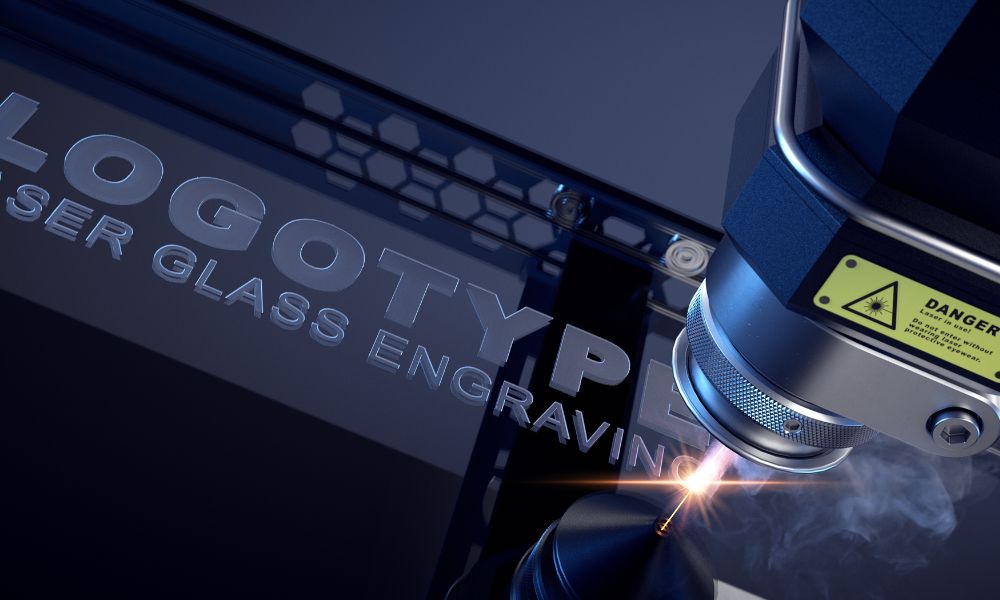
Stainless steel’s high chromium content (typically 10–30%) forms a passive oxide layer that resists corrosion—but also makes traditional marking difficult. Fiber laser systems overcome this by delivering concentrated energy (wavelength 1064 nm) that modifies the surface microstructure through controlled heating. Depending on parameters like power (20W–100W+), pulse frequency, and scanning speed, the laser can achieve:
- Annealing marks: Color change (black, gold, blue) without material removal—ideal for medical and aerospace components.
- Deep engraving: Material ablation up to 0.5 mm depth—used for tooling, molds, and heavy-duty industrial parts.
- Surface texturing: Micro-patterns for functional or aesthetic purposes.
MeykoLaser’s fiber laser engraving systems deliver ±0.01 mm repeatability and mark speeds up to 7,000 mm/s, ensuring high throughput without compromising clarity—even on complex geometries like curved surfaces or thin-walled tubing.
Key Specifications to Evaluate When Choosing a Laser Engraving System
Procurement teams should prioritize these technical parameters when selecting a laser engraving machine for stainless steel:
Laser Power and Material Thickness Compatibility
Power directly correlates with marking depth and speed. For stainless steel:
- 20W–30W: Optimal for fine marking on thin sheets (≤1 mm) and small components. Typical price range: $8,000–$15,000.
- 50W–60W: Balanced performance for medium-depth engraving (0.1–0.3 mm) on sheets up to 3 mm. Price: $18,000–$28,000.
- 100W+: Required for deep engraving (>0.5 mm) or high-volume production. Price: $35,000–$60,000.
MeykoLaser offers configurable power options with real-time energy control, allowing users to optimize settings per application without hardware changes.
Marking Area and Beam Quality
Standard marking areas range from 100×100 mm to 300×300 mm. For larger parts (e.g., automotive exhaust systems), galvanometer scanners with F-theta lenses maintain focus uniformity across the entire field. MeykoLaser’s systems feature M² <1.2 beam quality, ensuring tight focal spots (<20 µm) for micro-marking on surgical instruments or electronic connectors.
Integration with Production Lines
Modern factories require seamless integration. MeykoLaser machines support:
- Ethernet/IP, PROFINET, and RS-232 interfaces
- PLC synchronization for automated loading/unloading
- Vision alignment systems (±0.02 mm accuracy) for mispositioned parts
Industrial Applications of Stainless Steel Laser Engraving
The versatility of laser engraving machines for stainless steel spans multiple regulated industries:
Medical Device Manufacturing
FDA and EU MDR require unique device identification (UDI) via 2D DataMatrix codes. MeykoLaser’s systems produce high-contrast, corrosion-resistant marks that withstand autoclaving (134°C, 18 minutes) and chemical disinfectants—validated per ISO 13485 standards.
Automotive and Aerospace Components
Engine valves, fuel injectors, and turbine blades require permanent traceability. Deep engraving (≥0.2 mm) remains legible after shot peening or coating processes. MeykoLaser’s 60W systems achieve this at cycle times under 3 seconds per part.
Electronics and Consumer Goods
From smartphone frames to kitchen appliances, surface annealing creates decorative black or colored marks without compromising corrosion resistance—tested per ASTM B117 salt spray standards (>500 hours).
Why MeykoLaser Stands Out for Stainless Steel Engraving
With over 15 years of specialization in industrial laser marking, MeykoLaser delivers:
- Proven reliability: Mean time between failures (MTBF) >50,000 hours
- Global compliance: CE, FDA, and RoHS-certified systems
- Application engineering support: Free sample testing and parameter optimization
- Total cost of ownership (TCO) advantage: No consumables, <1 kW power consumption, and minimal maintenance
Compared to CO₂ or UV lasers, MeykoLaser’s fiber systems offer superior wall-plug efficiency (up to 30%) and eliminate costly gas refills or lamp replacements.
Frequently Asked Questions
Can laser engraving compromise stainless steel’s corrosion resistance?
When properly parameterized, laser engraving preserves corrosion resistance. MeykoLaser uses controlled heat input to avoid sensitization (chromium depletion at grain boundaries). Post-marking, parts pass 500+ hours of salt spray testing per ASTM B117—critical for marine and medical applications.
What’s the difference between laser engraving and laser marking on stainless steel?
Laser marking typically refers to surface-level color change (annealing), while laser engraving involves material removal to create tactile depth. MeykoLaser systems support both modes, selectable via software—enabling one machine to handle diverse product lines.
How fast can a laser engraving machine mark stainless steel parts?
Speed depends on content complexity and depth. A simple 10-character alphanumeric code takes <0.5 seconds with a 30W system; a full 2D DataMatrix code at 0.3 mm depth takes ~2.5 seconds with 60W. MeykoLaser’s high-speed scanners (up to 7 m/s) ensure competitive cycle times even in high-mix production.
Is laser engraving cost-effective for small-batch production?
Absolutely. Unlike mechanical stamping or chemical etching, laser systems require no tooling or masks. Changeover takes seconds via software—making lot sizes of 1–100 economically viable. MeykoLaser’s entry-level 20W systems start under $10,000, with ROI typically achieved within 6–12 months through reduced scrap and rework.
Does MeykoLaser provide international service and training?
Yes. MeykoLaser offers remote diagnostics, on-site installation, and multilingual training (English, Spanish, German, Mandarin). Spare parts are stocked in regional hubs across Europe, North America, and Southeast Asia, ensuring <48-hour delivery for critical components.
Take the Next Step with MeykoLaser
Selecting the right laser engraving machine for stainless steel demands technical expertise and real-world validation. MeykoLaser provides complimentary sample testing using your actual parts and materials—so you can verify mark quality, speed, and compliance before purchasing. Our application engineers will recommend the optimal configuration based on your production volume, part geometry, and regulatory requirements.
Ready to upgrade your stainless steel marking process? Contact MeykoLaser’s global sales team today at www.meyko.cn for a free consultation and customized solution.
Frequently Asked Questions
Can laser engraving compromise stainless steel's corrosion resistance?
When properly parameterized, laser engraving preserves corrosion resistance. MeykoLaser uses controlled heat input to avoid sensitization (chromium depletion at grain boundaries). Post-marking, parts pass 500+ hours of salt spray testing per ASTM B117—critical for marine and medical applications.
What's the difference between laser engraving and laser marking on stainless steel?
Laser marking typically refers to surface-level color change (annealing), while laser engraving involves material removal to create tactile depth. MeykoLaser systems support both modes, selectable via software—enabling one machine to handle diverse product lines without hardware changes.
How fast can a laser engraving machine mark stainless steel parts?
Speed depends on content complexity and depth. A simple 10-character alphanumeric code takes under 0.5 seconds with a 30W system; a full 2D DataMatrix code at 0.3 mm depth takes approximately 2.5 seconds with 60W. MeykoLaser's high-speed scanners (up to 7 m/s) ensure competitive cycle times even in high-mix production environments.
Is laser engraving cost-effective for small-batch production?
Absolutely. Unlike mechanical stamping or chemical etching, laser systems require no tooling or masks. Changeover takes seconds via software—making lot sizes of 1–100 economically viable. MeykoLaser's entry-level 20W systems start under $10,000, with ROI typically achieved within 6–12 months through reduced scrap and rework costs.
Does MeykoLaser provide international service and training?
Yes. MeykoLaser offers remote diagnostics, on-site installation, and multilingual training in English, Spanish, German, and Mandarin. Spare parts are stocked in regional hubs across Europe, North America, and Southeast Asia, ensuring under 48-hour delivery for critical components to minimize production downtime.