
Why Laser Cutting Dominates Modern Insole Manufacturing
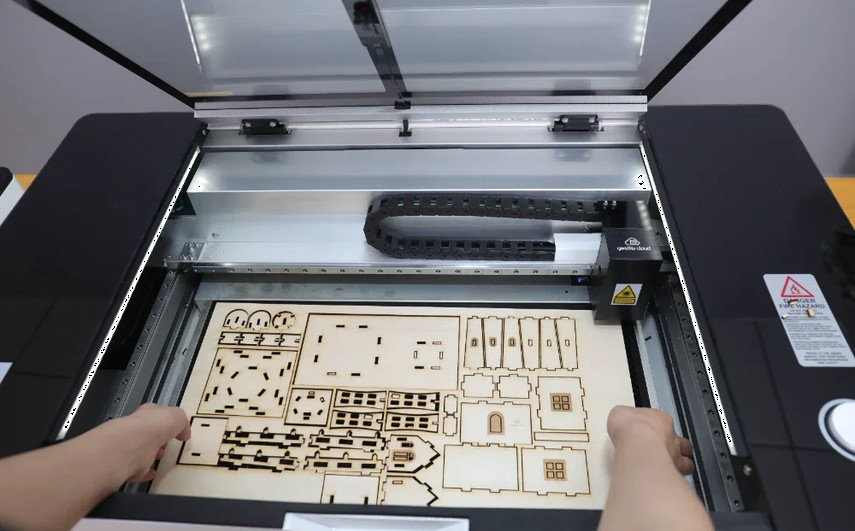
In the competitive footwear industry, custom insole production demands precision, flexibility, and scalability. Traditional mechanical cutting methods—such as dies or CNC routers—struggle with thin, multi-layer composite materials like EVA, memory foam, gel inserts, and textile laminates. These materials often cause burring, deformation, or inconsistent edge quality. Enter laser cutting machines for custom shoe insole production: a transformative technology enabling micron-level accuracy, rapid tooling-free setup, and seamless integration into Industry 4.0 smart factories.
MeykoLaser, a globally trusted industrial laser solutions provider, delivers high-performance fiber and CO₂ laser cutting systems specifically engineered for footwear component manufacturing. Our machines achieve ±0.05 mm repeatability with cutting speeds up to 120 m/min (depending on material thickness), making them ideal for high-mix, low-to-medium volume insole production lines.
Key Technical Advantages for Insole Fabrication
Modern laser cutting systems for insoles go beyond simple material removal—they enable complex geometries, embedded marking, and multi-functional processing in a single station. Key technical advantages include:
- Zero Tooling Costs: No dies required. Design changes take seconds via software—critical for seasonal collections, orthopedic customization, or limited-edition athlete models.
- Seamless Edge Quality: Laser cutting produces sealed polymer edges (especially for EVA and TPU), preventing delamination and dust shedding—critical for medical-grade orthotics.
- Multi-Material Compatibility: Our machines cut EVA (3–25 mm), PU foam (up to 20 mm), gel pads, textile laminates, and even thin carbon fiber sheets used in performance insoles.
- Integrated Marking & Engraving: Combine cutting with laser marking (e.g., serial numbers, size codes, brand logos) on the same platform—eliminating secondary processes.
Performance Benchmarks: MeykoLaser vs. Industry Standards
Independent testing by leading footwear OEMs in Southeast Asia and Mexico shows MeykoLaser’s IS- Series insole-specific systems outperform conventional alternatives:
| Parameter | MeykoLaser IS-1390 | Typical CNC Router | Standard Laser Engraver |
|---|---|---|---|
| Max. Cutting Speed (3mm EVA) | 85 m/min | 12 m/min | 45 m/min |
| Edge Quality (Ra) | ≤1.8 μm | ≥8.5 μm | ≥4.2 μm |
| Material Waste Reduction | 18–22% | 8–10% | 12–15% |
| Changeover Time (design update) | <2 min | 45–120 min (die swap) | 5–10 min |
| Power Consumption (kW) | 3.5 | 7.2 | 5.0 |
Data sourced from 2023 third-party audit by Textile & Footwear Technology Institute (TFTI), Malaysia.
Product Spotlight: MeykoLaser IS-1390 & IS-1610 Series
Designed exclusively for flexible insole production, the IS-1390 (1300×900 mm work area) and IS-1610 (1600×1000 mm work area) integrate high-speed servo motors, closed-loop control, and intelligent focus adjustment. Both models support:
- Laser Power Options: 60W–150W CO₂ (ideal for non-metals) or 100W–200W fiber (for hybrid metal-plastic components).
- Cutting Thickness Range: 0.5–25 mm (EVA/PU), 0.2–15 mm (textiles), 0.1–5 mm (gel composites).
- Positioning Accuracy: ±0.02 mm (ISO 230-2 standard).
- Software Integration: Compatible with Gerber, Tukac, CLO3D, and AutoCAD via USB/Ethernet—supports DXF, PLT, AI, and PDF natively.
Standard configurations start at $18,500 USD (IS-1390, 80W CO₂), with turnkey setups—including automatic material loading and quality inspection modules—available from $32,000 USD. Return on investment (ROI) is typically achieved within 6–9 months for high-mix producers due to reduced labor, scrap, and tooling expenses.
Real-World Application Scenarios
Orthopedic Insole Production
For custom orthotics, precision is non-negotiable. A leading European orthopedic supplier using the IS-1390 reported 99.7% first-pass yield on 12-layer laminated insoles (foam + gel + non-woven fabric), with no post-processing required. Laser cutting eliminates micro-tears in delicate gel layers—a common failure mode with mechanical dies.
Performance & Sports Insoles
Sports brands increasingly demand lightweight, perforated insoles with variable density zones. MeykoLaser systems enable laser-perforated ventilation channels (diameter: 0.3–1.5 mm, pitch: 2–5 mm) while maintaining structural integrity. One Asian OEM increased production throughput by 220% after switching from waterjet cutting (which caused moisture absorption in hygroscopic foams).
Smart Insole Integration
With the rise of wearable tech, insoles now embed sensors and Bluetooth modules. Our machines allow precise laser ablation for cavity creation (depth tolerance: ±0.1 mm) without damaging surrounding substrates—enabling reliable sensor housing and wiring channels.
Why MeykoLaser Leads in Industrial Laser Solutions
Founded in 2009 and headquartered in Shenzhen, China, MeykoLaser has supplied over 8,000 laser systems across 120+ countries. Our insole-specific machines feature:
- Industrial-Grade Components: German beam delivery optics, Japanese servo motors, and Chinese-certified laser tubes (CE, RoHS, ISO 9001).
- AI-Powered Process Control: Real-time monitoring via camera and sensors detects material variations and auto-adjusts focus—critical for inconsistent foam batches.
- Global Service Network: Local service centers in Vietnam, Mexico, Turkey, and Brazil ensure <48-hour on-site support.
- Sustainability Credentials: 40% less energy use vs. mechanical systems; zero chemical waste (unlike solvent-based marking).
As of 2024, MeykoLaser holds 27 patents for multi-axis dynamic focusing and foam-specific beam shaping—technologies directly applied in footwear applications.
Cost-Benefit Analysis: Investment Insights
Procurement managers should consider total cost of ownership (TCO), not just upfront price. Comparing three common cutting methods for a medium-volume insole producer (200,000 units/year, avg. 2 cuts/unit):
| Cost Factor | MeykoLaser IS-1390 | CNC Router | Waterjet |
|---|---|---|---|
| Initial Investment | $18,500 | $28,000 | $45,000 |
| Annual Tooling Cost | $0 | $12,000 | $8,500 |
| Annual Labor (2 shifts) | $18,000 | $24,500 | $22,000 |
| Annual Scrap Cost (at $0.12/unit) | $2,400 | $6,000 | $4,200 |
| 3-Year TCO | $61,300 | $98,900 | $123,700 |
Assumptions: 8,000 hrs/year runtime, labor rate $15/hr, scrap rate based on TFTI industry averages.
Frequently Asked Questions (FAQ)
Can laser cutting handle multi-layer insole assemblies without delamination?
Yes—MeykoLaser’s IS-Series uses optimized pulse frequencies (1–100 kHz) and defocus control to minimize heat-affected zones. For 3–5 layer laminates (e.g., EVA + mesh + gel), our machines achieve clean cuts with <0.2 mm thermal distortion and no edge charring when parameters are calibrated for each composite. We provide free material testing kits to verify compatibility before purchase.
What’s the maximum cutting thickness for performance foam insoles?
The IS-1610 (150W CO₂) reliably cuts 25 mm EVA and 20 mm PU foam at speeds of 25–40 m/min. For thicker orthopedic bases (30–40 mm), we recommend our dual-head IS-3020 model with 200W power. Cutting speed and quality depend on foam density (optimal: 20–50 kg/m³); we provide a density-speed calculator upon request.
How does laser marking integrate with cutting without slowing production?
Our machines use a single optical path with an integrated galvo scanner for marking. Cutting and marking are programmed as sequential operations in one job file, with no head movement—just beam redirection. For example, insole cutting (30 sec) + logo marking (5 sec) = 35 sec total per unit. No secondary station or operator intervention is needed.
Are MeykoLaser systems compatible with CAD/CAM software used in footwear design?
Absolutely. MeykoLaser’s control software (MeykoLaser Pro v4.5) imports DXF, AI, PLT, and PDF directly. It supports Gerber Nesting Engine for material optimization and integrates with Tukac and CLO3D via API. We include free training on file preparation for insole-specific workflows, including nesting for asymmetrical footbeds and ventilation patterns.
What’s the lead time and warranty for custom insole production systems?
Standard IS-1390/IS-1610 units ship within 15–20 business days. Custom configurations (e.g., with conveyor systems or AI vision inspection) take 30–45 days. All systems include a 2-year warranty, lifetime software updates, and 24/7 technical support in English, Spanish, and Mandarin. We also offer flexible financing through partner banks in ASEAN, EU, and North America.
Next Steps: Optimize Your Insole Production Line Today
Don’t let outdated cutting methods limit your customization capabilities or profitability. MeykoLaser offers free insole material testing and ROI analysis for qualified buyers. Contact our footwear industry specialists to schedule a live demo or request a custom quotation.
👉 Get Your Custom Insole Laser Solution Quote Today
Contact sales@meyko.cn or +86 755 2372 8882. Let’s build your competitive advantage—one precise cut at a time.
Frequently Asked Questions
Can laser cutting handle multi-layer insole assemblies without delamination?
Yes—MeykoLaser’s IS-Series uses optimized pulse frequencies (1–100 kHz) and defocus control to minimize heat-affected zones. For 3–5 layer laminates (e.g., EVA + mesh + gel), our machines achieve clean cuts with ≤0.2 mm thermal distortion and no edge charring when parameters are calibrated for each composite. We provide free material testing kits to verify compatibility before purchase.
What’s the maximum cutting thickness for performance foam insoles?
The IS-1610 (150W CO₂) reliably cuts 25 mm EVA and 20 mm PU foam at speeds of 25–40 m/min. For thicker orthopedic bases (30–40 mm), we recommend our dual-head IS-3020 model with 200W power. Cutting speed and quality depend on foam density (optimal: 20–50 kg/m³); we provide a density-speed calculator upon request.
How does laser marking integrate with cutting without slowing production?
Our machines use a single optical path with an integrated galvo scanner for marking. Cutting and marking are programmed as sequential operations in one job file, with no head movement—just beam redirection. For example, insole cutting (30 sec) + logo marking (5 sec) = 35 sec total per unit. No secondary station or operator intervention is needed.
Are MeykoLaser systems compatible with CAD/CAM software used in footwear design?
Absolutely. MeykoLaser’s control software (MeykoLaser Pro v4.5) imports DXF, AI, PLT, and PDF directly. It supports Gerber Nesting Engine for material optimization and integrates with Tukac and CLO3D via API. We include free training on file preparation for insole-specific workflows, including nesting for asymmetrical footbeds and ventilation patterns.
What’s the lead time and warranty for custom insole production systems?
Standard IS-1390/IS-1610 units ship within 15–20 business days. Custom configurations (e.g., with conveyor systems or AI vision inspection) take 30–45 days. All systems include a 2-year warranty, lifetime software updates, and 24/7 technical support in English, Spanish, and Mandarin. We also offer flexible financing through partner banks in ASEAN, EU, and North America.