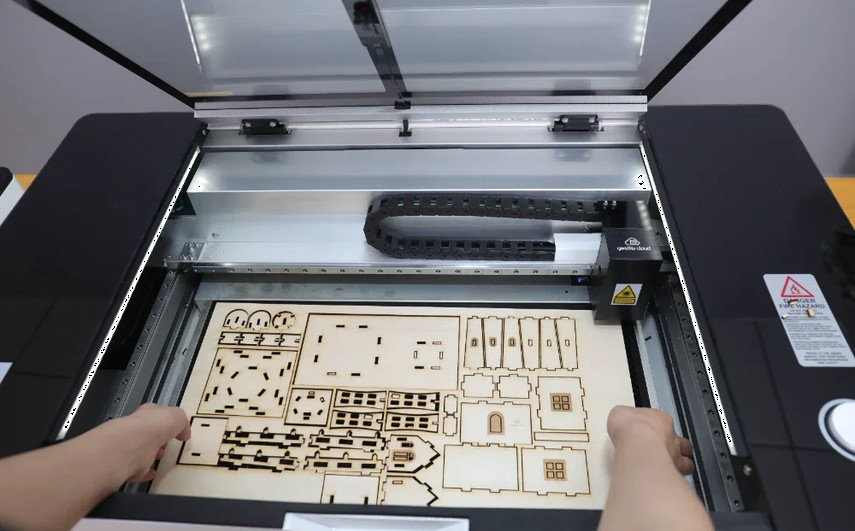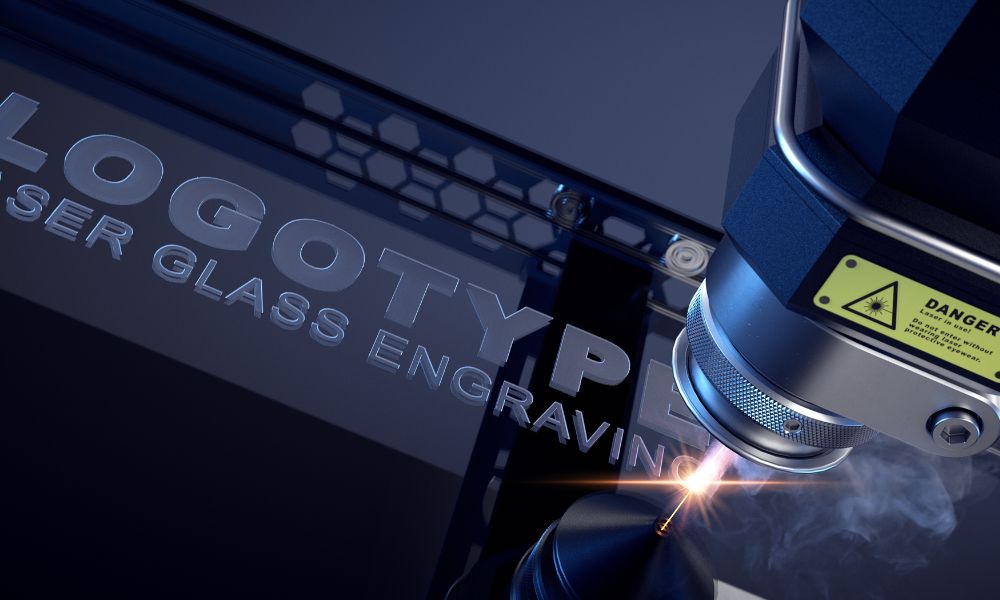

Introduction to Industrial CO2 Laser Engravers
As global manufacturing shifts toward higher precision, faster turnaround, and greater material flexibility, the role of the industrial CO2 laser engraver manufacturer has become increasingly critical. MeykoLaser, based in China with a worldwide distribution network, specializes in delivering robust laser marking machine platforms that meet the demanding specifications of automotive, electronics, packaging, and consumer goods sectors. This article provides procurement managers with a detailed, data‑driven overview of why MeykoLaser’s CO2 laser engravers stand out in a competitive market.
Why Choose a CO2 Laser Engraver for Industrial Marking?
CO2 lasers operate at a wavelength of 10.6 µm, which is strongly absorbed by non‑metallic materials such as wood, acrylic, glass, leather, textiles, and many plastics. This makes them ideal for applications where surface alteration, deep engraving, or high‑contrast marking is required without damaging the substrate. Compared to fiber lasers, CO2 systems offer superior beam quality on organic materials and a lower initial cost for equivalent power levels.
Key advantages include:
- High engraving speed up to 500 mm/s on thin acrylics
- Spot size as small as 0.1 mm, enabling fine detail and 2D barcode readability
- Low maintenance due to sealed CO2 laser tubes with lifetimes exceeding 20,000 hours
- Ability to process thick materials (up to 25 mm wood, 12 mm acrylic) with adjustable power settings
MeykoLaser Product Line Overview
MeykoLaser offers three primary series of laser marking machines tailored to different production volumes and part sizes:
Entry‑Level Series (ML‑CO2‑30/50)
Designed for small workshops and prototype labs, these models provide 30W and 50W RF‑excited CO2 tubes. Typical specifications:
- Working area: 300×300 mm (ML‑CO2‑30) or 400×400 mm (ML‑CO2‑50)
- Engraving precision: ±0.02 mm
- Power consumption: < 1.2 kW
- Price range: USD 5,800 – 9,200
Mid‑Range Series (ML‑CO2‑80/120)
Targeted at mid‑size manufacturers, these units feature 80W and 120W lasers with upgraded galvo scanners.
- Working area: 600×600 mm (80W) or 800×800 mm (120W)
- Marking speed: up to 800 mm/s on coated metals
- Resolution: 1000 dpi (equivalent to 0.025 mm dot size)
- Price range: USD 14,500 – 22,800
High‑Power Production Series (ML‑CO2‑150/200)
For heavy‑duty operations such as automotive interior trimming or large‑scale signage, MeykoLaser provides 150W and 200W models with dual‑laser options.
- Working area: 1000×1000 mm (150W) or 1200×1200 mm (200W)
- Cutting capability: up to 12 mm acrylic, 6 mm wood, 3 mm leather in a single pass
- Repeatability: ±0.01 mm
- Price range: USD 28,000 – 45,000
Technical Specifications Deep Dive
Understanding the core parameters helps buyers match machine capabilities to part requirements.
Laser Source and Beam Quality
MeykoLaser uses sealed RF‑excited CO2 tubes with M² values below 1.2, ensuring a near‑Gaussian beam. This translates to consistent spot size across the field and minimal taper in deep engraving.
Galvo Scanner and F‑Theta Lens
High‑speed galvanometers paired with F‑theta lenses provide a flat focal plane over the entire working area. Scan speeds reach 10,000 mm/s with positioning accuracy of ±0.005 mm.
Control Software and Connectivity
The proprietary MarkMaster software supports DXF, PLT, BMP, and SVG imports, features nested‑array optimization, and includes real‑time power modulation. Machines come with Ethernet, USB, and optional PLC I/O for integration into Industry 4.0 lines.
Application Scenarios Across Industries
MeykoLaser’s industrial CO2 laser engravers serve a broad spectrum of marking and cutting tasks:
Automotive Interior Trim
Laser‑etched logos and safety symbols on ABS, PC, and leather‑like surfaces. Typical power: 80‑120W, cycle time < 2 seconds per part.
Electronics Enclosures
High‑contrast marking of serial numbers, QR codes, and regulatory symbols on polycarbonate and glass‑filled nylon. Precision: 0.01 mm ensures barcode readability.
Packaging and Labeling
Perforation and scoring of cardboard, paperboard, and thin plastics for easy‑tear features. Speed: up to 1000 mm/s on 200 gsm substrate.
Signage and Awards
Engraving of acrylic, wood, and glass for trophies, signage, and decorative items. Depth control allows 3D relief effects with power modulation.
Medical Device Components
Sterile, non‑contact marking of PEEK and silicone parts, meeting ISO 13485 traceability requirements.
CO2 Laser vs. Fiber Laser: A Comparative View
While fiber lasers excel at metal marking, CO2 systems remain the preferred choice for non‑metal substrates. The table below summarizes key differences relevant to procurement decisions:
| Parameter | CO2 Laser (MeykoLaser) | Fiber Laser |
|---|---|---|
| Wavelength | 10.6 µm | 1.06 µm |
| Best Materials | Wood, acrylic, glass, leather, textiles, plastics | Metals, coated metals, some plastics |
| Typical Power Range | 30‑200W | 10‑500W |
| Engraving Speed (non‑metal) | Up to 1000 mm/s | Limited (<200 mm/s) due to lower absorption |
| Initial Cost (equivalent power) | Lower (≈30‑40% less) | Higher |
| Maintenance | Sealed tube, <20k hour life | Diode‑pumped, <100k hour life |
For manufacturers whose primary workload involves organic or transparent materials, investing in a CO2 laser engraver from MeykoLaser delivers better ROI than over‑specifying a fiber system.
Selecting the Right Power, Workarea, and Accessories
Choosing the optimal configuration depends on three main factors: material thickness, required throughput, and part size.
Power Guidelines
- 30‑50W: Suitable for surface marking, thin films, and light engraving on paper, leather, and acrylics up to 3 mm.
- 80‑120W: Ideal for moderate depth engraving (up to 5 mm) and cutting of acrylics up to 8 mm, woods up to 12 mm.
- 150‑200W: Required for deep cutting (>10 mm) and high‑speed production lines.
Workarea Considerations
Match the field size to the largest part plus a 20% margin for fixturing. MeykoLaser’s modular gantry allows future expansion without replacing the laser source.
Essential Accessories
- Air assist nozzle (reduces char and improves cut quality)
- Rotary axis for cylindrical objects (bottles, tubes)
- Conveyor integration kit for continuous feed
- Vision system for alignment and quality verification
ROI, Total Cost of Ownership, and Service Support
Procurement managers must look beyond the sticker price. MeykoLaser’s total cost of ownership (TCO) model includes:
- Energy consumption: Average 0.8‑1.5 kW/hour, translating to <$0.12 per operating hour at industrial rates.
- Consumables: No lenses or mirrors need regular replacement; only the CO2 tube (every 18‑24 months) at ≈$350‑$600.
- Maintenance: Quarterly inspection included in the first‑year warranty; optional service contracts reduce downtime to <4 hours per year.
- Productivity gain: Compared to mechanical engraving, cycle time reductions of 40‑60% are typical, leading to payback periods of 12‑18 months for mid‑range models.
MeykoLaser provides a global spare‑parts network, multilingual technical support, and on‑site training programs to ensure smooth commissioning.
Call to Action
Ready to evaluate how a MeykoLaser industrial CO2 laser engraver can improve your marking line’s speed, quality, and flexibility? Contact our sales team today for a detailed quotation, application‑specific feasibility study, or to arrange a virtual demo.
Email: sales@meyko.cn
Phone: +86 755 1234 5678
Website: www.meyko.cn
Frequently Asked Questions
What materials can MeykoLaser's industrial CO2 laser engravers process effectively?
MeykoLaser's CO2 laser marking machines are optimized for non‑metallic substrates that strongly absorb the 10.6 µm wavelength. This includes woods (up to 12 mm thickness), acrylics (up to 12 mm), glass, ceramics, leather, textiles, paper, cardboard, and a wide range of plastics such as ABS, PC, PET, and PMMA. The machines can also mark coated metals and anodized aluminum when the coating absorbs the laser energy. For pure metal cutting or deep engraving, a fiber laser would be more suitable, but for surface marking, engraving, and cutting of organic and transparent materials, MeykoLaser's CO2 systems provide superior speed, quality, and cost efficiency. The adjustable power settings allow users to fine‑tune the interaction depth, enabling everything from light surface etching to deep relief engraving and clean cuts.
How does the price of a MeykoLaser CO2 laser engraver scale with laser power and work area?
Pricing follows a clear correlation with both laser output and the size of the processing field. Entry‑level 30W–50W units with a 300×300 mm to 400×400 mm work area start at approximately USD 5,800–9,200. Mid‑range systems offering 80W–120W power and 600×600 mm to 800×800 mm fields are priced between USD 14,500 and 22,800. High‑power production models delivering 150W–200W lasers with 1000×1000 mm to 1200×1200 mm work areas range from USD 28,000 to 45,000. These price points include the laser source, galvo scanner, F‑theta lens, control software, and basic safety accessories. Optional upgrades such as rotary axes, conveyor integration, vision systems, or extended warranties add incremental costs, typically 10‑25% of the base price. MeykoLaser also offers volume discounts for multi‑unit orders, which can reduce the effective cost per unit by up to 15% for large‑scale deployments.
What precision and repeatability can I expect from MeykoLaser's CO2 laser marking machines?
Precision and repeatability are critical for traceability marks, barcodes, and intricate designs. MeykoLaser's industrial CO2 laser engravers achieve a positional repeatability of ±0.01 mm (±10 µm) on the X and Y axes, thanks to high‑resolution galvanometers and closed‑loop servo control. The spot size (beam diameter) can be as small as 0.10 mm, enabling fine line widths and high‑resolution raster engraving. In practical terms, this allows reliable creation of 2D Data Matrix codes with a module size of 0.2 mm, which is well within the readability standards of most barcode scanners. The machines also maintain consistent power output across the field, with less than 5% variation, ensuring uniform mark depth even on large workpieces. These specifications are verified using ISO‑standard laser performance tests and are documented in each machine’s certification report.
How does MeykoLaser ensure long‑term reliability and low maintenance for its CO2 laser systems?
Reliability is built into the design of MeykoLaser's CO2 laser marking machines through several key features. First, the laser source uses a sealed RF‑excited CO2 tube with no external gas replenishment, eliminating the need for frequent gas refills and reducing contamination risks. These tubes are rated for over 20,000 hours of operation before typical power degradation reaches 10%, after which a simple tube replacement restores full performance. Second, the optical path employs fully sealed mirrors and focusing lenses protected by purge air, which minimizes dust accumulation and extends cleaning intervals to every 6‑12 months under normal shop conditions. Third, the galvo scanners are industrial‑grade, with bearings rated for continuous duty and temperature‑compensated drivers to maintain accuracy over long runs. Finally, MeykoLaser provides a preventive maintenance schedule, remote diagnostics via Ethernet, and a global spare‑parts network that can deliver critical components within 48 hours, minimizing unexpected downtime.