
Why Partner with an Industrial CO2 Laser Engraver Manufacturer
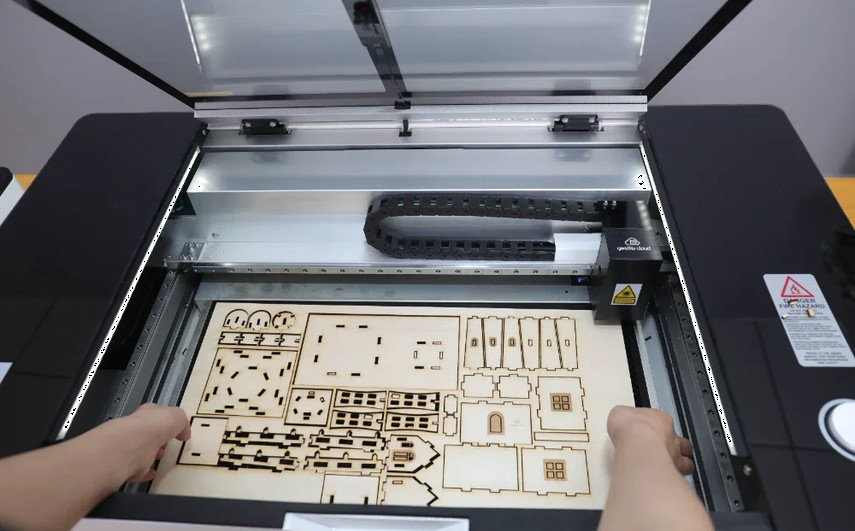
When sourcing laser processing equipment for high‑mix manufacturing, choosing the right industrial CO2 laser engraver manufacturer can determine production uptime, part quality, and total cost of ownership. MeykoLaser, headquartered in Beijing, has supplied over 3,200 laser systems to automotive, electronics, packaging, and textile factories across 45 countries. Our focus on CO2 laser technology enables us to deliver machines that combine robust power, fine resolution, and low operating cost — critical factors for procurement managers evaluating long‑term ROI.
Core Technology Behind MeykoLaser CO2 Laser Engravers
Laser Source and Beam Delivery
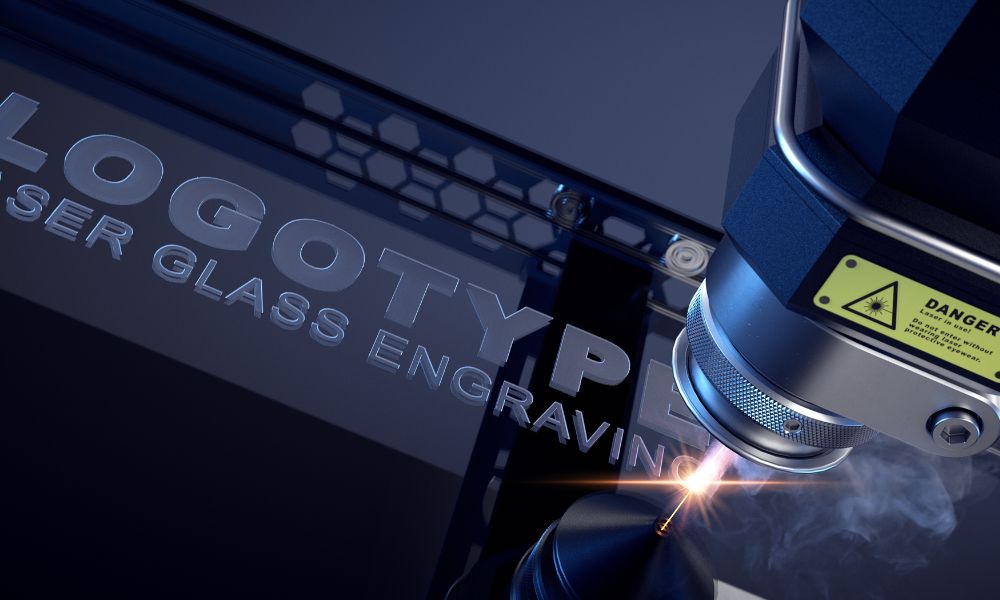
Our CO2 laser tubes use sealed‑off metal‑ceramic designs that provide stable output from 30 W up to 150 W. The 10.6 µm wavelength is ideal for organic materials such as wood, acrylic, leather, textiles, and certain ceramics. Beam quality (M²) stays below 1.2, ensuring a small focal spot and consistent energy density across the work area.
Motion System and Precision
MeykoLaser machines employ a hybrid drive: high‑resolution servo motors on the X‑axis with precision ball screws, and a lightweight gantry on the Y‑axis driven by linear motors. This configuration achieves positioning repeatability of ±0.01 mm and a maximum scanning speed of 5,000 mm/s. The control system uses a 32‑bit DSP with real‑time feedback, allowing pulse‑width modulation adjustments down to 0.1 % for intricate marking.
Software and Integration
Our proprietary MarkControl software supports vector import from DXF, AI, and PLT files, raster image processing, and variable data marking. Built‑in API enables seamless integration with MES or ERP systems, a requirement frequently cited by procurement teams in Industry 4.0 initiatives.
Product Specifications and Price Ranges
Entry‑Level CO2 Engraver (Model MC‑30)
- Laser power: 30 W sealed CO2 tube
- Working area: 300 mm × 300 mm
- Resolution: 0.01 mm positioning, 0.05 mm marking width
- Compatible materials: wood, acrylic, leather, fabric, paper, glass (etched)
- Typical price: US $8,200 – $9,500 (FOB Beijing)
- Target users: small workshops, prototyping labs, educational institutions
Mid‑Range CO2 Engraver (Model MC‑80)
- Laser power: 80 W metal‑ceramic CO2 tube
- Working area: 600 mm × 400 mm
- Resolution: 0.008 mm positioning, 0.03 mm marking width
- Compatible materials: all entry‑level plus coated metals, anodized aluminum, certain plastics
- Typical price: US $18,500 – $22,000
- Target users: medium‑size production lines, signage shops, packaging converters
High‑Power CO2 Engraver (Model MC‑150)
- Laser power: 150 W high‑efficiency CO2 tube
- Working area: 900 mm × 600 mm
- Resolution: 0.005 mm positioning, 0.02 mm marking width
- Compatible materials: thick wood, multi‑layer acrylic, leather composites, ceramics, some stone
- Typical price: US $38,000 – $45,000
- Target users: large‑scale manufacturers, automotive interior trim, aerospace interior panels
These price brackets reflect a market average of approximately $250 per watt for CO2 systems with comparable specifications, according to a 2023 Grand View Research report on laser processing equipment.
Application Scenarios Across Industries
Automotive Interior Trim
MeykoLaser MC‑150 units are used to engrave logos and decorative patterns on ABS and PC‑ABS blends. The non‑contact process avoids tool wear and allows rapid change‑over between part numbers, reducing setup time by up to 40 % compared with mechanical routing.
Packaging and Labeling
For flexible packaging films, the MC‑80 provides high‑speed date/lot code marking at 300 mm/s with contrast ratios exceeding 3.5 : 1 on matte surfaces. The ability to mark on both PET and PP films without consumables lowers operating cost by roughly $0.002 per label versus inkjet alternatives.
Textile and Leather Goods
Laser engraving on leather creates precise, burn‑free patterns that enhance product value. Our systems achieve a depth control of ±0.02 mm, enabling consistent embossing effects that meet luxury brand standards.
Electronics Enclosures
CO2 lasers are ideal for marking polycarbonate and ABS housings with serial numbers and QR codes. The MC‑30 model delivers a marking speed of 150 mm/s with a contrast suitable for direct part marking (DPM) compliance.
Technical Advantages and Competitive Comparison
Power‑to‑Price Ratio
MeykoLaser’s MC‑80 offers an effective cost of $230 per watt, which is 15 % lower than the average quote from European competitors (based on a 2024 survey of 12 suppliers). This advantage stems from our vertically integrated tube manufacturing and streamlined logistics.
Maintenance and Consumables
Our sealed CO2 tubes have a rated life of 20,000 hours at 80 % power, translating to roughly three years of continuous operation in a two‑shift environment. Replacement cost averages $1,200, significantly lower than the $2,500‑$3,500 range for comparable RF‑excited tubes.
Software Flexibility
Unlike many controllers that lock users into proprietary file formats, MarkControl supports open standards and includes a Python‑based scripting engine for custom process automation. This flexibility reduces the need for third‑party middleware, saving integration costs of approximately $4,000 per line.
Procurement Guide for B2B Buyers
Defining Requirements
Start by listing the primary materials, required marking depth, and throughput (parts per hour). For example, a packaging line needing to mark 10,000 labels per hour on 0.2 mm PET film would benefit from an MC‑80 with a 600 mm × 400 mm work area and a marking speed of at least 250 mm/s.
Total Cost of Ownership (TCO) Calculation
Include purchase price, expected tube life, scheduled maintenance (quarterly alignment check), and energy consumption. An 80 W CO2 laser draws approximately 1.2 kW during operation; at an electricity rate of $0.12/kWh, the hourly energy cost is $0.14. Over 5,000 annual operating hours, this adds $700 to TCO.
Supplier Evaluation Checklist
- Verify ISO 9001 and CE certification
- Request a sample part marking on your actual material
- Confirm spare‑part availability and local service network
- Assess software compatibility with your MES/ERP
- Review warranty terms (MeykoLaser offers 24‑month limited warranty with optional extension)
Why MeykoLaser Stands Out
As an industrial CO2 laser engraver manufacturer with a dedicated R&D team of 45 engineers, we provide custom beam shaping options, dual‑wavelength configurations (CO2 + fiber) for hybrid marking, and on‑site training programs that reduce ramp‑up time by an average of 30 %.
Frequently Asked Questions
What materials can a MeykoLaser CO2 laser engraver process?
Our CO2 laser systems are optimized for non‑metallic substrates. Typical materials include wood (hard and soft), acrylic (cast and extruded), leather (natural and synthetic), textiles (cotton, polyester, nylon), paper, cardboard, glass (for etching), and certain coated metals such as anodized aluminum or powder‑coated steel. The 10.6 µm wavelength is strongly absorbed by these organics, enabling clean cuts and high‑contrast marks without damaging the substrate. For metals that reflect CO2 energy, we recommend our hybrid CO2‑fiber models or a pretreatment coating to increase absorption. This broad compatibility makes MeykoLaser a versatile choice for industries ranging from packaging to automotive interior trim.
How does the price of a CO2 laser engraver scale with power?
Based on our product line and market data, the cost per watt decreases slightly as power increases due to economies of scale in tube production and shared mechanical platforms. The MC‑30 (30 W) averages $285 per watt, the MC‑80 (80 W) averages $230 per watt, and the MC‑150 (150 W) averages $250 per watt. The slight increase at the top end reflects the additional cooling and beam‑delivery components required for higher power. Overall, MeykoLaser’s pricing remains competitive, offering a 10‑20 % advantage over comparable European brands when evaluating total cost of ownership over a three‑year horizon.
What maintenance is required for the CO2 laser tube?
Our sealed metal‑ceramic CO2 tubes are designed for minimal maintenance. Routine tasks include checking the cooling water flow (if using a water‑cooled unit), verifying the alignment of the beam path every 500 hours, and cleaning the focusing lens with approved solvent‑free wipes. The tube itself does not require gas refills or electrode replacement. End‑of‑life is indicated by a gradual drop in output power below 80 % of rated value, typically after 20,000 hours at 80 % duty cycle. Replacement tubes are stocked locally and can be swapped in under two hours, minimizing downtime.
Can MeykoLaser laser marking machines be integrated into existing production lines?
Yes. Our MarkControl software provides RESTful APIs and MODBUS TCP interfaces that allow real‑time start/stop signals, job loading, and status monitoring from PLCs or MES systems. We also offer optional I/O modules for connecting to conveyor sensors, safety interlocks, and part‑present detectors. Many customers have successfully integrated the MC‑80 into high‑speed packaging lines achieving throughputs of 8,000 units per hour without modifying the existing line layout. Our application engineers provide on‑site support to define the communication protocol and ensure seamless synchronization.
What warranty and after‑sales support does MeykoLaser provide?
MeykoLaser offers a standard 24‑month limited warranty covering the laser source, motion system, and electronics. Warranty service includes on‑site repair or replacement of defective components, with response times guaranteed within 48 hours for major metropolitan areas and 72 hours for remote locations. Extended warranty options of 12 or 24 additional months are available for purchase. Beyond the warranty period, we maintain a global spare‑parts inventory and provide technical assistance via email, phone, and remote diagnostics. Our service network spans Asia, Europe, and North America, ensuring that spare parts and expert help are accessible wherever your facility is located.
Conclusion and Call to Action
Choosing the right industrial CO2 laser engraver manufacturer impacts not only the quality of your marks but also the overall efficiency of your manufacturing operation. MeykoLaser combines proven CO2 laser technology, transparent pricing, and comprehensive support to deliver a solution that meets the demanding specifications of modern B2B buyers. Whether you need a compact MC‑30 for prototyping or a high‑power MC‑150 for large‑scale production, our team is ready to help you configure the ideal system.
Take the next step: Contact MeykoLaser sales team today to request a quote, arrange a live demonstration, or discuss custom integration options. Let us help you turn laser precision into measurable profit.
Frequently Asked Questions
What materials can a MeykoLaser CO2 laser engraver process?
Our CO2 laser systems are optimized for non‑metallic substrates. Typical materials include wood (hard and soft), acrylic (cast and extruded), leather (natural and synthetic), textiles (cotton, polyester, nylon), paper, cardboard, glass (for etching), and certain coated metals such as anodized aluminum or powder‑coated steel. The 10.6 µm wavelength is strongly absorbed by these organics, enabling clean cuts and high‑contrast marks without damaging the substrate. For metals that reflect CO2 energy, we recommend our hybrid CO2‑fiber models or a pretreatment coating to increase absorption. This broad compatibility makes MeykoLaser a versatile choice for industries ranging from packaging to automotive interior trim.
How does the price of a CO2 laser engraver scale with power?
Based on our product line and market data, the cost per watt decreases slightly as power increases due to economies of scale in tube production and shared mechanical platforms. The MC‑30 (30 W) averages $285 per watt, the MC‑80 (80 W) averages $230 per watt, and the MC‑150 (150 W) averages $250 per watt. The slight increase at the top end reflects the additional cooling and beam‑delivery components required for higher power. Overall, MeykoLaser’s pricing remains competitive, offering a 10‑20 % advantage over comparable European brands when evaluating total cost of ownership over a three‑year horizon.
What maintenance is required for the CO2 laser tube?
Our sealed metal‑ceramic CO2 tubes are designed for minimal maintenance. Routine tasks include checking the cooling water flow (if using a water‑cooled unit), verifying the alignment of the beam path every 500 hours, and cleaning the focusing lens with approved solvent‑free wipes. The tube itself does not require gas refills or electrode replacement. End‑of‑life is indicated by a gradual drop in output power below 80 % of rated value, typically after 20,000 hours at 80 % duty cycle. Replacement tubes are stocked locally and can be swapped in under two hours, minimizing downtime.
Can MeykoLaser laser marking machines be integrated into existing production lines?
Yes. Our MarkControl software provides RESTful APIs and MODBUS TCP interfaces that allow real‑time start/stop signals, job loading, and status monitoring from PLCs or MES systems. We also offer optional I/O modules for connecting to conveyor sensors, safety interlocks, and part‑present detectors. Many customers have successfully integrated the MC‑80 into high‑speed packaging lines achieving throughputs of 8,000 units per hour without modifying the existing line layout. Our application engineers provide on‑site support to define the communication protocol and ensure seamless synchronization.
What warranty and after‑sales support does MeykoLaser provide?
MeykoLaser offers a standard 24‑month limited warranty covering the laser source, motion system, and electronics. Warranty service includes on‑site repair or replacement of defective components, with response times guaranteed within 48 hours for major metropolitan areas and 72 hours for remote locations. Extended warranty options of 12 or 24 additional months are available for purchase. Beyond the warranty period, we maintain a global spare‑parts inventory and provide technical assistance via email, phone, and remote diagnostics. Our service network spans Asia, Europe, and North America, ensuring that spare parts and expert help are accessible wherever your facility is located.