
What Is an Industrial CO2 Laser Engraver and How Does It Work?
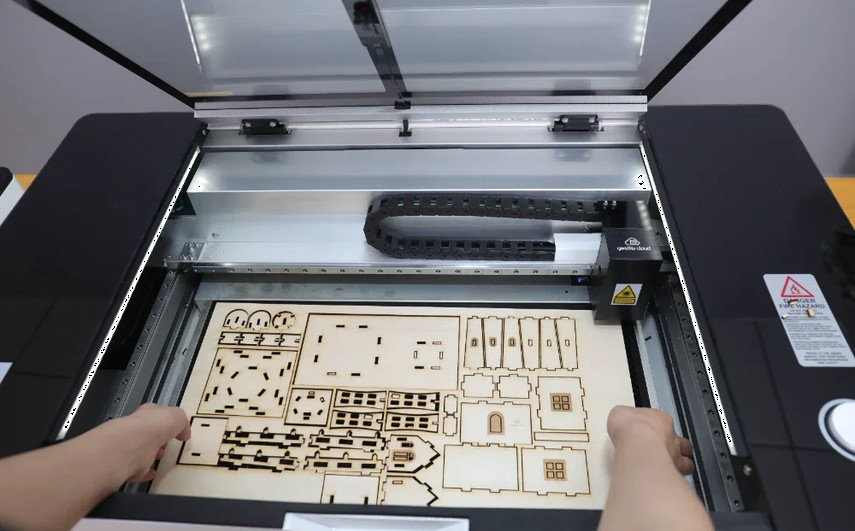
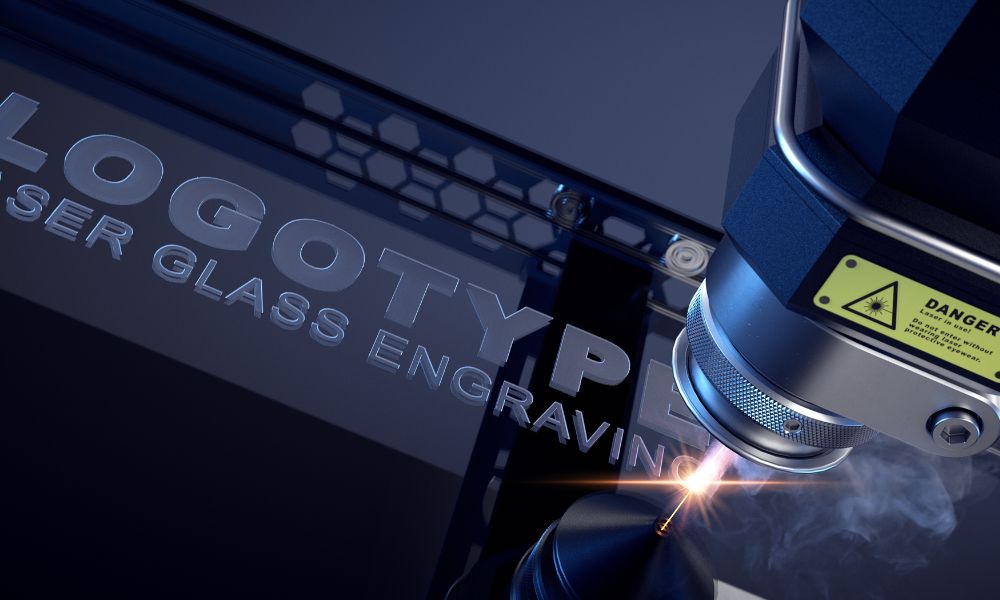
An industrial CO2 laser engraver is a precision manufacturing tool that uses a high-powered carbon dioxide laser beam (typically operating at a wavelength of 10.6 micrometers) to etch, mark, or engrave designs onto various materials. Unlike mechanical engraving or inkjet printing, CO2 laser marking machines deliver permanent, high-contrast marks through a non-contact process that alters the surface of the material at the molecular level.
The core technology relies on a gas-filled tube that produces an infrared laser beam, which is then directed through a series of mirrors and focused through a precision lens onto the workpiece. The concentrated energy—ranging from 10 watts to over 200 watts depending on the application—vaporizes or melts the material surface to create precise, repeatable marks. Modern industrial CO2 laser systems can achieve marking speeds exceeding 7,000 mm/s with positioning accuracy of ±0.01 mm, making them ideal for high-volume production environments.
At MeykoLaser, our industrial CO2 laser engraver systems are engineered specifically for 24/7 manufacturing operations, featuring sealed CO2 laser sources with a rated lifespan of 20,000+ hours and integrated air-cooling or water-cooling systems that maintain consistent beam quality throughout extended production runs.
Key Components of a High-Performance CO2 Laser Marking System
Understanding the critical components helps procurement managers evaluate manufacturer quality. A reliable industrial CO2 laser engraver consists of five essential subsystems:
- CO2 Laser Source: RF-excited sealed CO2 lasers (30W–200W) offer superior beam quality and longer lifespan compared to DC-excited tubes. MeykoLaser sources deliver M² < 1.2 beam quality for consistent mark depth.
- Galvanometer Scanner System: High-speed galvo mirrors (typically from Scanlab or Cambridge Technology) control beam positioning. Look for systems offering 10,000+ mm/s marking speed with repeatability of ±0.005 mm.
- F-Theta Lens: Field lenses with focal lengths ranging from 100 mm to 420 mm determine the marking area and spot size. A quality F-theta lens maintains consistent focal depth across the entire marking field.
- Control Software: Industrial-grade software supporting vector files (DXF, AI, PLT), barcode generation, serial numbering, and integration with MES/ERP systems via Ethernet or RS232.
- Mechanical Enclosure: Class 1 laser safety enclosures with interlock switches, fume extraction ports, and conveyor integration options for inline production.
Top 7 Factors When Evaluating an Industrial CO2 Laser Engraver Manufacturer
Selecting the right industrial CO2 laser engraver manufacturer directly impacts your production uptime, maintenance costs, and return on investment. Procurement teams should systematically evaluate manufacturers against these seven criteria:
1. Laser Source Quality and Lifespan
The laser source is the most critical and expensive component. Premium manufacturers use RF-excited sealed CO2 sources from recognized brands (Coherent, Synrad, or equivalent) that deliver 20,000–30,000 hours of operational life. Budget manufacturers often use DC-excited tubes that degrade after 2,000–5,000 hours, requiring frequent replacement at $800–$2,000 per tube. Always request the laser source brand and model number in your quotation.
2. After-Sales Support and Spare Parts Availability
Industrial equipment requires ongoing maintenance. A trustworthy manufacturer should offer 24/7 technical support, on-site installation and training, and guaranteed spare parts availability for a minimum of 10 years. MeykoLaser maintains a global spare parts inventory with 48-hour dispatch capability and provides comprehensive operator training at your facility.
3. Customization and Integration Capabilities
Standard CO2 laser engravers handle flat surfaces, but many production lines require customized solutions: rotary attachment for cylindrical parts, conveyor belt integration for continuous processing, or multi-axis systems for 3D curved surfaces. Evaluate whether the manufacturer has in-house mechanical and software engineering teams to develop tailored solutions.
4. Compliance and Certification
International buyers should verify CE marking, FDA registration (for North American markets), ISO 9001 certification, and RoHS compliance. These certifications demonstrate that the manufacturer adheres to quality management and safety standards required for industrial equipment.
5. Total Cost of Ownership
Beyond the initial purchase price ($3,000–$50,000 depending on power and configuration), calculate the total cost of ownership including electricity consumption (a 60W CO2 laser typically draws 800–1,200W), consumables (lenses, mirrors, filters), maintenance intervals, and expected service life. A higher-quality system with a $15,000 investment often delivers lower per-unit marking cost than a $5,000 budget system over a 5-year period.
6. Material Compatibility Testing
Reputable manufacturers provide free sample marking on your specific materials before purchase. This allows you to verify mark quality, contrast, and depth on your actual production substrates. Never purchase without material testing.
7. Production Capacity and Lead Time
For urgent deployment, confirm production lead times. Standard CO2 laser engravers typically ship within 15–25 working days, while customized systems may require 30–45 days. Established manufacturers with dedicated production facilities can often expedite orders.
Industrial Applications of CO2 Laser Engravers
Industrial CO2 laser engraver systems serve diverse manufacturing sectors with precision marking requirements. Here are the primary applications where CO2 laser technology delivers superior results:
Packaging Industry
CO2 lasers are the industry standard for marking expiration dates, batch numbers, barcodes, and logos on cardboard, paper, and plastic packaging. Unlike inkjet printers, laser marks are permanent, cannot be smudged or removed, and require no consumable inks or solvents—reducing ongoing operational costs by 60–80% compared to traditional inkjet systems.
Food and Beverage
Direct food contact marking is possible with CO2 lasers on certain substrates. Common applications include date coding on bottle caps, batch marking on flexible packaging, and logo engraving on wooden food containers. The non-contact process eliminates contamination risks associated with mechanical or chemical marking methods.
Electronics and Semiconductor
Precision marking on PCBs, electronic components, and semiconductor packaging requires the fine spot size achievable with CO2 lasers (typically 0.08–0.15 mm spot diameter). Serial numbers, QR codes, and manufacturer logos are permanently marked without thermal damage to sensitive components when properly calibrated.
Pharmaceutical and Medical Devices
Regulatory compliance (FDA 21 CFR Part 11, UDI requirements) demands permanent, traceable marking on pharmaceutical packaging and medical devices. CO2 laser systems with audit trail software and database connectivity meet these stringent requirements while delivering tamper-proof marks.
Automotive and Aerospace
Component traceability is critical in automotive and aerospace manufacturing. CO2 lasers mark VIN numbers, part codes, and safety information on interior trim components, rubber seals, plastic housings, and composite materials used in modern vehicle production.
CO2 vs. Fiber vs. UV Laser: Which Technology Fits Your Application?
Understanding the differences between laser technologies helps procurement managers make informed purchasing decisions. Each laser type excels in specific material applications:
| Parameter | CO2 Laser (10.6μm) | Fiber Laser (1.06μm) | UV Laser (355nm) |
|---|---|---|---|
| Best Materials | Wood, acrylic, glass, leather, paper, plastics, rubber, textiles | Metals (steel, aluminum, titanium), hard plastics | Glass (internal marking), silicon wafers, medical plastics, UV-sensitive materials |
| Power Range | 10W–200W | 10W–200W | 1W–30W |
| Marking Speed | Up to 7,000 mm/s | Up to 12,000 mm/s | Up to 3,000 mm/s |
| Spot Size | 80–150 μm | 20–50 μm | 15–30 μm |
| Price Range | $3,000–$50,000 | $5,000–$80,000 | $15,000–$100,000 |
| Source Lifespan | 20,000–30,000 hrs | 100,000 hrs | 15,000–20,000 hrs |
For non-metallic materials and mixed-material production lines, CO2 laser technology offers the best versatility and cost-effectiveness. If your production involves both metals and non-metals, consider a dual-laser system or separate stations for each technology.
Why MeykoLaser Is Your Trusted Industrial CO2 Laser Engraver Manufacturer
With over 15 years of experience in laser marking technology, MeykoLaser has established itself as a leading industrial CO2 laser engraver manufacturer serving customers across 60+ countries. Here's what sets us apart:
Engineering Excellence
Our R&D team of 35+ engineers continuously develops solutions for emerging manufacturing challenges. We hold 28 patents in laser marking technology and invest 8% of annual revenue in research and development.
Quality Manufacturing
Our 12,000 m² production facility operates under ISO 9001:2015 quality management systems. Every system undergoes 72 hours of continuous testing before shipment, ensuring zero-defect delivery to your production line.
Comprehensive Product Range
MeykoLaser offers CO2 laser marking machines from 10W to 200W, with marking areas from 100×100 mm to 600×600 mm. Our product line includes standard desktop systems, fully enclosed industrial units, rotary marking systems, and inline conveyor integration solutions.
Global Support Network
With regional service centers in Europe, Southeast Asia, and the Americas, MeykoLaser provides local technical support, spare parts inventory, and on-site service. Our multilingual support team communicates in English, Spanish, French, Russian, and Arabic.
Competitive Pricing
Direct factory pricing eliminates intermediary markups. Our CO2 laser engraver systems start at $3,500 for a 30W desktop model and range to $45,000 for a fully automated 200W inline system—offering 20–40% savings compared to European and American manufacturers with equivalent specifications.
Request a Free Sample Test and Quotation
Ready to evaluate MeykoLaser as your industrial CO2 laser engraver manufacturer? We offer free sample marking on your materials, detailed technical consultations, and customized quotations within 24 hours. Our application engineers will analyze your production requirements and recommend the optimal system configuration for your specific needs.
Contact our international sales team today at www.meyko.cn or email sales@meyko.cn to schedule a live video demonstration. Let us show you why manufacturers in over 60 countries trust MeykoLaser for their laser marking requirements.
Frequently Asked Questions
What materials can an industrial CO2 laser engraver mark?
Industrial CO2 laser engravers are optimized for non-metallic materials including wood, acrylic, glass, leather, paper, cardboard, rubber, ceramics, textiles, and most plastics (ABS, PET, PVC, PP). They can also mark anodized aluminum and painted metals. CO2 lasers at 10.6μm wavelength are absorbed efficiently by organic compounds and polymers, making them the preferred choice for packaging, signage, and product identification applications across manufacturing industries.
How much does an industrial CO2 laser engraver cost?
Industrial CO2 laser engraver prices range from $3,000 for a basic 10W desktop model to $50,000+ for a high-power 200W automated inline system. Key price factors include laser power (higher wattage increases cost), marking area size, automation features, and software capabilities. At MeykoLaser, our standard 30W CO2 laser marking machine starts at approximately $3,500, while our 100W enclosed industrial system is priced around $12,000—offering competitive direct-factory pricing with comprehensive warranty coverage.
What is the difference between CO2 and fiber laser engravers?
CO2 lasers operate at 10.6μm wavelength and excel at marking non-metallic materials like wood, glass, plastics, and leather. Fiber lasers operate at 1.06μm wavelength and are superior for marking metals and hard plastics. CO2 lasers typically offer larger marking areas and lower initial investment costs, while fiber lasers provide faster marking speeds on metallic substrates and significantly longer source lifespan (100,000 hours vs. 20,000–30,000 hours). The choice depends entirely on your primary material types and production requirements.
How do I verify the quality of a CO2 laser engraver manufacturer?
To verify manufacturer quality, request: (1) sample marking on your actual materials, (2) laser source brand and specifications, (3) ISO 9001 and CE certifications, (4) customer references in your industry, (5) detailed warranty terms (minimum 2 years recommended), and (6) factory audit reports or video facility tours. A reputable manufacturer like MeykoLaser welcomes these verification steps and provides transparent documentation of their manufacturing processes, quality control procedures, and customer satisfaction records.
What maintenance does an industrial CO2 laser engraver require?
Routine maintenance includes cleaning focusing lenses and mirrors weekly, checking and replacing air filters monthly, inspecting galvo alignment quarterly, and replacing the CO2 laser source after 20,000–30,000 hours of operation. Water-cooled systems require coolant replacement every 6 months. Annual professional calibration ensures maintained marking precision. MeykoLaser provides comprehensive maintenance schedules, on-site service contracts, and remote diagnostic support to minimize unplanned downtime and extend equipment lifespan beyond rated specifications.