Why Partner With a Specialized Industrial CO2 Laser Engraver Manufacturer?
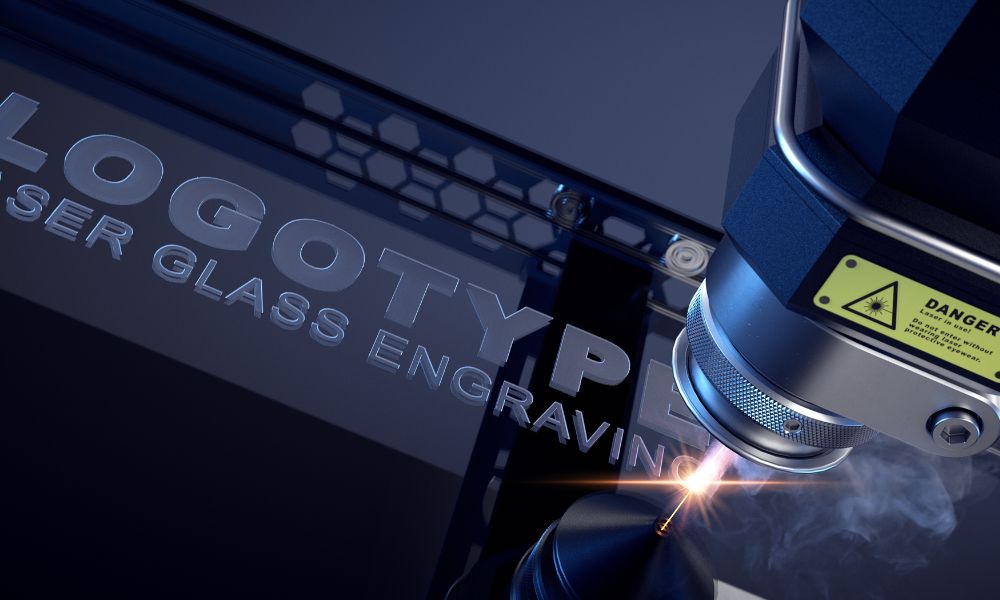
For manufacturing businesses across a wide range of industries, sourcing industrial laser equipment directly from a trusted industrial CO2 laser engraver manufacturer delivers significant cost savings, customization options, and reliable after-sales support. CO2 lasers operate at a 10.6μm wavelength, which is ideal for absorbing into non-metallic and coated materials, making them the go-to choice for engraving, marking, and even light cutting of organic materials, plastics, glass, and coated metals.
Unlike generalist laser equipment suppliers, a specialized manufacturer focuses on continuous product improvement, adheres to global certification standards, and understands the unique production requirements of B2B industrial buyers. For procurement managers, working directly with a manufacturer eliminates middleman markup, reduces lead times for custom orders, and ensures access to genuine replacement parts and technical support long after installation.
At MeykoLaser, we have over 15 years of experience as an industrial laser marking machine manufacturer, exporting our CO2 laser engravers to 32 countries across North America, Europe, Southeast Asia, and Latin America. We design our machines to meet the demanding needs of high-volume industrial production, with a focus on durability, precision, and low operating costs.
Key Specifications to Verify When Sourcing
Power Range and Material Compatibility
The power of a CO2 laser engraver directly impacts its application capabilities and price. A reputable industrial CO2 laser engraver manufacturer will offer a range of power options to match different use cases. Typical power ranges available from leading manufacturers like MeykoLaser span 10W to 150W, with clear use cases for each range:
- 10W–30W: Ideal for high-precision marking of thin materials, including glass, plastic packaging, and small electronic components. Ex-factory price range: $2,200–$3,500.
- 30W–80W: Suitable for medium-duty engraving of wood, leather, acrylic signage, and coated metals. Ex-factory price range: $3,500–$5,800.
- 80W–150W: Designed for deep engraving and cutting of thick non-metals, including thick MDF, rubber stamps, and large format signage. Ex-factory price range: $5,800–$8,200.
Industry data shows that for every 10W increment in power, base prices increase by approximately $200–$300, which aligns with the price ranges above. CO2 lasers are compatible with a wide range of industrial materials, including acrylic (PMMA), wood, MDF, leather, glass, ceramics, coated aluminum, anodized aluminum, ABS, PVC, PET, rubber, paper, and cardboard. Most standard CO2 models are not compatible with bare metals, as the 10.6μm wavelength is not absorbed by uncoated metal surfaces.
Precision and Durability Specifications
For industrial production, consistent precision is critical to meeting quality standards. Top manufacturers provide verifiable precision specs: for example, MeykoLaser’s CO2 laser engravers offer a positioning accuracy of ±0.01mm, repeatability of ±0.005mm, maximum marking speed of 15,000mm/s, and a minimum character size of 0.5mm. These specs ensure that even small serial numbers, batch codes, or fine logos are crisp and permanent.
Durability is another key factor. A high-quality CO2 RF laser tube from a reputable manufacturer will last 15,000–20,000 hours of operation, compared to 8,000–10,000 hours for lower-cost generic tubes. MeykoLaser uses imported RF CO2 tubes in all our industrial models, guaranteeing a 20,000-hour service life, which translates to 4–5 years of 8-hour daily operation. We also use linear guide rails from leading brands like HIWIN to ensure long-term precision and reduce wear over time.
Common Industrial Applications
Packaging and Product Identification
CO2 laser engravers are widely used to mark batch codes, expiration dates, and barcodes on cardboard packaging, paper labels, and plastic containers. A 30W CO2 model can mark up to 120 packages per minute, making it ideal for high-speed production lines. Unlike ink printing, laser marks are permanent and do not smudge, reducing quality control issues.
Automotive and Electronics Components
Many automotive interior trim parts are made of plastic or leather, which are easily marked with CO2 lasers. Electronics manufacturers also use CO2 lasers to mark serial numbers and logos on plastic enclosures, anodized aluminum heat sinks, and ceramic insulators. The permanent, high-contrast marks meet industry durability requirements for resistance to heat, chemicals, and abrasion.
Custom Signage and Consumer Goods
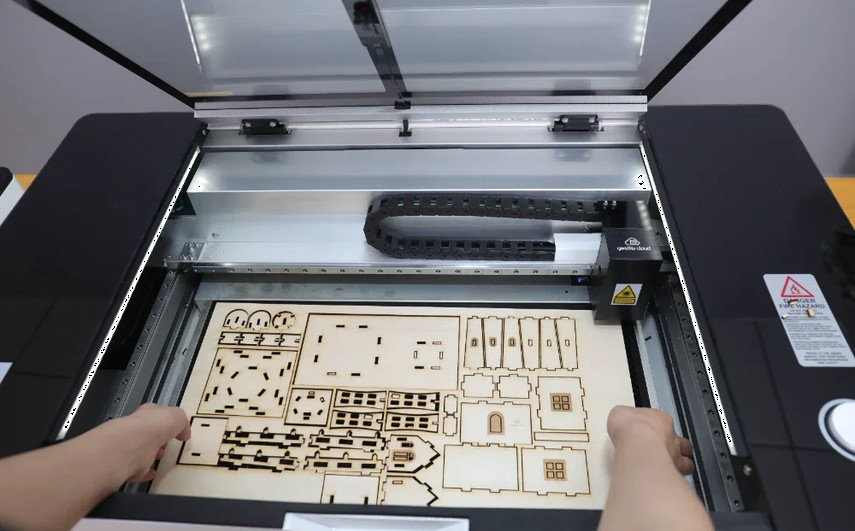
CO2 lasers can both cut and engrave acrylic, wood, and MDF for custom architectural signage, storefront displays, and promotional products. Consumer goods manufacturers also use CO2 engraving to add custom logos and designs to wooden cutting boards, glass bottles, leather goods, and promotional gifts.
How to Select the Right Manufacturer for Your Business
When sourcing from an industrial CO2 laser engraver manufacturer, procurement managers should verify several key factors to avoid costly mistakes:
- Certification: Ensure the manufacturer holds CE, FDA, and ISO 9001 certifications for their products, which guarantees compliance with global safety and quality standards. All MeykoLaser CO2 laser engravers are fully certified for international sale.
- After-sales Support: Look for a manufacturer that offers a clear warranty, remote technical support, and ready access to replacement parts. MeykoLaser provides a 1-year full warranty on all components, 6-month warranty on laser tubes, 24/7 remote technical support, and global shipping of replacement parts within 3 business days.
- MOQ and Lead Times: Most reputable manufacturers accept orders starting from 1 unit for standard models, with lead times of 7–15 business days. For custom bulk orders, lead times typically range from 15–25 business days. MeykoLaser offers MOQ 1 for all standard CO2 laser engraver models.
- Customization: A good manufacturer will work with you to customize the working area, power, and automation features to match your production line requirements. MeykoLaser offers custom configurations for automated feeding, conveyor integration, and large-format marking for bulk production.
If you are looking for a reliable industrial CO2 laser engraver manufacturer that offers high-quality, competitively priced laser marking machines backed by global after-sales support, contact MeykoLaser today. Our team of technical sales engineers can help you select the right model for your application, provide free custom quotes, and even test mark your material for free before you buy. Visit us at http://www.meyko.cn to browse our full product catalog, or reach out to our sales team directly to get started.
Frequently Asked Questions
What is the difference between a CO2 laser engraver and a fiber laser engraver for industrial use?
The core difference lies in wavelength and compatible materials. CO2 lasers operate at a 10.6μm wavelength that is absorbed by non-metallic and coated materials, making them ideal for marking and engraving acrylic, wood, glass, leather, plastics, and coated metals. Fiber lasers operate at a 1.06μm wavelength that is absorbed by bare metals, so they are primarily used for metal marking and engraving. For non-metal applications, CO2 lasers are generally 20-30% lower in upfront cost than equivalent fiber lasers, and offer lower operating costs per part. As an experienced industrial CO2 laser engraver manufacturer, MeykoLaser recommends CO2 lasers for all non-metal-focused production applications to help you reduce capital and operational expenses.
How much does an industrial CO2 laser engraver cost when buying direct from a manufacturer?
The cost of an industrial CO2 laser engraver depends on power output, working area size, and additional automation features. When buying direct from an industrial CO2 laser engraver manufacturer like MeykoLaser, you eliminate middleman markup, which saves you 15-25% compared to buying through a local distributor. For standard models, 10W-30W units range from $2,200 to $3,500 ex-factory, 30W-80W units range from $3,500 to $5,800 ex-factory, and 80W-150W units range from $5,800 to $8,200 ex-factory. Custom configurations with automated loading, conveyor integration, or large-format working areas add 20-40% to the base price. We also offer flexible shipping and payment terms for international bulk orders.
What maintenance is required for an industrial CO2 laser engraver?
Industrial CO2 laser engravers require minimal routine maintenance, which keeps downtime low for production lines. Basic weekly maintenance includes cleaning the focusing lens with a lint-free cloth and lens cleaner to remove dust and debris from engraving. Every 3-6 months, you should check beam alignment to ensure consistent marking quality. The highest maintenance cost is replacing the laser tube once it reaches end of life. When you buy from a reputable industrial CO2 laser engraver manufacturer like MeykoLaser, our high-quality imported RF tubes last 20,000 hours, which translates to 4-5 years of 8-hour daily operation. We also provide detailed maintenance guides and stock genuine replacement parts for all our models, so you can get what you need quickly to minimize production interruptions.
Can CO2 laser engravers mark metal materials?
Standard CO2 laser engravers cannot effectively mark bare metals because the 10.6μm wavelength of CO2 lasers is not absorbed by most uncoated bare metal surfaces. However, CO2 lasers can produce high-contrast, permanent marks on coated, anodized, or painted metals, which is a very common industrial application. For example, many electronics manufacturers use CO2 lasers to mark serial numbers on anodized aluminum heat sinks, and automotive manufacturers use them to mark logos on coated steel tool handles. As an experienced industrial CO2 laser engraver manufacturer, MeykoLaser can optimize laser parameters to ensure marks meet your durability requirements for resistance to abrasion, heat, and chemicals. If you need to mark bare metals, we also offer a full line of fiber laser marking machines optimized for that use case.