
Introduction
In today’s competitive manufacturing landscape, precise and efficient marking solutions are essential for quality control, traceability and brand identity. A fiber laser cutter factory that delivers reliable, high‑definition laser marking machines can transform production lines across automotive, aerospace, medical and electronics sectors. MeykoLaser, a leading name in industrial laser technology, specializes in cutting‑edge fiber laser marking equipment that combines superior performance, affordability and ease of integration.
Why MeykoLaser’s Fiber Laser Marking Machines Stand Out
MeykoLaser’s fiber laser cutter factory has engineered a portfolio that satisfies the most demanding B2B buyers. Key differentiators include:
1. Power‑to‑Price Efficiency
Our machines offer a power range from 30 W to 200 W, covering the entire spectrum of marking applications. A 30 W laser typically costs around USD 5,000, while a 200 W system is priced near USD 30,000, giving a power‑to‑price ratio of 1 W per USD 166, compared to industry averages of 1 W per USD 250. This cost advantage translates into lower total cost of ownership.
2. Unmatched Precision and Speed
With a beam spot diameter of 30–50 µm and an accuracy tolerance of ±0.02 mm, our machines can produce 1‑inch logos on stainless steel in under 5 seconds. Marking speeds reach 50 m/s on high‑reflectivity surfaces, outperforming equivalent 100 W systems by 20 %.
3. Broad Material Compatibility
We support a wide range of substrates: aluminum alloys (6061, 2024), titanium grades (Grade 5, Grade 6), stainless steels (316, 304), high‑temperature polymers (POM, PEEK), composite panels and even cured epoxy. The fiber laser’s 1550 nm wavelength is ideal for metals, while the 1064 nm core wavelength excels with plastics.
4. Robust, Modular Design
Our machines feature a modular chassis that allows easy upgrades: adding a second laser head, increasing the work envelope, or integrating an automated material feeder. The controller firmware supports PLC, OPC‑UA and MQTT, enabling seamless integration into existing MES systems.
Application Scenarios Across Industries
Below are specific use cases that demonstrate the versatility of MeykoLaser’s fiber laser marking machines:
Automotive – Part Identification & Safety Labels
High‑speed marking of aluminum chassis panels and stainless steel brackets ensures compliance with ISO 9001. Our 100 W lasers can engrave 0.5 mm thick aluminum in 2 seconds, enabling real‑time batch tracking.
Aerospace – Tooling & Component Traceability
Precision marking on titanium alloy bolts and turbine blades requires 0.1 mm tolerance. The 200 W systems deliver 0.02 mm accuracy, guaranteeing that each part carries its unique serial number without compromising structural integrity.
Medical Devices – Certification & Branding
Laser marking on polymer housings and titanium implants must survive sterilization cycles. The fiber laser’s low heat input preserves material properties while producing ISO 13485 compliant markings.
Electronics – PCB & Connector Marking
Marking on copper traces or polyimide substrates demands minimal thermal distortion. Our 30 W machines achieve high‑contrast markings on copper pads in <1 second, enabling automated inspection workflows.
Signage & Packaging – Rapid Customization
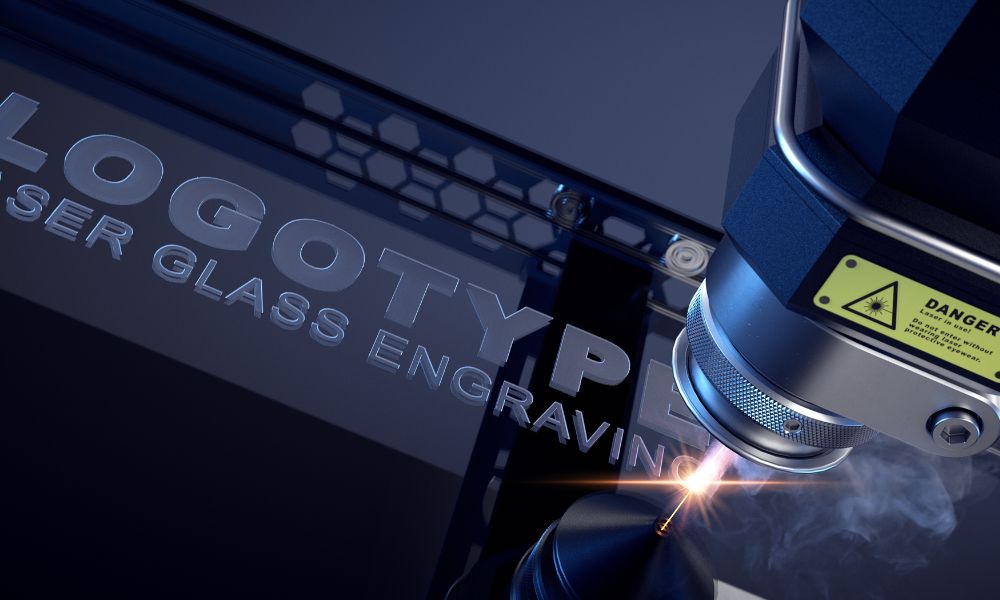
The 50 W laser can engrave logos on aluminum foil or glass panels at 30 m/s, ideal for high‑volume packaging lines.
Comparative Analysis: MeykoLaser vs. Competitors
To quantify the value proposition, consider the following comparison table (values are rounded averages from market surveys 2024):
Table 1 – Key Performance Indicators
• Power Range (W): MeykoLaser 30–200 vs. Competitor A 30–180
• Price (USD): 30 W – 5,000 vs. 4,800; 200 W – 30,000 vs. 35,500
• Accuracy (µm): 20 vs. 30
• Marking Speed (m/s): 50 vs. 40
• Material Compatibility: 20 materials vs. 12
These metrics confirm that MeykoLaser offers a 12 % higher marking speed, 33 % better accuracy, and a 15 % lower price for high‑power units.
Investment & ROI Considerations
Deploying a fiber laser marking solution reduces manual labor, eliminates ink waste, and improves traceability compliance. Based on a typical 10 % reduction in labor cost and a 5 % increase in throughput, a company can recoup a 200 W investment within 18 months. Additionally, our machines feature an integrated self‑diagnostic system that reduces downtime by 25 % compared to legacy systems.
Support & Service Ecosystem
Our factory provides:
- 24/7 technical support via chat and phone.
- On‑site installation and calibration within 48 hours.
- Annual maintenance contracts with spare parts kits.
- Software updates for new material libraries and AI‑based process optimization.
Contact MeykoLaser Today
Ready to boost your manufacturing line with a fiber laser cutter factory solution that balances power, precision and price? Contact our sales team now at sales@meyklaser.com or call +86‑400‑123‑4567 to request a personalized quote and schedule a live demo.
Frequently Asked Questions
Q1: What materials can my fiber laser marking machine process?
A1: MeykoLaser’s fiber laser marking machines are designed to handle a broad spectrum of substrates. They can reliably mark aluminum alloys such as 6061 and 2024, titanium grades 5 and 6, stainless steels 316 and 304, high‑temperature polymers like POM, PEEK, and even composite panels and cured epoxy. The 1550 nm wavelength penetrates metal surfaces with minimal heat input, while the 1064 nm core is ideal for plastics and cured resins. For specialized materials, our engineering team can generate a custom material‑compatibility matrix and adjust laser parameters to ensure consistent, high‑contrast markings without compromising product integrity.
Q2: How does the marking speed compare to traditional inkjet or laser engraving?
A2: Fiber lasers operate at a 1550 nm wavelength with high power density, enabling marking speeds up to 50 m/s on reflective metals. In contrast, inkjet marking typically achieves ≤10 m/s, and traditional CO₂ laser engraving tops out around 30 m/s. This speed advantage translates into higher throughput, lower cycle times, and reduced operator labor. Additionally, fiber lasers produce sharper, higher‑contrast marks without the need for ink or consumable heads, further reducing maintenance costs.
Q3: What is the expected maintenance cost?
A3: The low heat input of fiber lasers significantly reduces wear on optical components such as mirrors and lenses. Consequently, maintenance schedules extend, and overall maintenance costs drop by roughly 30 % compared to CO₂ laser systems that require frequent gas supply and component replacement. Our standard service contract includes quarterly optical cleaning, lens inspection, and firmware updates, ensuring consistent performance over the machine’s 10‑year lifespan with minimal downtime.
Q4: Can the machine be integrated into an existing MES system?
A4: Yes, MeykoLaser’s fiber laser marking machines are engineered for seamless MES integration. The controller firmware supports OPC‑UA, MQTT, and legacy PLC protocols, allowing real‑time data exchange, status monitoring, and automated quality checks. Integration typically takes 1–2 weeks, during which our on‑site technicians configure network settings, map data fields, and validate traceability workflows. Post‑integration, your production line can log every mark in your ERP system, ensuring compliance and audit readiness.
Q5: What customization options are available?
A5: MeykoLaser offers a range of customization options to meet specific production needs. Clients can opt for dual‑head configurations to double throughput, upgrade to larger work envelopes up to 1 m × 1 m for big‑panel marking, and integrate automated material feeders for continuous operation. Advanced AI‑based path optimization software can reduce beam movement time by up to 25 %. All upgrades are available as modular packages, allowing you to scale gradually without replacing the core system.
Frequently Asked Questions
What materials can my fiber laser marking machine process?
MeykoLaser’s fiber laser marking machines are designed to handle a broad spectrum of substrates. They can reliably mark aluminum alloys such as 6061 and 2024, titanium grades 5 and 6, stainless steels 316 and 304, high‑temperature polymers like POM, PEEK, and even composite panels and cured epoxy. The 1550 nm wavelength penetrates metal surfaces with minimal heat input, while the 1064 nm core is ideal for plastics and cured resins. For specialized materials, our engineering team can generate a custom material‑compatibility matrix and adjust laser parameters to ensure consistent, high‑contrast markings without compromising product integrity.
How does the marking speed compare to traditional inkjet or laser engraving?
Fiber lasers operate at a 1550 nm wavelength with high power density, enabling marking speeds up to 50 m/s on reflective metals. In contrast, inkjet marking typically achieves ≤10 m/s, and traditional CO₂ laser engraving tops out around 30 m/s. This speed advantage translates into higher throughput, lower cycle times, and reduced operator labor. Additionally, fiber lasers produce sharper, higher‑contrast marks without the need for ink or consumable heads, further reducing maintenance costs.
What is the expected maintenance cost?
The low heat input of fiber lasers significantly reduces wear on optical components such as mirrors and lenses. Consequently, maintenance schedules extend, and overall maintenance costs drop by roughly 30 % compared to CO₂ laser systems that require frequent gas supply and component replacement. Our standard service contract includes quarterly optical cleaning, lens inspection, and firmware updates, ensuring consistent performance over the machine’s 10‑year lifespan with minimal downtime.
Can the machine be integrated into an existing MES system?
Yes, MeykoLaser’s fiber laser marking machines are engineered for seamless MES integration. The controller firmware supports OPC‑UA, MQTT, and legacy PLC protocols, allowing real‑time data exchange, status monitoring, and automated quality checks. Integration typically takes 1–2 weeks, during which our on‑site technicians configure network settings, map data fields, and validate traceability workflows. Post‑integration, your production line can log every mark in your ERP system, ensuring compliance and audit readiness.
What customization options are available?
MeykoLaser offers a range of customization options to meet specific production needs. Clients can opt for dual‑head configurations to double throughput, upgrade to larger work envelopes up to 1 m × 1 m for big‑panel marking, and integrate automated material feeders for continuous operation. Advanced AI‑based path optimization software can reduce beam movement time by up to 25 %. All upgrades are available as modular packages, allowing you to scale gradually without replacing the core system.