
Why the Source Matters: Direct from the Fiber Laser Cutter Factory
In the competitive landscape of industrial manufacturing, the decision to invest in laser cutting technology is not merely about purchasing a machine; it is about securing a long-term production partner. For procurement managers and B2B buyers, sourcing directly from a reputable fiber laser cutter factory offers distinct advantages over third-party distributors. The primary benefit is transparency in supply chain logistics, allowing for precise control over component quality, specifically the laser source and optical lenses. At MeykoLaser, we understand that the reliability of your production line hinges on the integrity of the equipment. By eliminating intermediaries, buyers gain access to factory-direct pricing, which typically results in a 15-20% cost reduction compared to retail channels. Furthermore, direct communication with the engineering team ensures that technical specifications are met exactly, reducing the risk of mismatched expectations regarding power output, cutting speed, or material compatibility.
Technical Specifications: Defining Precision in Industrial Laser Cutting
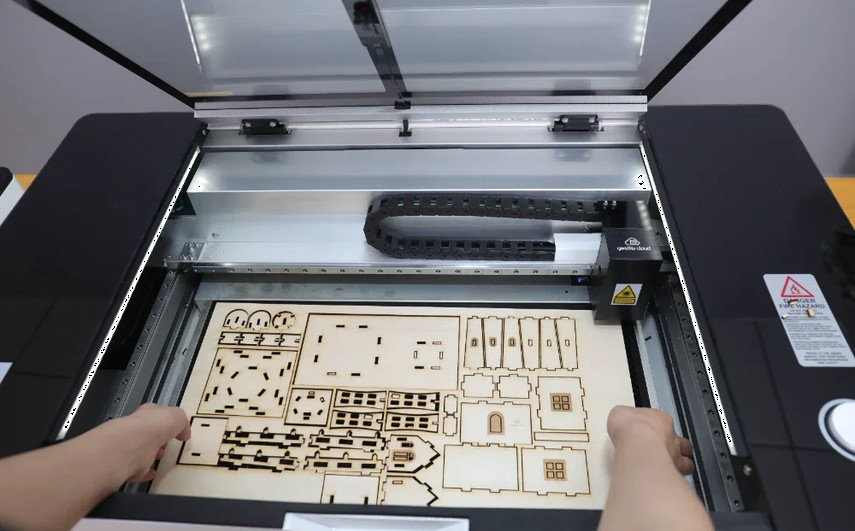
When evaluating a fiber laser cutter factory, the first step is to analyze the technical architecture of the machines offered. Modern fiber laser cutting technology has evolved significantly, moving beyond simple sheet metal processing to high-precision marking and intricate micro-machining. MeykoLaser specializes in high-performance systems that deliver exceptional beam quality, measured by the M² factor. A lower M² value indicates a tighter focal spot, which translates to finer kerf widths and superior edge quality. For instance, our industrial-grade fiber lasers typically operate within a power range of 500W to 6000W, catering to diverse thickness requirements. For mild steel, a 1000W laser can cut up to 12mm, while a 3000W unit can handle up to 25mm with clean edges. In contrast, for non-ferrous metals like aluminum and brass, the reflectivity challenges require specialized wavelengths and higher peak powers, which MeykoLaser optimizes through advanced pulse modulation technologies.
Power Ranges and Material Compatibility Data
Understanding the correlation between laser power and material thickness is critical for ROI calculation. The following data points illustrate the efficiency of MeykoLaser’s equipment across various industrial materials:
- Mild Steel: 1000W laser cuts up to 10mm at 4 m/min; 3000W cuts up to 20mm at 2.5 m/min.
- Stainless Steel: 500W cuts up to 4mm at 3 m/min; 2000W cuts up to 12mm at 1.5 m/min.
- Aluminum: 1000W cuts up to 6mm at 2 m/min; 4000W cuts up to 15mm at 1 m/min.
- Copper/Brass: Requires high-intensity pulsed modes; 1000W-2000W recommended for sheets under 3mm.
These figures are not static; they depend on the assist gas used (oxygen for steel, nitrogen for stainless/aluminum) and the nozzle configuration. MeykoLaser provides comprehensive testing services to verify these parameters against your specific material grades, ensuring that the quoted cutting speeds are achievable in real-world production environments.
Application Scenarios: From Heavy Industry to Electronics
The versatility of fiber laser technology allows it to serve multiple sectors, making it a high-value asset for diversified manufacturing facilities. While traditional applications focus on automotive parts and structural steel fabrication, the demand for fiber laser cutter factory solutions has expanded into electronics and medical device manufacturing. In the electronics sector, low-power fiber lasers (under 100W) are used for precise marking of serial numbers, QR codes, and logos on circuit boards and small components. This application requires extreme precision, often achieving tolerances of ±0.01mm, which is crucial for traceability and compliance in industries like aerospace and healthcare.
Efficiency in Mass Production Environments
For high-volume production lines, cycle time is the most critical metric. MeykoLaser’s automation-ready platforms integrate seamlessly with robotic loading systems and conveyor belts. The fast cutting speeds of fiber lasers, which are up to five times faster than CO2 lasers for thin materials, significantly reduce per-unit processing time. For example, cutting a complex pattern in 1mm stainless steel can be completed in seconds rather than minutes. This speed advantage directly impacts throughput, allowing factories to meet tight delivery schedules without compromising on quality. Additionally, the maintenance requirements of fiber lasers are minimal compared to gas lasers, as there are no gas mixtures to replenish and no mirrors to align frequently. This reduces downtime and labor costs, contributing to a lower total cost of ownership (TCO) over the machine’s lifespan.
Comparative Analysis: Fiber vs. Traditional CO2 Technology
Procurement managers must justify capital expenditures with clear data. When comparing fiber lasers to traditional CO2 lasers, the differences in energy efficiency and operational costs are substantial. Fiber lasers convert up to 40% of electrical input into laser light, whereas CO2 lasers typically convert only 10-15%. This higher wall-plug efficiency means significantly lower electricity bills, especially for machines running 24/7. Furthermore, the beam delivery system in fiber lasers uses flexible cables, eliminating the need for complex mirror arrays that require regular cleaning and realignment. This structural simplicity results in higher reliability and longer mean time between failures (MTBF). For buyers transitioning from CO2 to fiber technology, the payback period is often calculated to be between 12 to 18 months, driven by energy savings and increased production capacity.
Cost Implications for B2B Buyers
While the initial investment in a fiber laser system is higher than a CO2 equivalent, the long-term savings are undeniable. Operating costs include electricity, assist gases, and maintenance. A 2000W fiber laser consumes approximately 15-20 kW/hour, while a comparable CO2 laser may consume 30-40 kW/hour. Over a year of operation (assuming 8 hours/day, 25 days/month), the energy savings can amount to tens of thousands of dollars. Additionally, the lifespan of a fiber laser source is typically 100,000 hours, compared to 10,000-20,000 hours for CO2 tubes. This longevity reduces the frequency of major component replacements, stabilizing long-term operational budgets.
Choosing the Right Partner: MeykoLaser’s Commitment to Quality
Selecting a fiber laser cutter factory is a strategic decision that impacts your company’s competitive edge. MeykoLaser distinguishes itself through rigorous quality control processes, using components from verified global suppliers such as IPG, Raycus, and Precitec. Our engineering team provides end-to-end support, from initial consultation and material testing to installation, training, and after-sales service. We understand that international buyers face challenges regarding shipping, customs, and technical support across time zones. Therefore, MeykoLaser offers comprehensive logistics support and remote diagnostic capabilities to ensure minimal disruption to your operations. Our commitment to transparency means that every machine is shipped with detailed documentation, including test reports, maintenance schedules, and warranty terms, providing peace of mind for procurement teams.
Conclusion
The transition to fiber laser technology is no longer optional for manufacturers seeking to remain competitive; it is essential. By sourcing from a dedicated fiber laser cutter factory like MeykoLaser, B2B buyers gain access to superior technology, competitive pricing, and reliable support. Whether you are processing thick structural steel or performing delicate marking on electronic components, MeykoLaser’s solutions are engineered to deliver precision, efficiency, and long-term value. We invite you to explore our product range and discuss your specific manufacturing needs with our expert team.
Call to Action
Ready to upgrade your production capabilities? Contact MeykoLaser today for a free consultation and custom quotation. Our team is ready to provide detailed technical specifications, material testing videos, and competitive pricing tailored to your business requirements. Visit www.meyko.cn or email our sales team to start your project.
Frequently Asked Questions
What is the typical lifespan of a fiber laser source compared to CO2 lasers?
The typical lifespan of a high-quality fiber laser source, such as those used by MeykoLaser, is approximately 100,000 hours. This is significantly longer than traditional CO2 laser tubes, which generally last between 10,000 and 20,000 hours. This extended longevity reduces the frequency of costly replacements and maintenance downtime, offering a much better total cost of ownership for industrial applications. Additionally, fiber lasers require less frequent alignment of optical components, further enhancing their reliability over time.
How does laser power affect the maximum cutting thickness for stainless steel?
Laser power directly correlates with the maximum thickness of stainless steel that can be cut cleanly. Generally, a 1000W fiber laser can cut stainless steel up to 6mm thick, while a 2000W unit can handle up to 12mm. A 3000W laser can effectively cut up to 20mm, and higher power systems (4000W-6000W) are capable of cutting up to 25-30mm, though the edge quality may require secondary finishing. MeykoLaser provides precise cutting charts based on assist gas pressure and nozzle type to ensure optimal performance for your specific material grades.
Can MeykoLaser machines be integrated with robotic automation systems?
Yes, MeykoLaser’s industrial laser cutting machines are designed with automation in mind. They feature standard interfaces (such as Ethernet, RS232, or digital I/O) that allow seamless integration with robotic loading and unloading systems, as well as conveyor belts and central management software. This integration is crucial for high-volume production environments, enabling continuous operation and reducing labor costs. Our engineering team can provide technical specifications and support to ensure smooth integration with your existing factory infrastructure.
What is the energy efficiency difference between fiber and CO2 lasers?
Fiber lasers are significantly more energy-efficient than CO2 lasers. A fiber laser typically converts 40% or more of electrical input into laser light, whereas a CO2 laser converts only about 10-15%. This means that for the same output power, a fiber laser consumes roughly 50-60% less electricity. For a factory running multiple machines 24/7, this difference translates to substantial savings on electricity bills, often paying for the efficiency gap within the first year of operation. MeykoLaser emphasizes this efficiency benefit in our ROI calculations for prospective clients.
Does MeykoLaser offer after-sales support for international buyers?
Absolutely. MeykoLaser provides comprehensive after-sales support for international B2B buyers. This includes remote diagnostic services, video-conferenced technical training, and shipping of spare parts. We understand the challenges of international maintenance, so we maintain a global network of service partners and keep critical spare parts in stock to minimize downtime. Our support team is available to assist with troubleshooting, software updates, and operational best practices, ensuring that your investment continues to perform optimally throughout its lifecycle.