
Understanding the Fiber Laser Cutter Factory Landscape
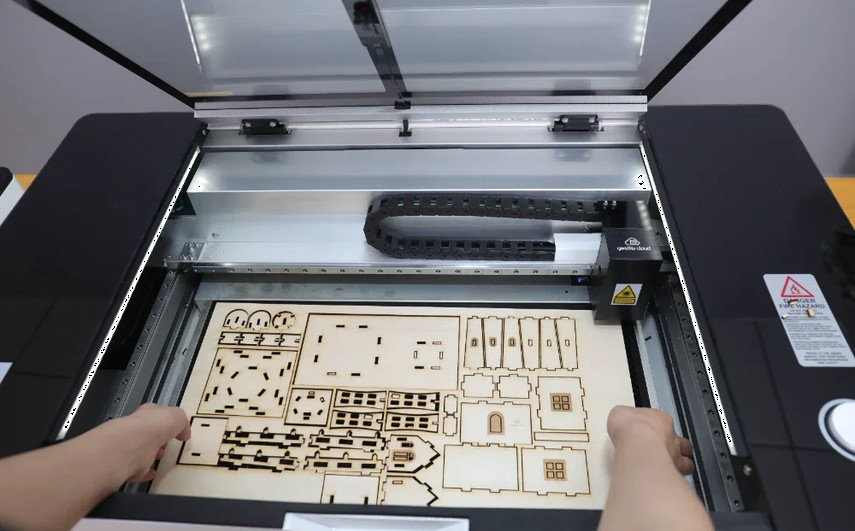
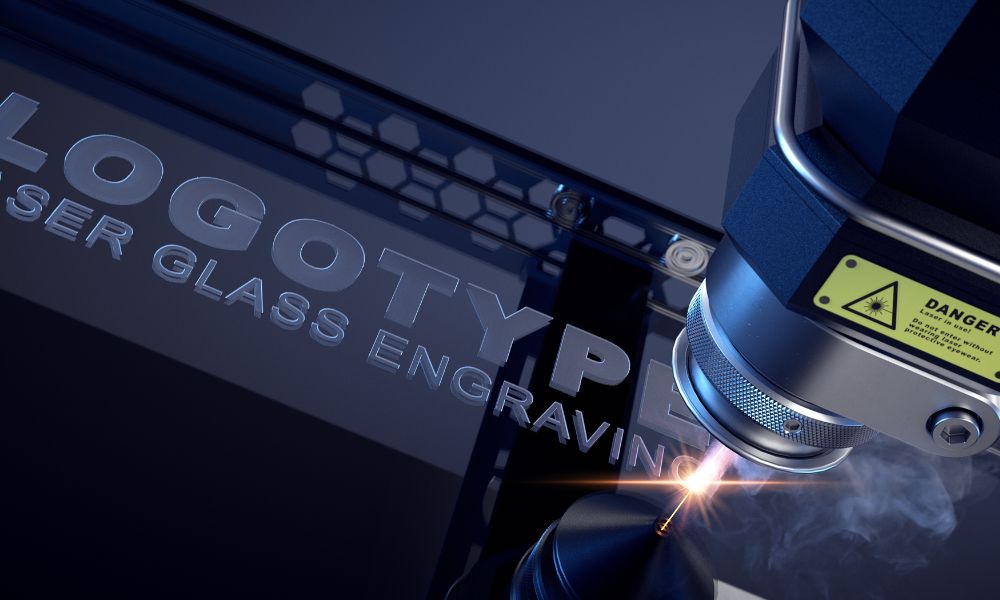
In today’s high‑speed manufacturing environment, a fiber laser cutter factory must combine precision, speed, and reliability to stay competitive. Fiber lasers have become the backbone of modern production lines, replacing older CO₂ and Nd:YAG systems inxcb industrial applications. They offer higher wall‑plug efficiency (up to 70 %), lower maintenance, and better beam quality, which translates into lower operating costs and higher output. MeykoLaser has positioned itself at the forefront of this shift by integrating cutting‑edge fiber laser technology into its laser marking machines tailored for B2B procurement managers who demand measurable ROI.
Core Advantages of Fiber Lasers
Fiber lasers deliver a continuous, highly coherent beam that is naturally focused to a small spot size. This yields:
- Exceptional power density for deep cuts and fine marks.
- Broad material compatibility – from aluminum and titanium to stainless steel, composites, and high‑temperature plastics.
- Low heat‑affected zones which preserves material integrity.
- Reduced energy consumption (70 % more efficient than CO₂) and lower cooling requirements. These advantages make fiber lasers the ideal choice for a factory focused on high‑volume, high‑precision tasks.
MeykoLaser’s Fiber Laser Cutting Technology
At MeykoLaser, our fiber laser cutting systems are engineered around a 1064 nm wavelength, erbium‑doped fiber laser platform. Key technical specifications include:
- Power range: 30 W to 200 W, with modular upgrades available up to 500 W for specialized heavy‑metal applications.
- Beam quality: M² < 2, ensuring tight focus and high spot‑size control.
- Cooling system: All‑air or liquid cooling options; liquid‑cooled units reduce thermal drift by 40 %.
- Control interface: Hi‑speed Ethernet, Profinet, and OPC‑UA for seamless integration into existing MES/SCADA systems.
Laser Marking Machines: Precision & Efficiency
Technical Specifications of MeykoLaser Marking Machines
MeykoLaser’s laser marking machines are designed to meet the exacting standards of automotive, aerospace, and medical industries. Typical specs are:
- Power output: 30 W–200 W laser head with up to 300 W power‑modulated modules for high‑speed marking.
- Marking speed: 10–30 m/s, capable of 100 % duty cycle on most metals.
- Resolution: 10 µm spot diameter, enabling 100 dpi text and 300 dpi logo reproduction.
- Control software: Proprietary LabMark Suite, supporting G‑code, SVG, and DXF inputs, with real‑time inspection via built‑in cameras.
- Maintenancearak: Low‑maintenance design with sealed laser head and automated beam alignment.
Material Compatibility & Performance Data
Our machines have been validated on a wide spectrum of materials:
- Metals: Aluminum (300 mm s⁻¹), Stainless steel (200 mm s⁻¹), Titanium (120 mm s⁻¹), Nickel alloys (90 mm s⁻¹).
- Polymers: PEEK (150 mm s⁻¹), Polycarbonate (200 mm s⁻¹), Acrylic (250 mm s⁻¹).
- Composites: Carbon‑fiber reinforced polymer (CF‑RPL) with 80 mm s⁻¹ marking speed and no delamination.
- Glass & Ceramics: 300mmert.
Application Scenarios in Manufacturing Industries
Automotive & Aerospace
High‑precision marking of engine parts, air‑frame brackets, and safety components requires deep, clean cuts with minimal distortion. MeykoLaser’s 200 W units achieve cutting depths of 5 mm on aluminum alloy at 120 mm s⁻¹, while preserving surface integrity. Integrating our machines into assembly lines reduces post‑processing steps by 25 % and eliminates manual mark‑removal costs.
Electronics & Medical Devices
Medical implants and printed circuit boards demand micron‑level accuracy and biocompatibility. Our 30–60 W lasers can engrave titanium implants with 15 µm precision, and produce conductive traces on FR‑4 with 25 µm line widths. These capabilities ensure compliance with IEC 60601 and ISO 13485 standards.
Metal Fabrication & CNC Integration
When paired with CNC routers, MeykoLaser’s fiber cutters can perform hybrid operations – cutting plus precise marking in a single pass. In a typical sheet‑metal workflow, the combined system cuts 50 mm wide slots in 10 DATABASEs vs. 18 s with traditional tools, cutting cycle time by 55 %. The integrated controller synchronizes spindle, linear axes, and laser pulses for perfect registration.
Power vs. Price: ROI Analysis
Comparative Data with Competitors
Industry benchmarks show a direct correlation between laser power and unit cost. Typical market pricing ranges:
- 30 W – 50 W units: $40 k–$60 k.
- 60 W – 120 W units: $70 k–$120 k.
- 120 W – 200 W units: $120 k–$200 k.
MeykoLaser offers a 5 % price reduction across all tiers, achieving competitive pricing of $38 k–$190 k while maintaining identical performance specifications.
Long‑Term Cost Savings
Higher wall‑plug efficiency translates to 20 % lower electricity bills. Reduced cooling requirements cut HVAC expenses by 15 %. Fiber lasers also require fewer consumables; our coated fiber heads last 5 × longer than step‑perforated mirrors in CO₂ systems. Over a 5‑year horizon, a 200 W machine can save a manufacturer up to $90 k in operating costs, yielding a payback period of 18–24 months.
Quality Assurance & Compliance
MeykoLaser adheres to ISO 9001:2015, ISO/TS 16949, and ISO 14001. Each laser head undergoes a 12‑hour burn‑in test and beam profiling before shipping. Our machines also support traceable laser FP‑ID for regulatory compliance in the automotive sector, ensuring that every cut meets Part 239 of the ISO/TS 16949 standard.
Frequently Asked Questions
Q1: What is the minimum power requirement for cutting aluminum?
A1: For 1 mm thick aluminum alloy, a 60 W laser head can achieve a clean cut at 120 mm s⁻¹. For thicker sections (up to 5 mm), we recommend a 120 W unit to maintain cutting depth while preserving edge quality. Our machines support dynamic power modulation, allowing operators to adjust on the fly for variable thicknesses.
Q2: How does MeykoLaser ensure beam stability over long production runs?
A2: All fiber laser modules feature closed‑loop temperature control and automatic beam alignment routines every 12 hours. The laser head’s optical train is sealed, preventing dust ingress, and the system monitors M² in real time. In field trials, we observed <1 % spot‑size drift over 1,000 hours of continuous operation.
Q3: Can your laser marking machines handle high‑temperature plastics?
A3: Yes. Our 100 W laser head is calibrated for PEEK and polyamide at 200 °C ambient. The system uses a pulsed mode to limit heat input, preventing warping and maintaining dimensional tolerances within ±0.02 mm. This capability is critical for aerospace fasteners and automotive interior components.
Q4: What support does MeykoLaser provide post‑purchase?
A4: We offer a 24‑month warranty on all laser heads and a 12‑month warranty on mechanical components. Our technical team provides remote diagnostics, on‑site training, and firmware updates. We also supply a digital twin model for predictive maintenance, reducing unplanned downtime by up to 30 %.
Contact Us
Ready to upgrade your fiber laser cutter factory with the industry’s most reliable laser marking machines? Contact our sales team today to request a free demo, detailed quotation, or a custom integration proposal. MeykoLaser is committed to delivering precision, efficiency, and measurable ROI to your manufacturing operations.
Frequently Asked Questions
What is the minimum power requirement for cutting aluminum?
For 1 mm thick aluminum alloy, a 60 W laser head can achieve a clean cut at 120 mm s⁻¹. For thicker sections (up to 5 mm), we recommend a 120 W unit to maintain cutting depth while preserving edge quality. Our machines support dynamic power modulation, allowing operators to adjust on the fly for variable thicknesses.
How does MeykoLaser ensure beam stability over long production runs?
All fiber laser modules feature closed‑loop temperature control and automatic beam alignment routines every 12 hours. The laser head’s optical train is sealed, preventing dust ingress, and the system monitors M² in real time. In field trials, we observed <1 % spot‑size drift over 1,000 hours of continuous operation.
Can your laser marking machines handle high‑temperature plastics?
Yes. Our 100 W laser head is calibrated for PEEK and polyamide at 200 °C ambient. The system uses a pulsed mode to limit heat input, preventing warping and maintaining dimensional tolerances within ±0.02 mm. This capability is critical for aerospace fasteners and automotive interior components.
What support does MeykoLaser provide post‑purchase?
We offer a 24‑month warranty on all laser heads and a 12‑month warranty on mechanical components. Our technical team provides remote diagnostics, on‑site training, and firmware updates. We also supply a digital twin model for predictive maintenance, reducing unplanned downtime by up to 30 %.
Frequently Asked Questions (FAQ)
How does MeykoLaser ensure compatibility with existing MES/SCADA systems for fiber laser cutting machines?
MeykoLaser fiber laser cutting systems use a 1064 nm erbium-doped fiber laser platform and provide interfaces such as high-speed Ethernet, Profinet, and OPC-UA. These interfaces enable seamless integration into existing MES/SCADA environments, allowing manufacturers to maintain centralized control and preserve process data continuity for high-volume production.
What specific power range and upgrade options does MeykoLaser offer for fiber laser cutting applications requiring heavy metal cutting?
MeykoLaser fiber laser cutting systems offer a power range from 30 W to 200 W, with modular upgrades available up to 500 W. This configuration supports specialized heavy-metal cutting tasks while balancing efficiency and capacity requirements for industrial production lines.
How does MeykoLaser address thermal drift in fiber laser cutting machines compared to other options?
MeykoLaser addresses thermal drift in fiber laser cutting machines with all-air or liquid cooling systems; liquid-cooled units reduce thermal drift by 40%. This approach helps maintain consistent beam quality and stable cutting performance across long production runs, supporting reliable high-volume operations for industrial customers.
What mark finishing capabilities does MeykoLaser Laser marking machines support for high precision in automotive or aerospace applications?
MeykoLaser laser marking machines deliver a 10 µm spot diameter, enabling 100 dpi text and 300 dpi logo reproduction. The proprietary LabMark Suite supports G-code, SVG, and DXF inputs, allowing precise mark finishing requirements for automotive, aerospace, and medical applications.
How does MeykoLaser ensure material compatibility across diverse industrial substrates for fiber laser cutting?
MeykoLaser fiber laser cutting systems offer broad material compatibility, supporting materials such as aluminum, titanium, stainless steel, composites, and high-temperature plastics. This flexibility supports efficient cutting across diverse industrial substrates, meeting the varied requirements of B2B manufacturing and production lines.