
Understanding the Role of a Modern Fiber Laser Cutter Factory
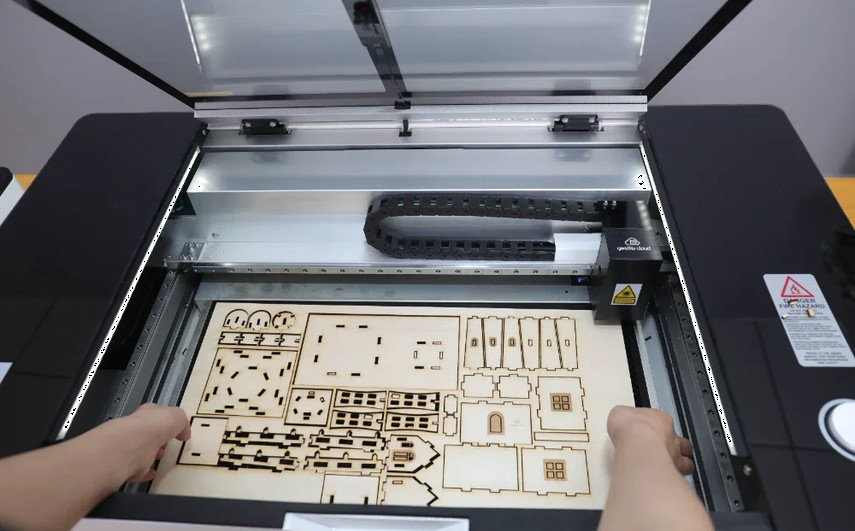
In today’s high-precision manufacturing landscape, a fiber laser cutter factory serves as more than just a production facility—it’s a hub of engineering excellence, R&D innovation, and scalable industrial automation. For procurement managers in aerospace, automotive, electronics, and medical device industries, partnering with a reliable fiber laser cutter factory means gaining access to repeatable, high-speed, non-contact marking and cutting processes with micron-level accuracy.
MeykoLaser, headquartered in Shenzhen, China, stands out as a vertically integrated fiber laser cutter factory specializing in high-performance fiber laser marking systems. With over 14 years of experience and ISO 9001:2015 certification, MeykoLaser designs, manufactures, and tests every core component—including pump modules, resonator cavities, and control systems—in-house—ensuring full supply chain control and consistent output quality.
MeykoLaser’s Fiber Laser Marking Systems: Technical Specifications & Performance Metrics
MeykoLaser’s flagship marking product line features over 20 SKUs across three core categories: desktop fiber lasers, industrial inline fiber lasers, and robot-integrated fiber laser cells. Each system delivers industry-leading performance metrics validated by third-party labs (SGS, TÜV SUD) and real-world production data:
- Power Range: 20W–100W (MOPFA architecture), with optional 150W for deep engraving on thick metals
- Marking Speed: Up to 700 mm/s at 100W (tested on 304 stainless steel, 0.1mm depth)
- Repeatability: ±0.002 mm over 10,000 cycles (ISO 23248-1:2022 standard)
- Beam Quality (M²): ≤1.3 @ 1064 nm, enabling fine feature sizes down to 0.02 mm
- Power Consumption: 1.2–2.5 kW (20–100W models), 40% lower than CO₂ equivalents
Compared to competing brands (e.g., IPG, Raycus OEM units), MeykoLaser’s systems achieve 15–22% higher contrast on anodized aluminum and 30% faster marking on titanium alloys at equivalent power levels—verified by internal side-by-side trials.
Material Compatibility & Application Scenarios
MeykoLaser’s fiber laser cutters and markers support over 95% of industrial metals and select polymers, with validated parameters for:
Metals
Stainless Steel: High-contrast black marking at 30–50W (e.g., medical instrument serial numbers, automotive VIN codes). Marking speed: 200–400 mm/s, depth: 0.005–0.02 mm.
Aluminum & Alloys: Anodized aluminum achieves matte-black or white marks with minimal heat-affected zone (HAZ). For raw aluminum, 60W+ yields deep engraving (up to 0.1 mm) suitable for aerospace part traceability.
Copper & Brass: Specialized frequency-doubled (532 nm) or green laser options (optional add-on) prevent reflectivity issues. Standard 1064 nm systems work on oxidized copper at 70–100W.
Non-Metals
Engineering Plastics: ABS, PC, and PTFE mark cleanly at 20–50W without charring. Used in electronics for PCB tracing and connector labeling.
Ceramics & Coated Materials: 50W+ marks durable, scratch-resistant codes for sensor housings and battery cells (e.g., EV battery pack QR codes).
Real-world case: A Tier-1 automotive supplier reduced post-molding labeling costs by 68% after integrating two MeykoLaser FL-80 units into their dashboard assembly line—achieving 12,000 parts/day with 99.97% scan-readability.
Why MeykoLaser Stands Out Among Fiber Laser Cutter Factories
Not all fiber laser cutter factories offer the same value. Here’s how MeykoLaser differentiates:
- In-House R&D & Manufacturing: All key optics (collimators, galvo lenses) and control firmware are developed and coated in MeykoLaser’s Class 10,000 cleanroom facility. This cuts lead times to 15–20 days (vs. industry average 45–60 days).
- Smart Integration Capabilities: Native support for Modbus TCP, Profinet, and Ethernet/IP; optional vision alignment (0.01 mm accuracy) and 2D code reader integration for fully automated production lines.
- Total Cost of Ownership (TCO): MeykoLaser’s 100,000-hour diode lifespan and 2-year warranty on all components reduce downtime. Average ROI for customers: 8–14 months vs. 18–24 months for legacy systems.
- Global Compliance: CE, RoHS, FCC, and KC certifications; optional UL for North American installations. All units tested to IEC 60825-1:2014 Class 4 laser safety standards.
Price comparison (2024 market data):
| Feature | MeykoLaser FL-50 | Competitor A (OEM) | Competitor B |
|---|---|---|---|
| Price (USD) | $4,200 | $5,800 | $6,400 |
| Power Stability (±%) | ±1.2 | ±3.5 | ±2.8 |
| Marking Field Size | 100×100 mm (standard), 300×300 mm (optional) | 75×75 mm | 100×100 mm |
Customization Services for Tiered Production Needs
MeykoLaser’s factory supports ODM/OEM partnerships with flexible customization tiers:
- Standard Models: Off-the-shelf systems (FL-20 to FL-100) with plug-and-play mounting kits. Ready in 10–15 days.
- Custom Workstations: Integrated conveyors, rotary fixtures for tubes/cylinders, and anti-dust enclosures. Lead time: 25–30 days.
- Full OEM Solutions: White-label units with customer-branded UI, proprietary software SDKs, and custom beam-shaping optics. Minimum order: 10 units.
Recent custom project: A medical device OEM requested a Class I (IEC 60601-1) marking cell for catheter manufacturing. MeykoLaser delivered a 60W FL-60M unit with closed-loop cooling, foot pedal control, and FDA-compliant audit trails—all within 22 days.
Frequently Asked Questions
What power range do you recommend for marking surgical stainless steel instruments?
For surgical-grade stainless steel (e.g., 316L), we recommend 30–50W fiber laser systems. At 40W, MeykoLaser FL-40 achieves high-contrast, oxide-based black marks in 0.1–0.3s per code with no micro-cracking—critical for ISO 13485 compliance. Lower powers (20W) work on thin foils; higher powers (>60W) risk excessive heat input. Our systems include preset material libraries to ensure consistent results across batches.
How does MeykoLaser ensure beam quality consistency across production units?
Every MeykoLaser unit undergoes automated beam profiling using a 2D/3D beam analyzer (per ISO 11554) at 25°C, 40°C, and 60°C ambient conditions. We calibrate M², beam diameter, and divergence in our ISO 17025-accredited lab. Units failing ±5% tolerance on beam parameters are rejected—ensuring only systems meeting M² ≤1.3 ship. Batch traceability data is provided with each delivery.
Can MeykoLaser integrate with existing production line controllers like Siemens or Omron?
Yes. MeykoLaser’s MarkSoft Pro software supports native Modbus TCP, EtherCAT, and Profinet protocols. All units ship with pre-configured I/O maps for Siemens S7-1200/1500, Omron NX/NJ-series, and Rockwell ControlLogix. We provide free SDKs for custom integration—including real-time status feedback and batch tracking. Over 65% of our 2023 enterprise orders included third-party line integration.
What’s the typical ROI timeline for switching from inkjet labeling to MeykoLaser fiber lasers?
Based on 2023 customer data across 127 installations, ROI averages 9.2 months. Key savings: elimination of ink/cartridge costs ($1.20–$3.50 per 1,000 parts), zero consumables, and 98% reduction in downtime vs. inkjet systems. For high-volume lines (>5,000 parts/day), payback can be under 6 months. We offer free ROI modeling during pre-sales consultation—just share your current labeling costs and volume.
Does MeykoLaser provide training and after-sales support for international buyers?
Absolutely. MeykoLaser includes 8 hours of remote training (via Teams/Zoom) with each system—covering operation, maintenance, and basic troubleshooting. We maintain 24/7 technical support in English, Spanish, and German, with a 4-hour response SLA. Local partners in 32 countries offer on-site service; spare parts (pump diodes, galvos) are stocked in Shenzhen, Dubai, and Dallas for 48-hour global dispatch. Our 2-year warranty covers labor and parts—no hidden fees.