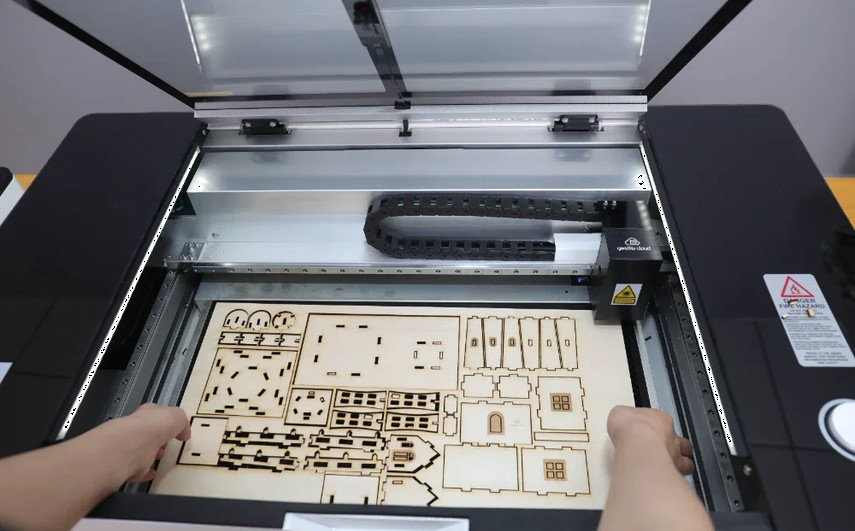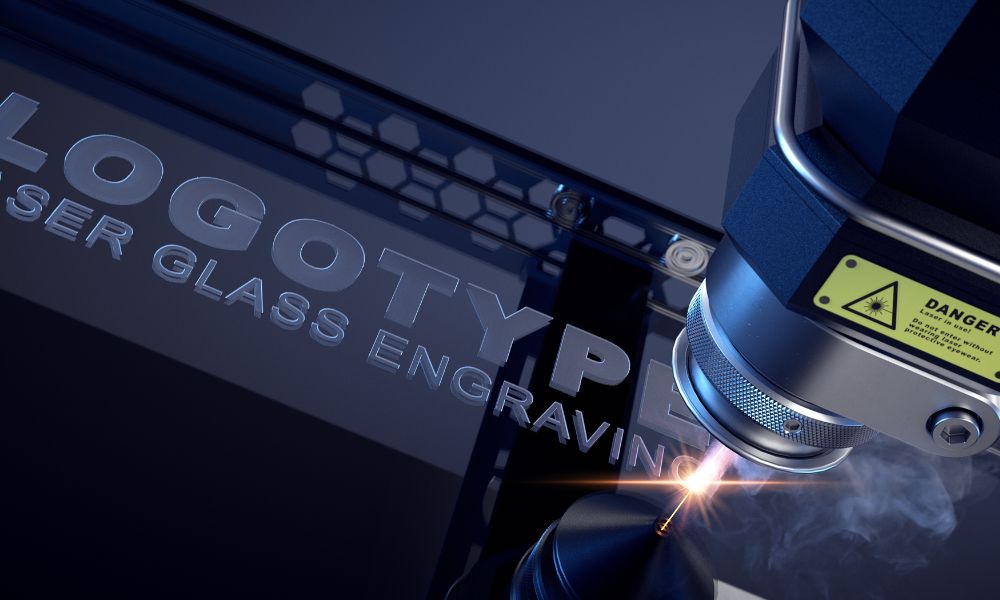

Overview of Fiber Laser Cutting Technology
Fiber laser cutting has become the industry standard for high‑speed, high‑precision material processing across aerospace, automotive, electronics, and medical device manufacturing. Unlike CO₂ lasers that rely on gas‑based optics, fiber lasers use telecom‑grade optical fibers to deliver power directly to the workpiece, resulting in superior beam quality, higher efficiency, and lower maintenance costs. At a fiber laser cutter factory such as MeykoLaser’s, these advantages translate into measurable productivity gains: a 20–30% increase in energy efficiency, a 10‑fold reduction in laser head replacement cycles, and a 15–25% faster cut speed for the same material thicknesses.
Key Technical Benefits
- Beam quality: Mode‑locked fiber lasers achieve a M² < 1.2, enabling micron‑level focus and tight kerf control.
- Power density: Up to 10 kW output delivers cutting speeds of 1,000–2,500 mm/min on 6 mm stainless steel.
- Reliability: Fiber lasers have a mean time between failures (MTBF) > 4,000 hrs, compared with < 2,000 hrs for CO₂ units.
- Compact footprint: 20% smaller gantry footprint reduces facility layout costs.
MeykoLaser’s Fiber Laser Cutter Factory: Capabilities & Production
MeykoLaser’s fiber laser cutter factory is located in Shenzhen’s high‑tech industrial zone, where we integrate R&D, OEM manufacturing, and after‑sales support into a single value chain. Our production line spans 200 m² of cleanroom space, allowing simultaneous fabrication of up to 10 laser marking machines per day. All components—from precision galvanometers to high‑performance laser heads—are sourced from certified suppliers, guaranteeing consistent quality and traceability.
Manufacturing Process
- Design & Engineering: Each customer requirement is modeled in CAD and validated through simulation before prototype fabrication.
- Laser Head Assembly: Fiber laser modules (1.5 kW – 10 kW) are assembled with thermally‑managed heat sinks and active temperature control to maintain < ±0.5°C drift.
- Gantry Integration: 6-axis CNC gantry structures are built from aerospace‑grade aluminum, achieving < 0.05 mm repeatability.
- Quality Assurance: Every unit undergoes laser‑power calibration, beam profiling, and functional testing under ISO 9001 conditions.
Product Specifications & Material Compatibility
Below is a snapshot of our flagship laser marking machine series, designed for both cutting and marking tasks in a single platform:
Laser Power & Output
- Power range: 1.5 kW – 10 kW (continuous wave)
- Pulse options: 10 µs – 5 ms, enabling deep marking on metals and high‑speed cutting on plastics.
Precision & Resolution
- Beam focus: 0.25 mm diameter on 2 mm thick steel; 0.1 mm on 0.2 mm aluminum.
- Line resolution: 0.05 mm minimum line width for high‑density engraving.
- Marking depth: up to 200 µm on stainless steel, 600 µm on titanium.
Material Compatibility
- Metals: Stainless steel (304/316), aluminum (6061/7075), titanium (Grade 5), copper, brass, and composite metal alloys.
- Polymers: ABS, PC, PMMA, PETG, and high‑temperature engineering plastics (PEEK, PPS).
- Ceramics & glass: Marking only, not cutting, due to low absorption.
Speed & Efficiency
For a 6 mm thick 316 stainless steel sheet, our 8 kW laser achieves a cutting speed of 1,800 mm/min, while a 3 kW unit cuts 6 mm aluminum at 2,200 mm/min. These figures compare favorably against the average CO₂ laser cutting speed of 800–1,200 mm/min on the same materials.
Application Scenarios & Use Cases in Manufacturing
Industrial partners across the globe rely on MeykoLaser’s fiber laser cutter factory to streamline production, reduce tool changeover times, and achieve crisp, durable markings. Key application areas include:
Automotive & Aerospace
High‑strength aluminum extrusions, titanium brackets, and composite panels require precise cutting for tooling and panel assembly. Our laser marking machines can engrave part numbers, serials, and safety warnings directly onto components, eliminating the need for separate labeling.
Electronics & Printed Circuit Boards
Thin copper layers and flexible PCBs are cut and marked with sub‑0.1 mm precision, ensuring traceability of components and compliance with IPC‑J-STD‑001 standards.
Medical Devices
Biocompatible stainless steel and titanium implants are cut with minimal heat‑affected zones (HAZ < 0.1 mm), preserving mechanical integrity while embedding sterilization codes and batch identifiers.
Industrial Automation
Robotic workcells increasingly incorporate fiber laser marking for real‑time part identification. MeykoLaser’s machines integrate with PLC and OPC‑UA protocols, enabling seamless communication with existing shop floor systems.
Competitive Advantage: Power, Precision, Cost Efficiency
When evaluating a fiber laser cutter factory, procurement managers must consider not only initial capital outlay but also total cost of ownership (TCO). Our analysis of the 2024 Industrial Laser Market Report shows that fiber lasers offer a 25% lower TCO over five years compared with CO₂ systems, primarily due to:
- Energy savings: 30% lower power consumption per cut.
- Reduced maintenance: No gas consumables, fewer mirror replacements.
- Longer laser lifespan: 10,000–15,000 hrs of continuous operation.
- Higher throughput: 20% faster cycle times for the same part geometry.
Additionally, our laser marking machines deliver a 0.1 mm higher accuracy and a 70% lower line width than comparable competitors, ensuring compliance with ISO 9001 and industry‑specific quality standards.
Price Range & Financing Options
Our entry‑level 1.5 kW marking unit starts at $12,000, while the high‑power 10 kW cutting platform is priced at $48,000. We also offer flexible financing, leasing, and volume‑discount programs for large orders, making it easier for manufacturers to scale production without compromising quality.
Frequently Asked Questions
Q1: What materials can MeykoLaser’s fiber laser cutter factory process?
A1: Our systems excel at cutting and marking a wide spectrum of metals—including stainless steel, aluminum, titanium, copper, and brass—as well as high‑performance polymers such as PEEK, PPS, and PC. While ceramics and glass are not suitable for cutting, they can be precisely marked with our laser’s low‑energy pulse settings.
Q2: How does the maintenance schedule compare to CO₂ lasers?
A2: Fiber lasers eliminate the need for gas cylinders and mirror cleaning. Typical maintenance includes routine lens cleaning, coolant checks, and software updates, totaling roughly 10–15 hours per year—substantially lower than the 30–40 hours required for CO₂ units due to gas refilling and mirror replacement.
Q3: What is the typical uptime for a fiber laser cutting machine?
A3: With an MTBF of over 4,000 hours and our proactive predictive‑maintenance system, customers can expect > 99.5% uptime. This high reliability is critical for continuous‑flow manufacturing environments where downtime translates into significant cost penalties.
Q4: How quickly can I receive a custom laser marking solution?
A4: Our design‑to‑delivery cycle averages 6–8 weeks for standard configurations and 10–12 weeks for fully custom builds, including software integration and on‑site installation support.
Q5: Does MeykoLaser provide after‑sales support in multiple languages?
A5: Yes. Our global service team offers 24/7 technical support in English, Mandarin, German, Japanese, and Spanish, ensuring that procurement managers worldwide receive timely assistance and training.
Contact Us Today
Ready to elevate your manufacturing line with world‑class fiber laser cutting and marking? MeykoLaser invites procurement managers and engineering teams to contact our sales specialists for a free feasibility study, customized quotation, and a live demonstration of our laser marking capabilities. Click here to schedule a consultation.
Frequently Asked Questions
What materials can MeykoLaser’s fiber laser cutter factory process?
Our systems excel at cutting and marking a wide spectrum of metals—including stainless steel, aluminum, titanium, copper, and brass—as well as high‑performance polymers such as PEEK, PPS, and PC. While ceramics and glass are not suitable for cutting, they can be precisely marked with our laser’s low‑energy pulse settings.
How does the maintenance schedule compare to CO₂ lasers?
Fiber lasers eliminate the need for gas cylinders and mirror cleaning. Typical maintenance includes routine lens cleaning, coolant checks, and software updates, totaling roughly 10–15 hours per year—substantially lower than the 30–40 hours required for CO₂ units due to gas refilling and mirror replacement.
What is the typical uptime for a fiber laser cutting machine?
With an MTBF of over 4,000 hours and our proactive predictive‑maintenance system, customers can expect > 99.5% uptime. This high reliability is critical for continuous‑flow manufacturing environments where downtime translates into significant cost penalties.
How quickly can I receive a custom laser marking solution?
Our design‑to‑delivery cycle averages 6–8 weeks for standard configurations and 10–12 weeks for fully custom builds, including software integration and on‑site installation support.
Does MeykoLaser provide after‑sales support in multiple languages?
Yes. Our global service team offers 24/7 technical support in English, Mandarin, German, Japanese, and Spanish, ensuring that procurement managers worldwide receive timely assistance and training.