
Understanding the Role of a Modern Fiber Laser Cutter Factory
In the evolving landscape of industrial manufacturing, the distinction between cutting and marking is becoming increasingly blurred by technological convergence. For procurement managers seeking to optimize capital expenditure (CapEx) and operational efficiency, partnering with a reputable fiber laser cutter factory offers strategic advantages that extend beyond simple component sourcing. MeykoLaser, a leader in high-precision laser equipment manufacturing, understands that modern production lines require versatile, reliable, and cost-effective solutions. While our primary expertise lies in advanced laser marking machines, the underlying technology—fiber laser sources—shares critical engineering principles with high-end cutting systems. This article explores how leveraging the robust infrastructure of a specialized laser factory can enhance your marking operations, reduce downtime, and improve part traceability across diverse materials.
The Technology Convergence: From Cutting to Marking
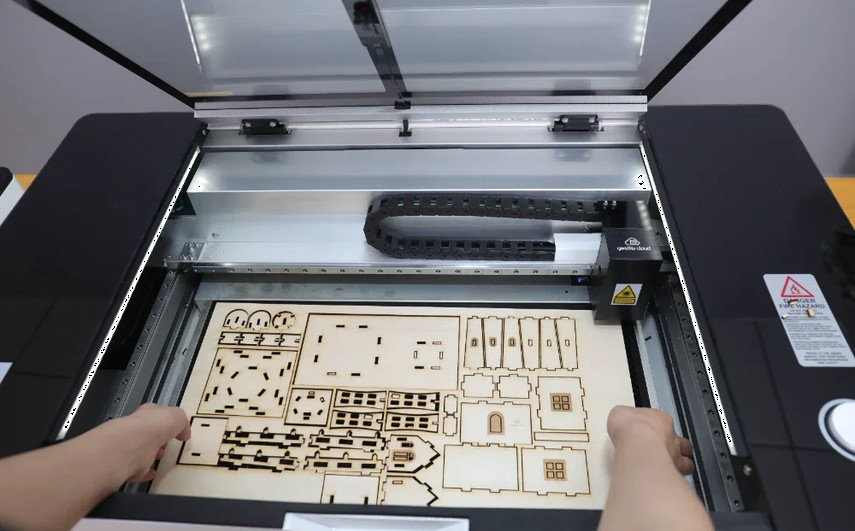
It is essential to clarify that while many industrial suppliers market themselves broadly, specialization yields superior results. A fiber laser cutter factory typically utilizes high-power fiber lasers (ranging from 1kW to 6kW+) for thick metal fabrication. However, the precision required for laser marking often demands a different configuration, focusing on beam quality and galvanometer scanning speeds rather than raw power. MeykoLaser bridges this gap by applying the rigorous quality control standards of cutting equipment manufacturing to our specialized laser marking solutions. By choosing a manufacturer with deep roots in fiber laser technology, you ensure that the components powering your marking stations—such as IPG or Raycus fiber sources—are sourced directly from the factory floor, ensuring authenticity and warranty support.
Key Specifications for Industrial Laser Marking Machines
When evaluating equipment from a fiber laser cutter factory or a dedicated marking solution provider, procurement managers must look beyond basic price tags. The performance of a laser marking machine is defined by several critical technical parameters. At MeykoLaser, we prioritize specifications that directly impact production throughput and mark permanence.
Laser Source and Power Ranges
For most industrial marking applications, such as serializing electronic components, automotive parts, or medical devices, a power range of 20W to 50W is optimal. Higher power (100W+) is typically reserved for deep engraving or annealing on stainless steel, which can slow down production speeds due to longer dwell times. MeykoLaser’s machines utilize high-repetition-rate fiber sources that deliver consistent beam quality. This ensures that even at high scanning speeds, the mark remains deep, high-contrast, and resistant to wear. For context, a 20W fiber laser can mark stainless steel at speeds exceeding 7,000 mm/s, a critical metric for high-volume manufacturing lines.
Precision and Beam Quality
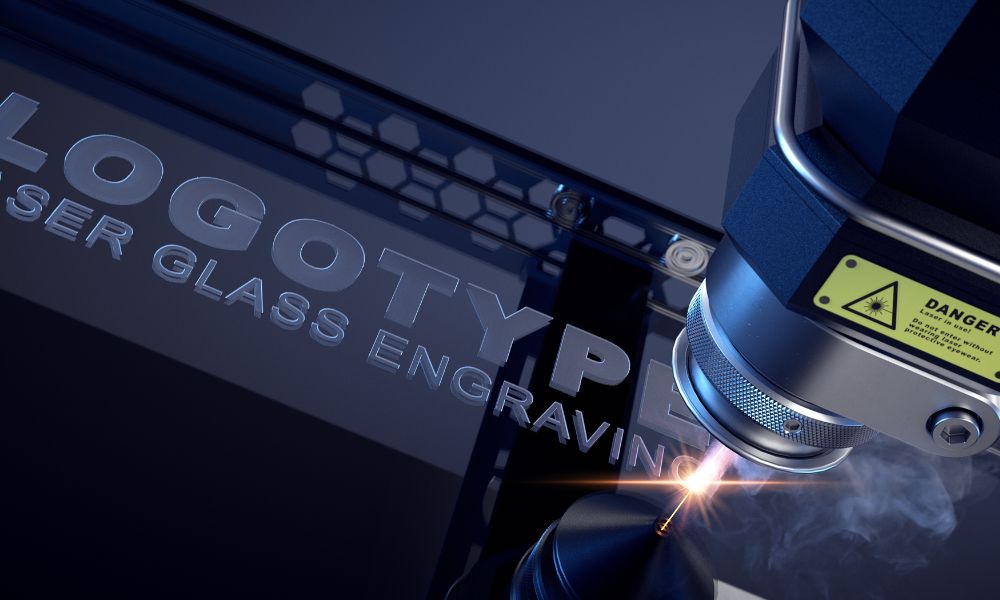
Precision is non-negotiable in industries like aerospace and medical devices. The beam waist diameter, typically between 0.01mm and 0.1mm for fiber lasers, determines the minimum feature size achievable. MeykoLaser’s systems are calibrated to maintain a focal spot size that allows for intricate logos and fine text. Unlike CO2 lasers, which struggle with metallic surfaces, fiber lasers are inherently absorbed by metals, offering superior efficiency and mark quality without the need for assist gases in many applications. This material compatibility expands your processing capabilities, allowing you to mark aluminum, brass, titanium, and hardened steel with equal ease.
Application Scenarios and Material Compatibility
One of the primary reasons companies partner with a specialized fiber laser cutter factory for their marking needs is the versatility of the technology. Fiber lasers are not limited to a single industry; they are a universal tool for permanent identification. Below is a detailed breakdown of compatible materials and common application scenarios.
| Material | Application | Recommended Power | Benefit |
|---|---|---|---|
| Stainless Steel | Medical implants, surgical tools | 20W - 30W | High contrast, corrosion-resistant marks |
| Aluminum | Aerospace components, automotive parts | 20W - 50W | Fast marking, no oxidation required |
| Copper/Brass | Electrical connectors, jewelry | 30W - 50W | High reflectivity managed via pulse control |
| Plastics (ABS, PC) | Consumer electronics, cable ties | 20W - 30W | Clean, dark marks without burning |
These applications demonstrate why a flexible, high-quality marking system is vital. MeykoLaser’s machines are designed to handle these diverse materials with minimal setup time, allowing for rapid changeovers in mixed-model production environments.
Comparing MeykoLaser to Generalist Suppliers
Procurement managers often face the dilemma of choosing between generalist machine tool suppliers and specialized laser manufacturers. While a generalist fiber laser cutter factory may offer cutting services, their marking solutions are often aftermarket add-ons, lacking the integrated software and hardware optimization that define a dedicated marking system. MeykoLaser offers distinct advantages:
- Integrated Software Ecosystem: Our proprietary software supports direct database connectivity (SQL, ODBC), enabling automatic serialization and version control. This is crucial for industries requiring strict traceability, such as automotive OEMs.
- After-Sales Support: As a factory-direct provider, we offer transparent pricing and faster technical response times. We do not rely on third-party dealers for spare parts or maintenance, reducing mean time to repair (MTTR).
- Customization: We can integrate our marking heads into existing robotic cells or conveyor systems. Whether you need a handheld unit for field service or a fully automated inline marking station, MeykoLaser provides tailored engineering solutions.
Cost Efficiency and ROI Analysis
Investing in a fiber laser cutter factory-grade marking machine is a decision driven by long-term value. The total cost of ownership (TCO) for fiber laser marking is significantly lower than traditional methods like inkjet printing or mechanical engraving. Fiber lasers are solid-state devices with no consumables such as inks, solvents, or drill bits. The primary maintenance cost is limited to cleaning the lens and occasional filter replacement, which can be performed in-house.
Furthermore, the energy efficiency of fiber lasers is superior. A 20W fiber laser consumes approximately 3-5 kW of electrical power, compared to older CO2 systems that may consume 10-15 kW for similar throughput. Over a five-year operational lifecycle, these savings in electricity and consumables can amount to tens of thousands of dollars, significantly improving your return on investment (ROI). MeykoLaser’s machines are built for 100,000 hours of service life, ensuring that your capital investment is protected over the long term.
Conclusion: Elevating Your Manufacturing Standards
Partnering with a fiber laser cutter factory that specializes in precision marking technology provides your organization with a competitive edge. MeykoLaser combines the robust engineering heritage of industrial laser manufacturing with the specialized focus required for high-speed, high-precision marking. By choosing MeykoLaser, you gain access to state-of-the-art technology, expert technical support, and a commitment to quality that meets the stringent demands of global industries. Whether you are marking medical devices, automotive parts, or consumer electronics, our solutions are designed to enhance your production efficiency and ensure permanent, compliant identification.
Frequently Asked Questions
What is the difference between a fiber laser cutter and a fiber laser marking machine?
While both technologies use fiber laser sources, their applications and configurations differ significantly. A fiber laser cutter is designed for high-power output (1kW to 6kW+) to melt and eject material for cutting thick metals. In contrast, a fiber laser marking machine uses lower power (20W to 50W) and a galvanometer scanning system to rapidly defocus the beam across a surface for engraving or annealing. MeykoLaser specializes in the latter, optimizing for speed and precision rather than cutting depth.
How long does a fiber laser marking machine typically last?
High-quality fiber laser sources, such as those used in MeykoLaser equipment, are rated for a service life of approximately 100,000 hours. This translates to roughly 11-15 years of continuous operation in a standard two-shift manufacturing environment. Unlike CO2 lasers that require gas refills and mirror alignments, fiber lasers are sealed, solid-state devices that require minimal maintenance, primarily involving lens cleaning and fan filter replacement.
Can MeykoLaser machines mark reflective materials like copper and gold?
Yes, MeykoLaser’s advanced fiber laser marking machines are specifically engineered to handle highly reflective materials. Traditional lasers often struggle with copper and gold due to high reflectivity, which can damage the source. However, our systems utilize specialized pulse modulation techniques and wavelength absorption characteristics that allow for clean, high-contrast marking on these materials without causing back-reflection damage to the laser head.
What software integrations are available for industrial serialization?
MeykoLaser marking systems support robust software integrations essential for B2B traceability. Our software connects directly to SQL databases, ODBC sources, and ERP systems. This allows for automatic variable data insertion, including serial numbers, batch codes, and QR codes. The system can also verify marks in real-time using vision systems, ensuring 100% quality control and compliance with industry standards like GS1 or automotive IATF 16949.
What is the typical lead time for ordering a custom laser marking solution?
For standard off-the-shelf laser marking machines, MeykoLaser typically offers a lead time of 2-4 weeks. However, for custom solutions involving robotic integration, specific fixture design, or specialized software development, the timeline may extend to 6-8 weeks. As a direct factory, we provide transparent production schedules and regular updates to ensure your procurement planning remains accurate and efficient.