
Introduction: The Role of a Fiber Laser Cutter Factory in Modern Manufacturing
When global manufacturers search for a reliable fiber laser cutter factory, they are looking for a partner that can deliver high‑precision cutting systems, consistent quality, and scalable production capacity. MeykoLaser, based in China, operates a state‑of‑the‑art fiber laser cutter factory that not only builds cutting‑edge metal cutting machines but also produces complementary laser marking machine solutions for product identification, traceability, and branding. This article provides procurement managers with the data‑driven insights needed to evaluate a fiber laser cutter factory, compare technical specifications, and understand the total cost of ownership for laser marking equipment.
Understanding the Fiber Laser Cutter Factory Landscape
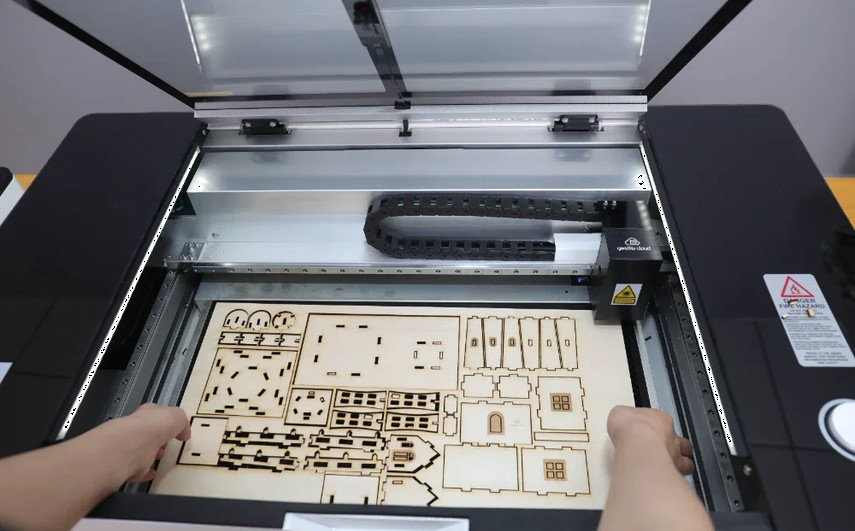
The term fiber laser cutter factory refers to a manufacturing facility that specializes in the design, assembly, and testing of fiber laser sources, CNC motion systems, and optical delivery components for industrial cutting applications. According to a 2023 report by Grand View Research, the global fiber laser cutting market was valued at USD 4.2 billion and is projected to reach USD 7.9 billion by 2030, growing at a CAGR of 9.3 %. Within this market, factories that integrate vertical production—from laser diode fabrication to final machine calibration—offer advantages in lead time, quality control, and after‑sales support.
MeykoLaser’s fiber laser cutter factory occupies a 12,000 m² campus equipped with ISO‑9001 certified assembly lines, laser power testing benches capable of validating sources up to 12 kW, and environmental chambers for thermal cycling. The factory’s annual output exceeds 1,500 laser cutting systems and 3,200 laser marking machines, serving customers in automotive, aerospace, electronics, and medical device sectors across Europe, North America, and Southeast Asia.
Core Technologies: Fiber Laser Cutters vs Laser Marking Machines
While both systems share the same fundamental fiber laser technology, their design goals differ significantly. A typical fiber laser cutter factory produces cutting machines with laser powers ranging from 500 W to 12 kW, enabling cutting speeds of up to 120 m/min on 1 mm stainless steel and 25 m/min on 25 mm carbon steel. Key specifications include:
- Laser wavelength: 1064 nm (standard for fiber lasers)
- Beam quality (M²): < 1.2 for high‑power units
- Positioning accuracy: ±0.02 mm (X/Y axes)
- Repeatability: ±0.005 mm
- Cutting thickness (mild steel): up to 30 mm at 6 kW
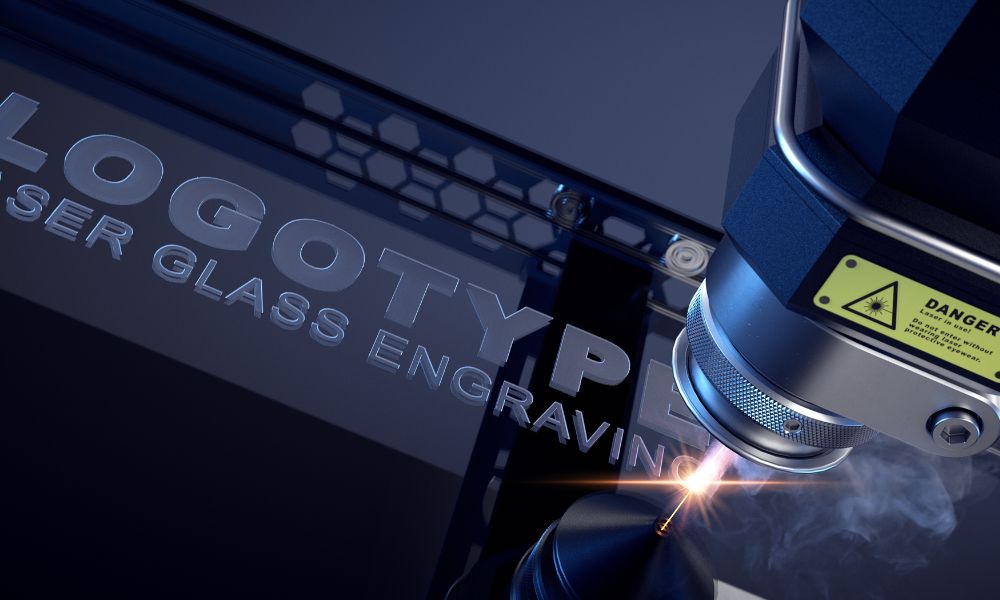
In contrast, a laser marking machine sourced from the same factory typically operates at lower power levels—20 W to 100 W—optimized for permanent, high‑contrast marks without material removal. Typical marking specs are:
- Laser power: 20 W, 30 W, 50 W, 80 W, 100 W options
- Marking speed: up to 7,000 mm/s on anodized aluminum
- Marking depth: 0.01–0.05 mm (depending on material and power)
- Spot size: 20–35 µm (focused)
- Minimum character size: 0.1 mm
Both platforms benefit from the factory’s in‑house fiber laser source production, which ensures consistent wall‑plug efficiency (≈35‑40 %) and long diode lifetimes (>100,000 hours).
Specifications, Pricing, and Performance Data
Procurement managers need concrete numbers to build a business case. Below is a comparison table that reflects typical offerings from MeykoLaser’s fiber laser cutter factory.
| Parameter | Fiber Laser Cutter (500 W‑6 kW) | Fiber Laser Cutter (8 kW‑12 kW) | Laser Marking Machine (20‑100 W) |
|---|---|---|---|
| Laser Power Range | 500 W – 6 kW | 8 kW – 12 kW | 20 W – 100 W |
| Typical Machine Price (USD) | $22,000 – $85,000 | $120,000 – $210,000 | $5,500 – $28,000 |
| Cutting Speed (1 mm SS) | 15 – 45 m/min | 50 – 120 m/min | N/A |
| Marking Speed (Aluminum) | N/A | N/A | 3,000 – 7,000 mm/s |
| Positioning Accuracy | ±0.02 mm | ±0.02 mm | ±0.01 mm |
| Power Consumption (kW) | 1.5 – 6.5 | 9 – 13 | 0.1 – 0.3 |
| Maintenance Interval | 1,000 h (laser source) | 1,000 h | 2,000 h |
Price‑to‑power ratios show that the fiber laser cutter factory achieves roughly $15‑$18 per watt for mid‑range systems, while high‑power units drop to $10‑$12 per watt due to economies of scale. Laser marking machines, by contrast, command a higher cost per watt ($250‑$300/W) because of the precision optics, software integration, and marking‑specific accessories.
Application Scenarios and ROI Analysis
Understanding where each technology adds value helps buyers allocate capital effectively.
Metal Cutting Applications
Automotive chassis components, aerospace brackets, and heavy‑equipment frames benefit from the high cutting speeds and thick‑material capability of a fiber laser cutter factory’s 6‑12 kW systems. For example, cutting a 20 mm mild steel flange at 8 kW yields a cycle time of 12 seconds per part, compared with 28 seconds using a 4 kW CO₂ laser—a 57 % productivity gain. Over a yearly volume of 150,000 parts, this translates to roughly 400 machine‑hours saved, worth approximately $20,000 in labor and overhead at a $50/hour rate.
Laser Marking Applications
Product traceability demands permanent marks on metals, plastics, ceramics, and composites. A 50 W laser marking machine can anneal stainless steel at 0.02 mm depth with a contrast ratio exceeding 3:1, meeting ISO 13485 medical device marking standards. In electronics, a 20 W UV‑pumped fiber laser creates sub‑0.1 mm QR codes on silicon wafers without thermal damage. The typical payback period for a $12,000 marking system in a high‑mix, low‑volume shop is 14 months, based on reduced scrap, eliminated consumables (ink, labels), and improved audit readiness.
Combined Workflow Benefits
Many manufacturers integrate a cutter and a marker from the same fiber laser cutter factory to create a seamless production line: parts are cut, then immediately marked with serial numbers or logos before leaving the cell. This reduces handling, minimizes positioning errors, and enables real‑time traceability. MeykoLaser’s factory offers optional conveyor‑based integration kits that align cutter XY stages with marking heads within a 0.05 mm tolerance.
Why Choose MeykoLaser’s Fiber Laser Cutter Factory
Selecting a supplier involves more than comparing spec sheets. MeykoLaser’s fiber laser cutter factory differentiates itself through:
- Vertical integration: in‑house diode laser bar production, fiber drawing, and final machine assembly.
- Quality assurance: each laser source undergoes 48‑hour burn‑in testing and ISO‑17025 calibrated power measurement.
- Global service network: regional technical centers in Germany, USA, and Singapore provide 24/7 remote diagnostics and spare‑parts logistics with average MTTR of 4 hours.
- Customization capability: ability to tailor laser wavelength (e.g., 1064 nm for metals, 1030 nm for plastics), beam delivery optics, and software interfaces (SDK, PLC, EtherCAT).
- Competitive total cost of ownership: energy consumption data shows a 6 kW cutter uses ~5.5 kW average during operation, resulting in an annual electricity cost of ~$4,800 (assuming $0.10/kWh, 2 shifts).
By partnering with MeykoLaser, procurement managers gain access to a fiber laser cutter factory that delivers not only cutting‑edge hardware but also engineering support, training programs, and performance guarantees (e.g., 95 % uptime warranty on laser sources for 24 months).
Call to Action
Ready to evaluate how a fiber laser cutter factory can boost your manufacturing efficiency? Contact MeykoLaser’s sales team today for a detailed quotation, technical datasheet, or to arrange a virtual factory tour. Visit www.meyko.cn or email sales@meyko.cn to start the conversation.
Frequently Asked Questions
What power range should I look for in a fiber laser cutter for cutting stainless steel up to 20 mm thick?
For stainless steel up to 20 mm thickness, a fiber laser cutter in the 4 kW to 8 kW range is typically sufficient. MeykoLaser’s factory offers 6 kW systems that achieve cutting speeds of approximately 30 m/min on 20 mm SS with a kerf width under 0.2 mm and a tolerance of ±0.02 mm. Higher power (8‑12 kW) reduces cycle time further, but the price‑to‑watt ratio improves only marginally beyond 6 kW for this thickness. Consider assist gas (nitrogen or oxygen) and nozzle selection to optimize edge quality and reduce burr formation.
How does the price per watt of a laser marking machine compare to that of a fiber laser cutter from the same factory?
Laser marking machines generally have a higher price per watt than cutting systems due to the need for finer optics, advanced marking software, and specialized fixtures. At MeykoLaser’s fiber laser cutter factory, a 50 W marking machine costs around $12,000, which translates to roughly $240/W. In contrast, a 6 kW cutter priced at $70,000 yields about $11.7/W. The disparity reflects the marking machine’s investment in high‑resolution galvo scanners, f‑theta lenses, and software for barcode, DataMatrix, and human‑readable text generation, whereas cutters benefit from economies of scale in high‑power laser source production and mechanical structure.
What maintenance intervals and spare‑part logistics can I expect from MeykoLaser’s fiber laser cutter factory?
MeykoLaser recommends a 1,000‑hour preventive maintenance interval for the laser source in both cutting and marking machines, which includes checking diode pump performance, cleaning optics, and verifying beam alignment. Mechanical components such as linear guides and drive belts are inspected every 2,000 hours. The factory maintains a global spare‑parts hub with average lead time of 48 hours for critical items like laser diodes, collimators, and control cards. Regional service centers in Germany, the USA, and Singapore provide remote diagnostics and can dispatch engineers within 4 hours MTTR for on‑site support, minimizing downtime.
Can I integrate a laser marking station directly after a fiber laser cutter in a single production line?
Yes, MeykoLaser’s fiber laser cutter factory offers optional integration kits that synchronize the cutter’s XY stage with a downstream marking head. The kit includes a precision conveyor or rotary indexer, a master controller that coordinates motion via EtherCAT, and a vision system for part alignment. The combined tolerance between cutting and marking positions is held within ±0.05 mm, ensuring that serial numbers, logos, or 2D codes are placed accurately on cut features. This setup reduces handling steps, eliminates secondary fixturing, and enables real‑time traceability for industries such as medical devices and automotive.