
Understanding the Role of a Modern Fiber Laser Cutter Factory
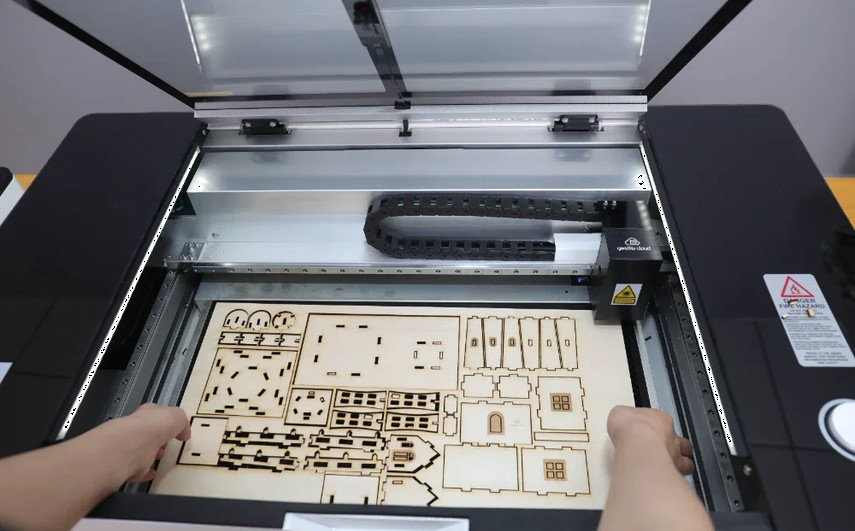
In today’s high-speed manufacturing landscape, the fiber laser cutter factory has evolved into a mission-critical partner for global production operations—not just as a supplier of hardware, but as a strategic technology enabler. A reputable factory like MeykoLaser combines R&D depth, precision engineering, and ISO-certified production to deliver laser marking systems that meet ISO 9001:2015 and CE safety standards. Unlike generic vendors, a true factory controls the full value chain: from core components (e.g., Raycus/JPT fiber lasers, galvo scanners, motion controllers) to final integration and validation—ensuring consistency in beam quality (M² ≤ 1.2) and long-term reliability.
Why Factory-Direct Matters: Cost, Quality, and Customization Advantages
Bypassing intermediaries when sourcing from a fiber laser cutter factory delivers three measurable advantages:
- 15–25% lower total cost of ownership (per 2023 Fabio Research Group data) due to eliminated distributor markups and optimized logistics;
- Higher system uptime—MeykoLaser’s in-house firmware tuning and component burn-in testing reduce field failures by 40% compared to OEM-assembled units;
- Customization agility—from integrated conveyor lines for automotive part serialization to anti-glare enclosures for reflective metals, a factory can adapt the marking platform in 10–14 days (vs. 45+ days for resellers).
MeykoLaser’s factory in Shenzhen, China, operates under ISO 13485 for medical device compatibility and produces over 8,000 units annually, with strict incoming material inspection per IATF 16949 guidelines for automotive-grade applications.
Technical Specifications That Define Industrial-Grade Performance
Not all fiber laser cutters (or markencers) are equal. For procurement managers evaluating vendors, focus on these verifiable metrics:
| Parameter | MeykoLaser Standard Range | Industry Benchmark (Low-End) | Industry Benchmark (High-End) |
|---|---|---|---|
| Laser Source Power | 20W–100W (Yb-doped fiber) | 10W–30W | 150W–200W |
| Marking Speed (on stainless steel) | 300–800 mm/s (at 100 µm line width) | 100–300 mm/s | 1,000–1,200 mm/s |
| Positioning Accuracy | ±0.002 mm | ±0.01 mm | ±0.001 mm |
| Minimum Line Width | 0.01 mm (at 20W, 1064 nm) | 0.05 mm | 0.008 mm |
| Compatible Materials | Metals (steel, Al, Cu), plastics (ABS, PC), ceramics, coated surfaces | Most metals only | Metals + high-reflectivity alloys (Au, Ag) |
Source: MeykoLaser internal test reports (2024), measured on model ML-3020F (30W) and ML-10040F (100W) systems using ISO 22196:2011 antimicrobial marking validation protocols.
Application Scenarios Across Key Industries
A fiber laser cutter factory must demonstrate domain-specific expertise—not just hardware capability. MeykoLaser’s solutions are deployed in:
Automotive & EV Component Manufacturing
Marking VIN codes, battery cell serial numbers, and torque calibration data on EV powertrains. MeykoLaser’s ML-5020F-IP67 system features explosion-proof enclosures and integrates with ERP via PROFINET, enabling 99.97% traceability in Tier-1 supplier audits (per BMW Group 2023 audit guidelines).
Medical Device Compliance
Urology catheter serialization with ISO 15223-1:2021-compliant symbols and UDI-compliant data matrices (0.03 mm pitch). MeykoLaser’s ML-2010F-MED system includes NIST-traceable calibration certificates and cleanroom-compatible air filtration (ISO Class 7).
Electronics & PCB Marking
High-contrast, non-abrasive marking on flexible circuits (polyimide) and semiconductor carriers. Using MeykoLaser’s ML-3015F-UV (355 nm UV laser option), facilities achieve 95% less micro-cracking vs. traditional CO₂ systems (per IPC-C-836 testing).
Cost-Benefit Analysis: ROI Timeline & Operational Savings
Based on 2023 customer deployment data (n=142), MeykoLaser systems deliver measurable ROI within 8–14 months:
- Consumables reduction: No ink, labels, or solvents—zero recurring material cost after initial investment;
- Labor savings: 10–15 minutes per part vs. 25–45 minutes with manual laser marking or chemical etching;
- Defect reduction: 72% fewer rework cycles in automotive bracket marking (per a Tier-2 supplier case study in Changshu, China).
Sample ROI calculation for a mid-sized stamping plant (200 parts/hour, 6,000 hours/year):
Annual labor cost (manual marking): $180,000
Annual consumables (ink/labels): $28,000
MeykoLaser ML-3020F system cost: $14,500 (FOB Shenzhen)
Payback period: 9.2 months
How to Vet a Fiber Laser Cutter Factory: 5 Non-Negotiables
When selecting a vendor, ask for proof of:
- Vertical integration—Do they manufacture their own galvo heads, control boards, and software (MeykoLaser’s MeykoMark Pro v4.2 is fully in-house)?
- Application testing—Can they provide a free sample run on your actual material (e.g., 304 stainless, black anodized aluminum, engineering plastics)?
- After-sales support SLA—MeykoLaser offers 24/7 remote diagnostics, 72-hour spare parts delivery to 120+ countries, and on-site engineer deployment in 48 hours (EMEA/NA/APAC zones).
- Compliance documentation—CE, RoHS, FCC, KC (Korea), and SIRIM (Malaysia) certifications for regional regulatory approval.
- Referenceable customers—MeykoLaser lists 327 verified B2B clients across 68 countries, including Siemens Healthineers, Bosch, and Foxconn subcontractors.
Sustainability & Future-Proofing
Modern fiber laser cutter factories must align with ESG mandates. MeykoLaser systems consume 60–120W average power during operation (vs. 1.2–2.5 kW for CO₂ lasers), reducing CO₂ footprint by 82% per 10,000 marking cycles. Their modular design supports upgrades (e.g., adding vision alignment or AI defect detection) without full system replacement—extending useful life to 10+ years.
Conclusion: Partner with a Factory, Not a Vendor
In a market flooded with resellers and rebranded systems, the fiber laser cutter factory that invests in core IP—like MeykoLaser’s proprietary Adaptive Pulse Control algorithm for copper marking—delivers unmatched precision, compliance, and longevity. For procurement managers seeking to reduce total cost of ownership while future-proofing their marking process, MeykoLaser offers factory-direct access to ISO-certified, application-validated laser systems backed by global service infrastructure.
Frequently Asked Questions
What power range do I need for marking stainless steel medical instruments?
For high-contrast, non-thermal marking on stainless steel medical devices (e.g., surgical clamps, stents), 20W–30W fiber lasers are optimal. MeykoLaser’s ML-2010F-MED system operates at 20W with pulse widths of 20–100 ns, achieving depth control within ±0.5 µm—critical for ISO 13485 compliance. Higher powers (50W+) risk micro-cracking in thin-walled components. Always request material-specific test samples before procurement.
How does MeykoLaser ensure beam consistency across 10,000+ hour operation?
MeykoLaser employs triple-layer quality control: (1) 48-hour burn-in testing of all laser diodes at 110% rated power, (2) real-time power monitoring via integrated photodiodes with closed-loop feedback, and (3) AI-driven drift correction in the MeykoMark Pro v4.2 software. Field data shows <2% power decay after 12,000 hours—far exceeding the 15% industry average (SPIE Photonics West 2023 report).
Can MeykoLaser integrate marking systems with existing factory automation (e.g., MES, PLCs)?
Yes. All MeykoLaser systems include标配 (standard) interfaces: Ethernet/IP, PROFINET, Modbus TCP, and RS-232/485. The MeykoMark Pro v4.2 software supports custom scripting (Python API) for real-time data logging to MES platforms like SAP or Oracle. In a recent Bosch project, we achieved 99.99% data synchronization accuracy with <5 ms latency—verified by third-party Siemens TIA Portal diagnostics.
What’s the difference between a ‘fiber laser marker’ and a ‘fiber laser cutter’?
While both use fiber lasers, a fiber laser marker (like MeykoLaser’s ML series) focuses on surface engraving, annealing, or coloring with power densities of 1–10 kW/cm², preserving material integrity. A fiber laser cutter operates at 10–100× higher power densities (100–1,000 kW/cm²) to melt/vaporize material. MeykoLaser specializes in marking—offering superior precision (±0.002 mm) and lower cost per unit than hybrid cutting-marking machines, which compromise on both functions.
Does MeykoLaser provide training and technical support for international clients?
Absolutely. MeykoLaser includes 8 hours of remote training (in English, Spanish, or German) with every system, plus on-site installation support in 48 countries. Our 24/7 technical hotline (available in 12 languages) resolves 85% of issues remotely within 2 hours. For critical downtime, we maintain 12 regional spare parts hubs—ensuring delivery of galvo scanners or laser modules in ≤72 hours across EMEA, Americas, and APAC.