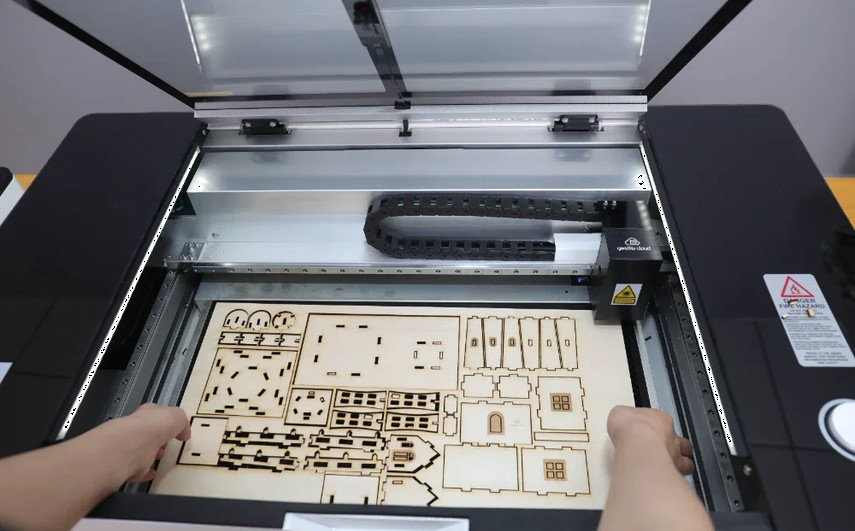

Choosing the right fiber laser cutter factory is one of the most consequential decisions a procurement manager or plant director can make when scaling a production line or modernizing a workshop. Fiber laser technology has moved from a premium niche to the dominant platform for cutting sheet metal, tubes, and thin-to-medium plate across automotive, appliance, signage, and general fabrication. This guide walks buyers through everything that matters when evaluating a fiber laser cutter factory—machine specs, pricing benchmarks, quality controls, and the vendor questions that separate serious manufacturers from generic resellers.
What Is a Fiber Laser Cutter and Why Has It Replaced CO₂ in Most Sheet-Metal Applications?
A fiber laser cutter uses an active optical fiber doped with rare-earth elements (typically ytterbium) as the gain medium. The laser beam at 1,064 nm wavelength is delivered through a flexible fiber optic cable to the cutting head, where it is focused onto the material. Compared with CO₂ lasers (10,600 nm wavelength), fiber lasers offer:
- Higher wall-plug efficiency: 30–35% vs. 10–15%, reducing electricity costs by roughly 50% at equivalent power.
- Faster cutting speeds on thin steel: up to 3× faster on 1–3 mm mild steel.
- Lower maintenance: no mirrors to align, no turbine blower, no gas consumption for the laser source itself.
- Lower cost of ownership: typical diode life exceeds 100,000 hours.
For these reasons, over 70% of new flat-bed cutting machines shipped globally in 2024 use fiber sources above 3 kW (data from Optech Consulting and VDMA annual reports). A modern fiber laser cutter factory therefore focuses almost exclusively on fiber platforms for sheet and tube cutting.
Key Specifications to Evaluate When Visiting a Fiber Laser Cutter Factory
Procurement teams should request a written spec sheet and, ideally, witness a cutting demo. The following parameters directly affect throughput, part quality, and operating cost.
1. Laser Source Power and Brand
Power determines the maximum thickness and speed. Common industrial tiers:
| Power | Typical Application | Mild Steel Max Thickness | Stainless Max Thickness |
|---|---|---|---|
| 1 kW | Signage, thin brackets | 5 mm | 3 mm |
| 2 kW | General fabrication | 8 mm | 5 mm |
| 3–4 kW | Appliance, automotive | 12–16 mm | 8–10 mm |
| 6–12 kW | Heavy plate, structural | 20–30 mm | 16–20 mm |
Source brands matter: IPG Photonics, Raycus, MAX, and JPT dominate the market. A reputable fiber laser cutter factory will disclose the source brand and offer a minimum 2-year warranty on the laser generator.
2. Working Area and Machine Configuration
Standard formats include 1,500 × 3,000 mm, 2,000 × 4,000 mm, and 2,000 × 6,000 mm. For high-mix, low-volume shops, a compact 1,500 × 3,000 mm bed with a shuttle table reduces load/unload downtime to under 30 seconds. Tube-cutting models add a rotary chuck rated for round, square, and rectangular profiles up to 200 mm diameter.
3. Positioning Accuracy and Repeatability
Look for positioning accuracy ≤ ±0.03 mm and repeatability ≤ ±0.02 mm over the full travel. These figures are achievable with linear-motor drives or high-precision ball-screws paired with absolute encoders. Ask the factory for a Ballbar test report or ISO 230-2 certification.
4. CNC Controller and Software
Industry-standard controllers—Siemens 840D, FANUC 31i-B5, Beckhoff, and PA 8000—offer nesting, common-line cutting, and automatic corner speed control. Software compatibility with SolidWorks, AutoCAD, and STEP/IGES files reduces engineering prep time.
Price Benchmarks: What Does a Fiber Laser Cutter Cost in 2024–2025?
Prices vary by power, bed size, and configuration. Below are FOB China ranges observed among Tier-1 and Tier-2 fiber laser cutter factories (including MeykoLaser) for standard flat-bed machines:
- 1 kW, 1,500 × 3,000 mm: $25,000–$35,000
- 2 kW, 1,500 × 3,000 mm: $35,000–$48,000
- 3 kW, 1,500 × 3,000 mm: $45,000–$60,000
- 4–6 kW, 2,000 × 6,000 mm: $70,000–$120,000
- 8–12 kW, 2,000 × 6,000 mm: $130,000–$200,000
Tube-cutting heads add $5,000–$15,000. Fully enclosed CE/UL safety cabins add $3,000–$8,000. These figures exclude shipping, installation, and training, which a professional factory typically bundles into a turnkey package.
How to Verify a Fiber Laser Cutter Factory's Quality Standards
Price alone is not a reliable proxy for quality. International buyers should verify:
- ISO 9001:2015 certification covering design, assembly, and final inspection.
- CE marking (Machinery Directive 2006/42/EC) or UL listing for North American markets.
- Incoming material inspection reports for laser sources, guide rails (Hiwin, THK), and servo motors (Yaskawa, Fanuc).
- 72-hour continuous cutting test on-site before shipment, demonstrating thermal stability and consistent edge quality.
- After-sales documentation: full electrical schematics, PLC source code access, and spare-parts list with lead times.
MeykoLaser, for example, provides all of the above and publishes test videos on request—standard practice among established fiber laser cutter factories targeting export markets.
Application Scenarios: Where Fiber Laser Cutters Deliver the Highest ROI
Understanding where fiber laser cutting outperforms plasma, waterjet, or punching helps justify capital expenditure to finance teams.
Automotive and EV Components
Chassis brackets, battery enclosures, and heat shields in 1–4 mm galvanized or aluminum sheet are cut 2–4× faster than plasma with kerf widths under 0.2 mm, reducing material waste by 5–10%.
Kitchen Appliances and Elevator Panels
Stainless steel (304, 316) from 0.8–3 mm requires clean, oxidation-free edges. Fiber lasers with nitrogen assist gas deliver mirror-ready surfaces, eliminating secondary deburring.
Agricultural and Construction Equipment
Thick mild steel (6–12 mm) at moderate speed benefits from 4–6 kW fiber sources, replacing oxy-fuel with tighter tolerances (±0.1 mm) and no heat-affected zone hardening.
Advertising and Metal Art
Intricate logos and decorative patterns in 0.5–2 mm aluminum or brass are a natural fit for 1–2 kW machines, where fine detail and speed matter more than raw power.
MeykoLaser: A Fiber Laser Cutter Factory Focused on Marking and Cutting Solutions
MeykoLaser (http://www.meyko.cn) is a China-based manufacturer specializing in laser marking machines and fiber laser cutting systems for international B2B buyers. While many factories focus solely on cutting, MeykoLaser integrates both platforms, enabling customers to mark part numbers, QR codes, and logos immediately after cutting—streamlining traceability in regulated industries such as medical devices and aerospace.
Key differentiators include:
- IPG and Raycus fiber sources with 3-year warranty options.
- Working areas from 1,500 × 3,000 mm to 2,000 × 6,000 mm, with custom formats on request.
- CE, ISO 9001, and FDA (for marking machines) certifications.
- On-site installation and operator training in over 40 countries.
- After-sales support with 24-hour remote diagnostics and spare parts shipped within 48 hours.
For procurement managers seeking a single-source fiber laser cutter factory that also delivers industrial marking capability, MeykoLaser offers a vertically integrated solution with transparent pricing and documented quality controls.
Frequently Asked Questions
Q1: How long does it take to receive a fiber laser cutter after placing an order?
Standard configurations (1–3 kW, 1,500 × 3,000 mm) ship within 15–25 working days from order confirmation. High-power or custom-bed machines require 30–45 days. Sea freight to major European or North American ports adds 20–35 days; air freight is available for urgent projects at higher cost. MeykoLaser provides a detailed production timeline before deposit and shares container-loading photos for shipment verification.
Q2: What gases are needed for fiber laser cutting, and what is the monthly cost?
Cutting mild steel under 6 mm typically uses oxygen (O₂) at 99.5% purity, costing $0.08–$0.15 per cubic meter depending on local supply. For stainless steel and aluminum, nitrogen (N₂) at 99.999% purity is required to achieve oxide-free edges; a 3 kW machine consumes approximately 8–15 Nm³/hour during cutting. A nitrogen generator (membrane or PSA) can reduce gas costs by 60–80% compared with cylinder rental for shops running two or more shifts.
Q3: Can a fiber laser cutter also perform laser marking or engraving?
Standard cutting machines are optimized for high-power continuous-wave (CW) operation and are not suitable for fine marking. However, many factories—including MeykoLaser—offer dedicated fiber laser marking machines (20 W–100 W) that handle barcodes, serial numbers, DataMatrix codes, and deep engraving on metals and engineering plastics. Integrating both processes on one production line improves traceability and reduces handling. Ask your fiber laser cutter factory about combined cutting-and-marking cells if your workflow requires post-cut identification.
Q4: What is the expected maintenance schedule and annual cost?
Fiber laser sources are virtually maintenance-free for the first 50,000–100,000 hours. Routine items include nozzle replacement ($2–$8 each, every 100–200 hours of cutting), protective window cleaning or swap ($15–$40 per set), and guide-rail lubrication. Annual maintenance for a 2–4 kW system typically runs $1,500–$3,500 including one factory technician visit. MeykoLaser includes a preventive-maintenance checklist and remote diagnostics platform at no extra charge during the warranty period.
Q5: How do I compare quotes from different fiber laser cutter factories?
Normalize every quote to the same specification: laser source brand and power, bed size, controller brand, included accessories (chiller, dust collector, shuttle table), warranty terms, and shipping terms (FOB, CIF, or DDP). Request cutting samples of your actual material and thickness; edge roughness (Ra ≤ 3.2 mm for quality cuts) and dross adhesion are more revealing than catalog specs. Finally, verify after-sales commitments in writing—response time, spare-parts availability, and training days. MeykoLaser provides itemized quotations that make side-by-side comparison straightforward.
Next Steps: Request a Quotation or Factory Tour
Selecting the right fiber laser cutter factory is a multi-factor decision that balances machine performance, total cost of ownership, and long-term support. MeykoLaser welcomes technical inquiries from procurement managers, plant engineers, and OEM integrators worldwide. Contact the MeykoLaser sales team at http://www.meyko.cn to request a cutting demo video, a customized quotation, or a virtual factory tour. Share your material type, thickness range, and daily volume targets, and receive a tailored recommendation within 24 business hours.
Frequently Asked Questions
How long does it take to receive a fiber laser cutter after placing an order?
Standard configurations (1–3 kW, 1,500 × 3,000 mm) ship within 15–25 working days from order confirmation. High-power or custom-bed machines require 30–45 days. Sea freight to major European or North American ports adds 20–35 days; air freight is available for urgent projects at higher cost. MeykoLaser provides a detailed production timeline before deposit and shares container-loading photos for shipment verification, ensuring full transparency throughout the procurement process.
What gases are needed for fiber laser cutting, and what is the monthly cost?
Cutting mild steel under 6 mm typically uses oxygen (O₂) at 99.5% purity, costing $0.08–$0.15 per cubic meter depending on local supply. For stainless steel and aluminum, nitrogen (N₂) at 99.999% purity is required to achieve oxide-free edges; a 3 kW machine consumes approximately 8–15 Nm³/hour during cutting. A nitrogen generator (membrane or PSA) can reduce gas costs by 60–80% compared with cylinder rental, making it a smart investment for high-volume shops.
Can a fiber laser cutter also perform laser marking or engraving?
Standard cutting machines are optimized for high-power continuous-wave operation and are not suitable for fine marking. However, many factories—including MeykoLaser—offer dedicated fiber laser marking machines (20 W–100 W) that handle barcodes, serial numbers, and deep engraving on metals and plastics. Integrating both processes on one production line improves traceability and reduces handling. Ask your fiber laser cutter factory about combined cutting-and-marking cells if your workflow requires post-cut identification.
What is the expected maintenance schedule and annual cost?
Fiber laser sources are virtually maintenance-free for the first 50,000–100,000 hours. Routine items include nozzle replacement ($2–$8 each, every 100–200 hours of cutting), protective window cleaning or swap ($15–$40 per set), and guide-rail lubrication. Annual maintenance for a 2–4 kW system typically runs $1,500–$3,500 including one factory technician visit. MeykoLaser includes a preventive-maintenance checklist and remote diagnostics platform at no extra charge during the warranty period.
How do I compare quotes from different fiber laser cutter factories?
Normalize every quote to the same specification: laser source brand and power, bed size, controller brand, included accessories, warranty terms, and shipping terms. Request cutting samples of your actual material and thickness; edge roughness and dross adhesion are more revealing than catalog specs. Finally, verify after-sales commitments in writing—response time, spare-parts availability, and training days. MeykoLaser provides itemized quotations that make side-by-side comparison straightforward for procurement teams.