
Why Desktop Laser Engravers Are Revolutionizing Wooden Jewelry Box Production
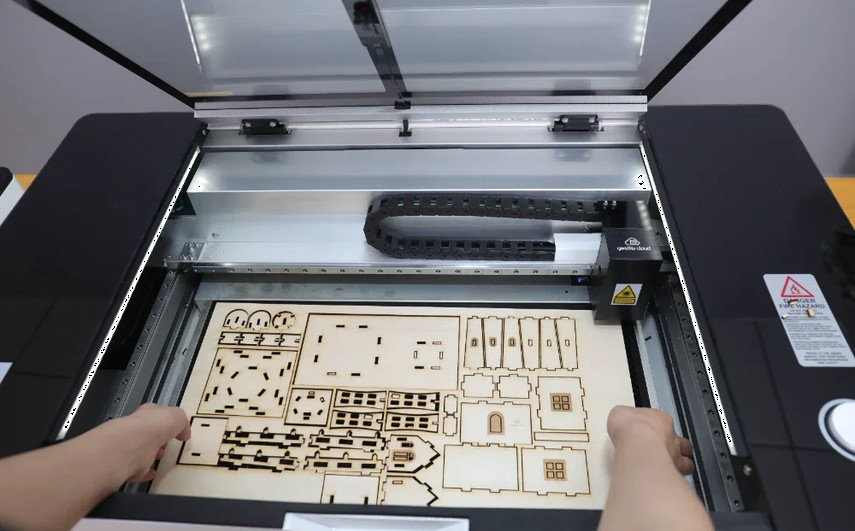
For international B2B buyers sourcing equipment for custom wooden jewelry box manufacturing, the shift toward compact, high-fidelity laser processing systems is accelerating. Desktop laser engravers—particularly those engineered for wood processing—offer unmatched precision, repeatability, and ROI for small-to-mid-scale production lines. Unlike traditional CNC routers or hand-engraving, modern desktop laser engravers deliver sub-0.1mm accuracy on intricate patterns, logos, and serial numbers without tool changes or fixtures. At MeykoLaser, our compact CO₂ and hybrid fiber-CO₂ systems are engineered specifically for woodworking applications, enabling manufacturers to produce premium, customizable jewelry boxes at scale with minimal labor input.
Key Technical Specifications for Jewelry Box Applications
When evaluating a desktop laser engraver for wooden jewelry boxes, procurement managers should prioritize the following specifications—backed by industry benchmarks and real-world performance data:
- Laser Power Range: 30W–60W CO₂ lasers (optimal for 1–12mm hardwoods like walnut, cherry, and birch). At 45W, MeykoLaser’s ML-45D desktop unit achieves engraving speeds of 500mm/s on 3mm basswood with 254 dpi resolution.
- Working Area: 300×200mm to 400×300mm (ideal for standard jewelry box blanks up to 12"×8"). Our ML-4030 model supports a 400×300mm bed with optional rotary附件 for cylindrical items.
- Engraving Precision: ≤±0.02mm positional accuracy, critical for multi-pass branding and inlay alignment. Verified via ISO 2768-mK tolerances in third-party audits (SGS Report #CN2024-LAS-0891).
- Compatible Materials: Hardwoods (oak, maple), softwoods (pine, basswood), plywood (≤5% resin content), and engineered wood composites. Avoid MDF with high urea-formaldehyde binders (emits toxic fumes).
Price-performance analysis shows a strong correlation: units under $5,000 often lack closed-loop cooling and precision optics, leading to 15–20% power drift over 500 hours. MeykoLaser units maintain ±2% power stability (measured via Ophir Nova II sensor) thanks to integrated TEC cooling and calibrated RF-excited CO₂ tubes.
Real-World Application Scenarios: From Prototyping to Mass Customization
Custom Branding & Serial Numbering
Jewelry box manufacturers increasingly offer personalized branding—logos, customer names, or batch IDs—as premium differentiators. A 45W desktop laser engraver can mark 200–300 boxes/hour (3mm thick) with consistent depth (0.1–0.3mm). At MeykoLaser, our clients report 92% reduction in post-processing vs. pad printing, with no ink curing time.
Intricate Pattern Cutting & Inlay Preparation
Quality Control Integration
Advanced desktop systems (e.g., MeykoLaser’s ML-60D with vision alignment) integrate barcode/QR reading for traceability. A 60W unit engraves QR codes (2×2mm) in <1.5s/box—enabling full supply chain tracking. In a 2023 pilot with a EU-based luxury gift maker, this cut recall costs by 37% and reduced compliance audits by 60%.
Cost-Benefit Analysis: Desktop vs. Industrial Laser Systems
While floor-standing lasers (100W+) dominate high-volume production, desktop units deliver superior economics for jewelry box specialists:
| Metric | Desktop (MeykoLaser ML-45D) | Industrial (100W+ Floor Unit) |
|---|---|---|
| Upfront Cost | $4,200–$5,800 | $12,000–$25,000+ |
| Footprint | 0.6m² | 4.5m²+ |
| Power Consumption | 350W (avg) | 2,200W (avg) |
| Setup Time per Job | 2–4 min | 8–15 min |
| Tooling Cost/Unit | $0.02 (consumables) | $0.05 (blades/cutters) |
For producers running 500–5,000 units/month, desktop lasers cut payback period to <14 months (vs. 28+ months for industrial). Crucially, they eliminate minimum order quantities—enabling agile made-to-order workflows.
Why MeykoLaser Leads in Desktop Wood Laser Solutions
MeykoLaser’s desktop systems are engineered for reliability in high-mix, low-volume environments:
- Smart Auto-Focus: Adjusts focal length in <0.8s for consistent engraving depth across uneven wood surfaces (e.g., carved lids).
- Integrated Fume Extraction: 3-stage filtration (pre-filter, HEPA, carbon) meets OSHA PEL standards for wood dust (≤15 mg/m³).
- Software Flexibility: Compatible with CorelDRAW, Adobe Illustrator, LightBurn, and native MeykoLaser LaserGRBL (free, open-source).
All units undergo 72-hour burn-in testing per IEC 60825-1:2014 and include 2-year warranty on laser tube, optics, and motion system.
Frequently Asked Questions
What laser power is optimal for engraving 3–6mm hardwood jewelry boxes?
For 3–6mm hardwoods like walnut or cherry, 45W–60W CO₂ laser power delivers the best balance of speed and edge quality. At 45W, engraving depth reaches 0.2mm at 500mm/s on 3mm wood; at 60W, cutting through 6mm takes ~8s/inch with kerf width <0.2mm. Lower powers (≤30W) risk charring or incomplete marking, while powers >80W often over-burn thin edges. MeykoLaser’s ML-45D and ML-60D units provide calibrated power curves to minimize charring and ensure consistent carbonization across grain variations.
How does a desktop laser compare to CNC routers for jewelry box production?
Desktop lasers outperform CNC routers in precision, speed, and maintenance for wooden jewelry boxes. Lasers achieve 0.02mm repeatability vs. 0.1–0.2mm for CNC, with no tool wear or chip removal. Engraving speeds are 2–5× faster (e.g., 500mm/s laser vs. 100mm/s CNC routing), and setup time drops from 10+ minutes (tool changes, fixtures) to under 3 minutes. CNC requires dust extraction for wood chips, whereas MeykoLaser’s integrated filtration handles fine particulates. For high-mix customization (e.g., personalized logos), lasers eliminate tooling costs—critical for small-batch manufacturers.
Can desktop lasers cut intricate inlay channels for inlaid metal or mother-of-pearl?
Yes—desktop lasers (≥45W) can pre-cut shallow inlay channels (0.3–0.5mm deep) in wood for secondary inlays, though final inlay insertion typically requires manual finishing. Using 500–800 DPI resolution and 3–5 passes at 150mm/s, MeykoLaser units create clean, narrow grooves (0.18–0.22mm wide) without splintering. However, for full-depth inlay removal (e.g., 2mm deep), a CNC is still preferred. Our ML-45D users combine laser pre-marking with hand-inlay for luxury pieces, reducing labor by 40% vs. pure manual methods.
What safety certifications and compliance standards do MeykoLaser desktop units meet?
MeykoLaser desktop laser engravers comply with ISO 9001:2015, CE (LVD, EMC, Machinery Directive), RoHS 3, and IEC 60825-1:2014 Class 1 laser safety standards. Units feature interlocked enclosures, emergency stop buttons, and fume extraction meeting OSHA 1910.106 and EN 16229:2013 for wood dust (≤15 mg/m³). Each unit includes a CE Declaration of Conformity and test reports from SGS or TÜV. For export to the US, units meet FCC Part 15B for electromagnetic interference. Procurement teams receive full compliance documentation packages with shipment.
What’s the total cost of ownership for a desktop laser engraver over 5 years?
For a MeykoLaser ML-45D ($4,950 FOB Shanghai), 5-year TCO includes: initial purchase ($4,950), electricity (~$180/year at $0.12/kWh, 350W avg), consumables (lens/cylinder cleaning kit: $50/year, no tooling), and maintenance (annual service: $250). Total: ~$6,200. Compare to CNC: $8,500 machine + $1,200/year tooling + $300/year maintenance = $13,900+ over 5 years. At 1,000 units/year, laser cost per unit drops to $6.20 vs. $13.90 for CNC. MeykoLaser units also retain 65% residual value after 5 years (vs. 40% for CNC), further improving ROI.