
Understanding CO2 laser engraving machine price is essential for procurement managers evaluating capital equipment investments. Prices typically range from $2,500 for desktop units to over $50,000 for industrial-grade systems. Factors like laser power (30W–150W), work area size, cooling systems, and automation integration significantly affect final costs. This guide breaks down pricing tiers, hidden costs, and key specifications to help international B2B buyers make informed sourcing decisions.
CO2 Laser Engraving Machine Price Ranges by Power & Configuration
CO2 laser engraving machines are categorized primarily by laser tube power and bed size. Entry-level models with 30–40W tubes are suitable for small-batch engraving on wood, acrylic, and leather, with prices between $2,500 and $6,000. Mid-range 60–80W systems, ideal for signage and packaging industries, cost $8,000–$18,000. Industrial 100–150W machines for high-volume production lines range from $20,000 to $50,000+. These prices reflect standard configurations; adding rotary attachments, conveyor belts, or custom automation can increase costs by 15–30%.
Entry-Level Machines ($2,500–$6,000)
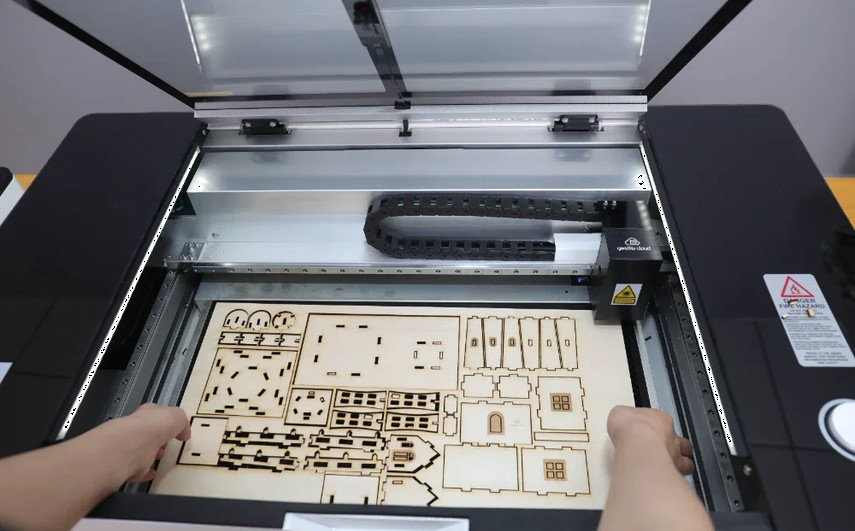
Desktop CO2 laser engravers with 30–40W power are designed for prototyping, small workshops, and educational institutions. Typical work areas measure 300×200mm to 400×400mm. They offer engraving speeds up to 300mm/s and positioning accuracy of ±0.01mm. While cost-effective, these machines often lack advanced cooling and exhaust systems, requiring additional investment in chilling units and ventilation. MeykoLaser offers compact models in this segment with integrated air cooling and user-friendly RDWorks software compatibility.
Mid-Range Industrial Systems ($8,000–$18,000)
For manufacturers requiring higher throughput and precision, 60–80W CO2 laser systems represent the optimal balance of price and performance. These machines feature work areas from 600×400mm to 900×600mm, speeds up to 600mm/s, and repeatability of ±0.02mm. They include CW-3000 or CW-5200 chillers for continuous operation and are compatible with CAM software for automated workflows. This tier is the most popular choice among international buyers seeking reliable 24/7 production capabilities.
High-Power Production Lines ($20,000–$50,000+)
Industrial CO2 laser engravers with 100–150W or higher power are engineered for mass production in automotive, electronics, and packaging sectors. They accommodate large-format materials up to 1300×900mm, cutting speeds exceeding 1000mm/s for thin materials, and advanced features like auto-focus and camera positioning. Integration with MES systems and robotic loading further increases upfront costs but delivers long-term ROI through labor reduction and yield improvement.
Key Factors Affecting CO2 Laser Engraving Machine Price
Beyond basic power and size, several technical components influence CO2 laser engraving machine price. The laser tube brand significantly impacts cost; domestic Chinese tubes cost $150–$400 with 1,500–2,000 hour lifespan, while imported tubes like RECI or EFR cost $800–$2,000 but last 8,000–12,000 hours. Optical lenses from reputable suppliers (II-VI, Thorlabs) ensure consistent beam quality but add $100–$500 per set. Cooling systems range from basic air cooling to industrial chillers ($300–$2,000). Motion control systems using servo motors versus stepper motors also create price differences of $500–$2,000, affecting long-term precision and maintenance costs.
Software & Control Systems
Standard machines ship with proprietary controllers supporting BMP, PLT, DXF formats. Upgrading to RDWorks, LightBurn, or SCANLAB systems adds $200–$1,000 but enables advanced features like camera registration, variable data processing, and network connectivity. For Industry 4.0 integration, buyers should budget additional $1,000–$3,000 for IoT-enabled controllers and cloud-based monitoring capabilities.
Material Handling & Automation
Manual loading suffices for batch production, but automated sheet feeders and rotary attachments increase capital expenditure. A basic rotary axis for cylindrical engraving costs $300–$800, while automated conveyor systems for continuous processing add $3,000–$10,000. Return on investment typically occurs within 12–18 months for high-volume operations through reduced labor and increased throughput.
Total Cost of Ownership: Beyond the Purchase Price
Procurement managers must evaluate total cost of ownership when comparing CO2 laser engraving machine price. Annual consumables include laser tubes ($200–$2,000 replacement), focusing lenses ($50–$200), mirrors ($20–$80 each), and air filters ($30–$100). Maintenance costs average 3–5% of machine price per year. Energy consumption ranges from 500W for 40W systems to 2,500W for 150W configurations, translating to $200–$1,200 annually depending on electricity rates and usage patterns.
Training & Technical Support
International buyers should consider training costs for operators and maintenance staff. On-site training typically costs $500–$1,500 plus travel expenses, while remote training via video conferencing is often included with machine purchase. Comprehensive service contracts covering preventive maintenance and spare parts availability prevent costly production downtime. MeykoLaser provides English-language training materials, 24/7 technical support, and regional spare parts warehouses to minimize service response times.
Financing & Payment Terms
Equipment financing options can ease cash flow pressure for capital purchases. Many suppliers offer 30% advance payment with balance against shipping documents, or leasing arrangements for qualified buyers. Letters of credit are standard for international transactions, with payment terms typically 30/70 or 40/60 split. Some suppliers provide extended warranties or service credit programs that reduce effective cost of ownership over 3–5 year periods.
Comparing CO2 with Alternative Laser Technologies
While evaluating CO2 laser engraving machine price, buyers should compare total capabilities against fiber and UV laser systems. Fiber lasers (1064nm) excel at metal marking but cannot process organic materials effectively. UV lasers (355nm) provide cold processing for sensitive electronics but cost 2–3x more than equivalent CO2 systems. For applications involving wood, acrylic, leather, paper, and textiles, CO2 lasers offer the best combination of quality, speed, and affordability. Hybrid systems combining multiple laser sources are available for manufacturers processing diverse material portfolios.
Application-Specific ROI Analysis
Signage manufacturers typically achieve ROI within 6–12 months through increased production speed and reduced material waste. Packaging companies report 30–50% cost reduction compared to traditional die-cutting methods. Electronics manufacturers using CO2 lasers for PCB marking and component identification achieve payback periods of 8–15 months when replacing inkjet printing systems. These calculations assume single-shift operation and standard material processing requirements.
Selecting the Right Supplier: Quality Certifications & Standards
International procurement requires suppliers meeting recognized quality and safety standards. Essential certifications include CE marking for European market compliance, FDA registration for US market access, and ISO 9001:2015 quality management systems. MeykoLaser maintains these certifications alongside additional compliance with RoHS and REACH directives. Buyers should verify factory audit reports, request sample processing videos, and confirm spare parts availability for specific machine models before placing orders.
Pre-Purchase Evaluation Checklist
Before finalizing CO2 laser engraving machine price negotiations, confirm the following: laser tube warranty period (minimum 6 months recommended), available power options for local electrical standards, software language support, installation requirements (floor space, power supply, ventilation), and training provisions. Request references from similar industry applications and review supplier track record for export documentation and customs clearance support.
Future-Proofing Your Investment
Technology evolution affects long-term value retention of CO2 laser equipment. Current trends include AI-powered autofocus systems, predictive maintenance algorithms, and energy-efficient RF-excited tubes replacing DC-excited designs. Modular machine architectures allowing field upgrades protect capital investment as production needs evolve. When negotiating CO2 laser engraving machine price, prioritize suppliers offering upgrade paths and technology roadmaps aligned with your industry's digital transformation initiatives.
Contact MeykoLaser's international sales team today to receive a customized quotation based on your specific production requirements, material types, and volume targets. Our engineers can recommend optimal configurations balancing performance, price, and future scalability for your manufacturing operations.
Frequently Asked Questions
What is the average price range for a CO2 laser engraving machine?
CO2 laser engraving machine prices vary significantly based on power and configuration. Entry-level 30-40W desktop models cost $2,500-$6,000, suitable for small workshops and prototyping. Mid-range 60-80W industrial systems range from $8,000-$18,000, offering optimal performance for signage and packaging applications. High-power 100-150W production systems cost $20,000-$50,000+, designed for automotive, electronics, and high-volume manufacturing. Additional costs for cooling systems, automation, and software should be budgeted at 15-30% above base machine price. MeykoLaser provides transparent pricing with detailed specifications to help buyers select configurations matching their production requirements and budget constraints.
How does laser tube power affect CO2 engraving machine price and performance?
Laser tube power directly influences both price and processing capabilities. Higher wattage enables faster cutting speeds and thicker material processing but increases machine cost and energy consumption. A 40W tube costs $150-$400 and effectively engraves wood, acrylic, and leather up to 5mm thickness. 60-80W tubes ($400-$1,200) cut materials up to 10mm and increase engraving speed by 50-100%. Industrial 100-150W tubes ($800-$2,000) process 15-25mm materials and maintain high speeds for production volumes. Imported tubes like RECI or EFR cost more initially but offer 4-6x longer lifespan, reducing long-term operating costs. MeykoLaser offers both domestic and imported tube options with clear performance specifications to help buyers optimize price-performance ratios.
What are the hidden costs when purchasing a CO2 laser engraving machine?
Beyond the base machine price, buyers should budget for several additional expenses. Cooling systems (chillers) cost $300-$2,000 depending on power requirements. Exhaust ventilation and air filtration systems add $200-$800. Annual consumables including laser tubes, lenses, and mirrors typically cost $300-$2,000. Training expenses range from $500-$1,500 for on-site instruction. Shipping and customs duties for international orders add 10-25% to equipment cost. Installation and commissioning may require electrical upgrades or facility modifications. Maintenance contracts and spare parts inventory should be planned at 3-5% of machine price annually. MeykoLaser provides comprehensive quotations including all ancillary costs to prevent budget surprises for international procurement teams.
How do I choose between CO2, fiber, and UV laser engraving systems?
Selection depends primarily on material types and application requirements. CO2 lasers (10.6μm wavelength) excel at processing organic materials including wood, acrylic, leather, paper, and textiles, offering the best price-performance ratio for these applications. Fiber lasers (1064nm) are optimal for metal marking and engraving but cannot effectively process transparent or organic materials. UV lasers (355nm) provide cold processing for sensitive electronics, medical devices, and brittle materials but cost 2-3x more than equivalent CO2 systems. For manufacturers processing diverse materials, hybrid systems or multiple machines may be necessary. MeykoLaser's application engineers can evaluate your specific material processing requirements and recommend the most cost-effective laser technology for your production needs.
What certifications should I require when purchasing CO2 laser equipment internationally?
International buyers should verify essential certifications ensuring safety and regulatory compliance. CE marking is mandatory for European market access, indicating compliance with EU machinery safety directives. FDA registration is required for US market entry. ISO 9001:2015 certification demonstrates supplier quality management systems. Additional relevant certifications include RoHS compliance for electrical/electronic equipment and REACH for chemical safety. For specific industries, medical device manufacturers may require ISO 13485, while automotive suppliers often mandate IATF 16949. MeykoLaser maintains comprehensive certifications including CE, FDA, and ISO 9001, with documentation available for customer audit requirements. Requesting factory audit reports and sample processing verification before order confirmation is recommended practice for international procurement.