
Understanding the True Cost of Industrial CO2 Engraving Solutions
For procurement managers and manufacturing directors, the CO2 engraving machine price is rarely just a single figure. It is a complex variable influenced by tube type, power output, field size, and the integration of automation systems. While consumer-grade units may offer low entry costs, they often fail to meet the durability and precision standards required in industrial environments. At MeykoLaser, we analyze the total cost of ownership (TCO) rather than just the sticker price, ensuring that your investment in laser marking technology delivers immediate ROI through reduced waste, higher throughput, and lower maintenance overhead.
Industrial-grade CO2 lasers are essential for marking organic materials such as wood, acrylic, leather, paper, and certain plastics. Unlike fiber lasers, which dominate metal marking, CO2 technology excels in non-metal applications due to its ability to vaporize materials with high precision. Understanding the market price range helps buyers avoid under-specifying equipment, which leads to frequent downtime, or over-specifying, which wastes capital on unnecessary power and features.
Price Drivers: What Determines the Investment Level?
The variance in CO2 engraving machine price can range from $3,000 for entry-level desktop units to over $25,000 for high-speed, automated industrial systems. Several critical factors drive these costs:
1. Laser Tube Type and Power Output
The heart of the system is the CO2 tube. Sealed glass tubes are common in lower-priced models ($3,000–$8,000). They are cost-effective but have a shorter lifespan (typically 8,000–10,000 hours) and require periodic realignment or replacement. In contrast, radio frequency (RF) sealed metal tubes found in premium MeykoLaser systems cost significantly more ($10,000–$25,000+). However, RF tubes offer a lifespan exceeding 20,000 hours, consistent beam quality, and no gas refilling needs. For high-volume manufacturing, the higher upfront cost of an RF tube is offset by reduced operational expenditure and minimal downtime.
2. Work Area and Bed Size
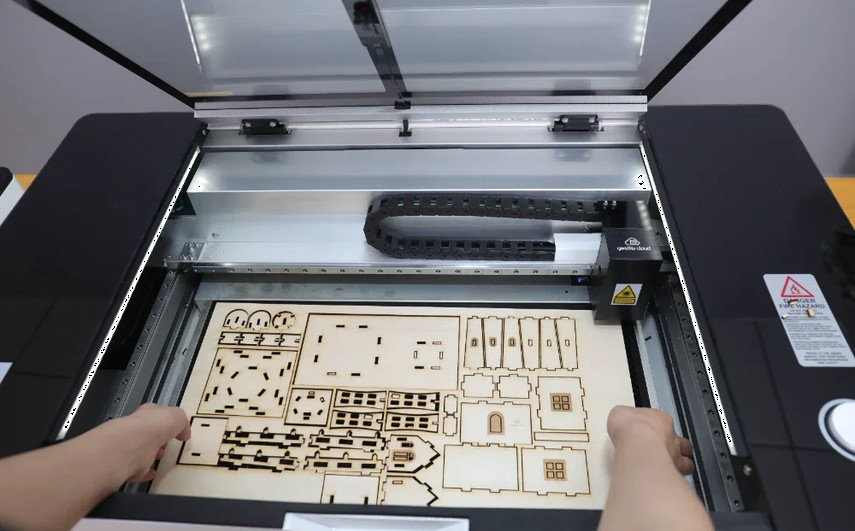
Standard work areas range from 300x300mm to 600x900mm. Larger beds require more robust motion control systems and larger optics, increasing the price. For batch production of small items, a standard bed may suffice. However, for large-format engraving, such as signage or furniture components, a 900x600mm or larger bed is necessary, pushing the price toward the upper end of the industrial spectrum.
3. Automation and Integration Capabilities
Manual loading is standard in basic models. However, industrial buyers often require rotary axes for cylindrical objects (like bottles or pens) or conveyor belts for continuous flow production. Adding a rotary axis can add $1,500–$3,000 to the base price, while a full conveyor system with PLC control can add $5,000–$10,000. These integrations are critical for reducing labor costs and increasing throughput, directly impacting the effective price per marked unit.
4. Software and Control Systems
Basic machines come with standard vector graphics software. Advanced industrial systems include proprietary software with auto-focus, power modulation, and database integration capabilities. MeykoLaser systems feature advanced control interfaces that allow for remote monitoring and maintenance alerts, reducing the need for on-site technical support.
Industry Application Scenarios and Material Compatibility
Selecting the right machine depends heavily on the materials you process. The CO2 engraving machine price must be justified by the machine's ability to handle your specific material mix efficiently.
- Wood and Bamboo: CO2 lasers are ideal for deep engraving and cutting wood. They provide clean edges without charring when properly tuned. High-power units (80W–150W) are recommended for thick materials to ensure speed.
- Acrylic and PMMA: CO2 lasers create crystal-clear cuts on acrylic. Lower power settings (30W–60W) are sufficient for thin sheets, while higher power is needed for thick blocks. Precision is key to avoiding melting or yellowing.
- Leather and Textiles: For fashion and automotive interiors, CO2 lasers provide precise cutting and marking without fraying. The ability to adjust power dynamically allows for subtle engraving on sensitive fabrics.
- Packaging and Paper: In the food and pharmaceutical industries, CO2 lasers are used for date coding, batch numbering, and QR code marking on cardboard and paperboard. Speed is critical here, requiring high-repetition-rate laser sources.
MeykoLaser: Maximizing Value Through Engineering Excellence
At MeykoLaser, we believe that competitive pricing should not come at the expense of reliability. Our industrial CO2 laser marking machines are engineered to meet ISO standards, ensuring consistent performance over thousands of operating hours. We utilize high-precision galvanometers and robust mechanical structures to minimize vibration and maintain focus accuracy.
Our pricing strategy is transparent. We provide detailed quotations that break down the cost of the laser source, motion system, software, and after-sales support. This allows procurement managers to compare apples-to-apples with other vendors. Furthermore, our global service network ensures that spare parts are readily available, minimizing the cost of potential repairs.
Comparative Data: Sealed Glass vs. RF Tubes
| Feature | Sealed Glass Tube | RF Metal Tube (MeykoLaser Standard) |
|---|---|---|
| Initial Cost | Low ($3k-$8k) | Higher ($12k-$25k) |
| Lifespan | 8,000–10,000 hours | 20,000+ hours |
| Maintenance | Gas refill, realignment | Zero maintenance |
| Beam Quality | Degrades over time | Consistent throughout life |
| TCO (5 Years) | High (due to downtime/replacements) | Low (minimal downtime) |
Conclusion: Investing in Long-Term Efficiency
When evaluating the CO2 engraving machine price, look beyond the initial purchase cost. Consider the lifespan of the laser tube, the efficiency of the marking process, and the support services provided. MeykoLaser offers a range of solutions tailored to different budgets and production needs, from entry-level industrial systems to high-end automated lines. By choosing a reliable, high-performance machine, you reduce long-term operational costs and enhance your competitive edge in the market.
Ready to optimize your production line? Contact our sales team today for a personalized quote and technical consultation. Visit www.meyko.cn to explore our full catalog of laser marking solutions.
Frequently Asked Questions
What is the average price range for an industrial CO2 engraving machine?
The price range for industrial CO2 engraving machines typically spans from $3,000 for basic desktop units with sealed glass tubes to over $25,000 for high-power, automated systems with RF metal tubes. The variation depends on factors such as laser power, work area size, and the inclusion of automation features like rotary axes or conveyor belts. For most manufacturing applications requiring high uptime and precision, investing in the mid-to-high range ($10,000–$18,000) is recommended to ensure long-term reliability and lower total cost of ownership.
How does the type of CO2 laser tube affect the overall price and performance?
Sealed glass tubes are less expensive upfront but have a shorter lifespan (8,000–10,000 hours) and require periodic maintenance like gas refilling and realignment. In contrast, Radio Frequency (RF) metal tubes, often used in premium MeykoLaser systems, cost more initially but offer a lifespan of 20,000+ hours with zero maintenance. For high-volume production, the higher initial cost of RF tubes is justified by reduced downtime and consistent beam quality, leading to a lower total cost of ownership over five years.
Which materials are best suited for CO2 laser engraving?
CO2 lasers are ideal for organic and non-metallic materials. They excel at marking and cutting wood, bamboo, acrylic, leather, paper, cardboard, glass, and certain plastics like ABS. The 10.6-micron wavelength of CO2 lasers is strongly absorbed by these materials, allowing for precise engraving and clean cuts. They are not suitable for bare metals, which require fiber lasers, but are the industry standard for packaging, signage, and fashion industries.
What additional costs should I consider when buying a CO2 engraving machine?
Beyond the machine cost, consider expenses for installation, training, and maintenance. While MeykoLaser provides comprehensive training and remote support, you may need to budget for compressed air systems or chiller units if not included. Additionally, factor in the cost of replacement parts such as lenses and mirrors, which degrade over time. Automation add-ons like rotary axes for cylindrical objects or conveyor systems for continuous production will also increase the initial investment but can significantly boost productivity.
How can I calculate the ROI of a CO2 laser marking system?
To calculate ROI, compare the cost of manual marking or outsourcing against the operational costs of the laser system. Consider the speed increase, reduction in material waste, and elimination of consumables like ink and solvents. A typical industrial CO2 laser can mark parts in seconds, reducing labor costs significantly. With a lifespan of 20,000+ hours for RF tubes, the system can pay for itself within 1–2 years of high-volume use, depending on your production volume and current marking methods.