
Understanding CO₂ Engraving Machine Pricing Factors
When evaluating a CO₂ engraving machine price, procurement managers must look beyond the headline figure. The total cost of ownership—including performance, durability, service support, and long-term ROI—often matters more than the initial purchase price alone. At MeykoLaser, we help global manufacturers make informed decisions by transparently aligning specifications with real-world production needs.
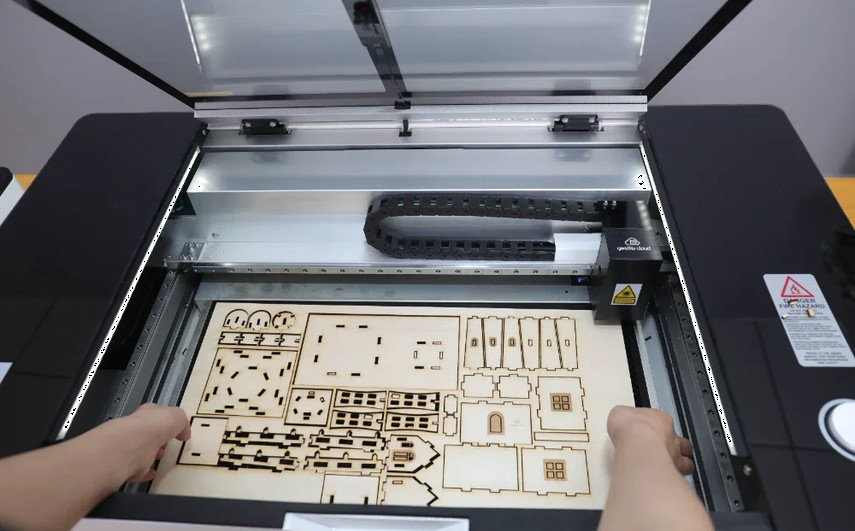
CO₂ laser engravers remain the industry standard for non-metal materials like wood, acrylic, leather, fabric, glass, and ceramics. Their widespread adoption across packaging, signage, apparel, and gift industries stems from reliable beam quality, high processing speeds, and relatively low operational costs. However, price variations across the market can be substantial—from under $5,000 for basic desktop units to over $50,000 for industrial-grade systems with automation.
Key Drivers Affecting CO₂ Laser Engraver Cost
Several technical and commercial factors directly influence the CO₂ engraving machine price:
- Laser power (wattage): 30W–150W is typical. Higher power enables deeper engraving and faster throughput but increases tube cost and power consumption.
- Work area size: Standard sizes range from 30×20 cm (desktop) to 130×90 cm (industrial). Larger beds demand more precise motion systems and structural rigidity, raising the price.
- Controller quality: Optimized software compatibility (e.g., RDWorks, LightBurn) and real-time motion control affect precision and ease of use.
- Component reliability: High-quality linear guides, stepper/servo motors, and sealed CO₂ laser tubes reduce downtime and maintenance frequency.
- Automation integration: Options like rotary attachments, conveyor systems, or auto-focusing add 15–30% to base price but significantly improve labor efficiency.
MeykoLaser’s CO₂ Engraving Solutions: Performance Meets Value
MeykoLaser designs industrial-grade CO₂ laser engravers specifically for international B2B customers seeking consistent output, minimal downtime, and scalable production. Our machines are CE- and FDA-certified, with RoHS-compliant components and a global service network covering 60+ countries.
Product Line Overview & Pricing Benchmark
Below is a comparative snapshot of our best-selling CO₂ engraving models—designed to help procurement teams benchmark quotes and avoid under-specification:
MK-CO2 Series: Desktop Entry-Level (30–60W)
Perfect for SMEs, prototyping labs, and small-batch production. Starting at $6,800 USD (FOB Shanghai), models include:
- MK-CO2 3002 (30W, 300×200 mm work area): Ideal for engraving wood, acrylic, and thin leather. Base price: $6,800.
- MK-CO2 6040 (60W, 600×400 mm work area): Handles thicker wood and multi-layer acrylic. Base price: $8,950.
Both feature high-precision stepping motors, optical path shielding, and pre-aligned optical components—reducing setup time by up to 40% compared to generic alternatives.
MK-CO2 Pro Series: Mid-Range Industrial (80–100W)
Built for 24/7 production environments. Priced from $14,200 USD:
- MK-CO2 9060 (80W, 900×600 mm): Used in signage shops for large-format acrylic lettering. Includes auto-focus and rotary chuck. Base price: $14,200.
- MK-CO2 1060 (100W, 1000×600 mm): Capable of deep engraving on stone and coated metals. Optional exhaust filtration adds $850.
These units incorporate Meyer’s proprietary beam-shaping optics for uniform engraving across the entire work area—eliminating edge-to-center consistency issues common in lower-tier machines.
MK-CO2 Elite Series: High-Throughput Automation (130–150W)
For high-volume factories integrating laser engraving into assembly lines. Starting at $28,500 USD:
- MK-CO2 1390 Auto (130W, 1300×900 mm with conveyor): Processes up to 120 pieces/hour (e.g., personalized phone cases). Includes PLC control and remote diagnostics. Base price: $28,500.
- MK-CO2 16100 Robotic (150W + robot arm integration): Enables 3D contour engraving on curved surfaces like bottles or trophies. Starting price: $42,000.
Our Elite models come with a 2-year warranty on the laser tube and 18-month coverage on motion components—far exceeding the industry average of 12 months.
Total Cost of Ownership: Why Cheaper Isn’t Always Better
Many procurement managers focus solely on upfront CO₂ engraving machine price, only to face unexpected costs within 12–18 months:
- Tube replacement: Generic machines often use imported laser tubes with 8,000–10,000 hour lifespans. MeykoLaser’s sealed CO₂ tubes (from reputable Chinese or German OEMs) last 20,000+ hours, cutting replacement frequency by 50%.
- Downtime losses: Poor alignment stability or faulty power supplies can cause 3–5 days of unplanned downtime annually in low-cost units. Our Mean Time Between Failure (MTBF) exceeds 15,000 hours.
- Training & support: MeykoLaser includes on-site or remote operator training, multilingual technical manuals, and 24/7 live chat support—reducing ramp-up time by 65%.
Our clients report an average ROI period of 8–14 months when upgrading from manual engraving or outsourcing—proving that investing in a higher-quality system pays for itself quickly.
How to Evaluate a CO₂ Engraving Machine Quote
When comparing CO₂ engraving machine price quotes, ask suppliers these critical questions:
- What brand/model is the laser tube, and what’s its guaranteed lifespan? (Avoid generic “100W” claims without tube certification.)
- Are all motion components (motors, rails, belts) included in the quoted price? (Some vendors exclude rotary attachments or exhaust systems.)
- Does the warranty cover labor and travel for repairs? (International service logistics can double repair costs.)
- Can you provide a live demo using our specific material? (Material performance varies significantly across power ranges.)
Frequently Asked Questions (FAQ)
What are the primary technical factors that influence the final price of a CO2 engraving machine?
Several core technical and commercial factors determine the CO2 laser engraver price. These include laser power, such as 30W to 150W, work area size from 30×20 cm to 130×90 cm, controller quality compatible with software like RDWorks and LightBurn, and automation integration that adds 15% to 30% to the base cost. MeykoLaser evaluates these factors to align specifications with actual production requirements.
How does automation integration affect the total cost and efficiency of a CO2 laser engraver?
Incorporating automation features, such as rotary attachments, conveyor systems, or auto-focusing, typically increases the base price by 15% to 30%. This upgrade is directly correlated with improved labor efficiency and enhanced production consistency. MeykoLaser integrates these automation options into its MK-CO2 Series machines to meet the scalability needs of international B2B customers.
Which certification and compliance standards does MeykoLaser ensure for its CO2 engraving machines?
MeykoLaser ensures all its CO2 laser engravers meet rigorous certification standards. The machines are certified to CE and FDA regulations, utilize RoHS-compliant components, and operate across diverse material types like wood, acrylic, and leather. This compliance guarantees reliable performance, safety, and a global service network covering over 60 countries for international buyers.
How can MeykoLaser help B2B procurement teams determine the appropriate machine model for their specific production scale?
MeykoLaser provides a detailed product line overview and pricing benchmark to assist procurement teams in selecting the right CO2 engraver. Options range from desktop entry-level models with 30W to 60W power for SMEs and prototyping to industrial-grade systems with larger work areas. This transparent alignment ensures buyers avoid under-specification while meeting their production needs.
What is the typical work area size range provided by MeykoLaser's desktop and industrial CO2 engravers?
MeykoLaser's CO2 engravers offer a wide range of work area sizes to suit different production needs. Desktop entry-level models typically feature standard work areas, while industrial-grade systems extend to larger dimensions such as 130×90 cm. This scalability ensures the machines can handle from small prototypes to large-scale manufacturing tasks with precise motion control.