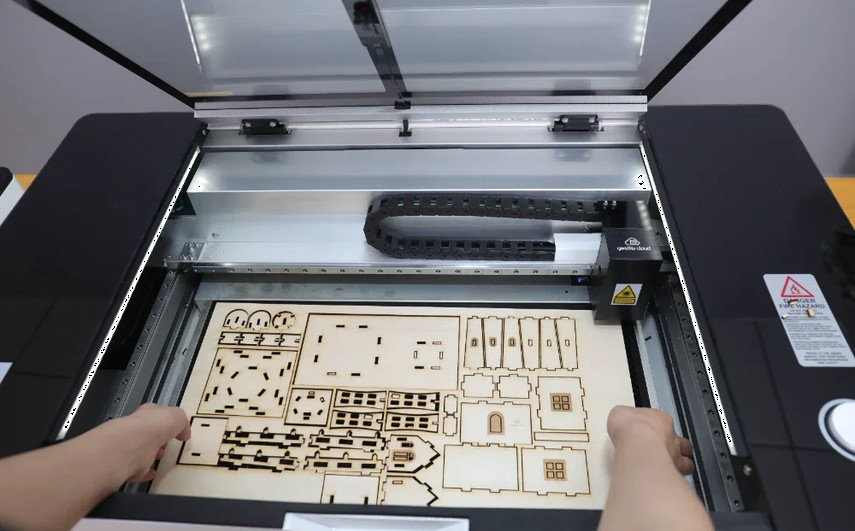

Understanding CO2 Engraving Machine Pricing: A Strategic Buying Guide
In today’s competitive manufacturing and customization landscape, investing in a reliable CO₂ engraving machine is essential for businesses seeking precision, versatility, and scalability. Yet one of the most common queries from international procurement managers and B2B buyers is: “What’s the CO₂ engraving machine price?” The answer isn’t straightforward—it depends on specifications, power output, automation level, and total cost of ownership. This comprehensive guide helps you understand the factors influencing CO₂ laser engraver pricing, benchmark against industry standards, and identify the best value solutions—like those offered by MeykoLaser.
Key Factors That Influence CO₂ Engraving Machine Price
CO₂ laser engravers vary significantly in cost, from entry-level desktop units to industrial-grade systems. Here are the primary variables affecting price:
- Laser Power (Wattage): 30W–150W machines dominate the SME market. A 30W unit may start under $3,000 USD, while 100W+ industrial models exceed $15,000 USD. Higher wattage enables deeper engraving on wood, acrylic, and stone—and faster processing on thicker materials.
- Work Area Size: Standard desktop models (300×200 mm) cost less than large-format machines (e.g., 600×400 mm or 900×600 mm). Larger beds support batch production and oversized parts but increase structural and motion-system costs.
- Control System & Software:
- Basic models use integrated controllers with USB/SD card input.
- Advanced systems include Ethernet, Wi-Fi, and PC-free operation with intuitive software (e.g., RDWorks, LaserGRBL, or MeykoLaser’s proprietary interface).
- Component Quality: High-end machines feature imported optics (e.g., USA lenses, German mirrors), precision linear rails, and sealed CO₂ laser tubes (e.g., 20,000+ hour lifespan), reducing long-term maintenance and downtime.
- Automation & Integration: Optional add-ons like rotary attachments (for cups, bottles), exhaust systems, air assist, or conveyor belts add $500–$3,000+ to the base price but improve throughput and safety.
Typical CO₂ Engraving Machine Price Ranges (2024)
Based on real-world configurations sold by MeykoLaser and other OEMs, here’s a transparent breakdown of expected price brackets:
| Category | Laser Power | Work Area | Typical Price Range (USD) | Best For |
|---|---|---|---|---|
| Entry-Level Desktop | 30–50W | 300×200 mm | $2,800 – $4,500 | Small workshops, hobbyists, prototyping |
| Mid-Range Production | 60–80W | 400×300 mm | $5,500 – $9,000 | Sign shops, awards, light manufacturing |
| Industrial-Grade | 100–150W | 600×400 mm+ | $12,000 – $22,000+ | High-volume production, packaging, textiles |
Note: MeykoLaser offers customizable packages—including shipping, installation, and training—making total landed cost predictable for international buyers.
Why MeykoLaser Delivers Superior Value in CO₂ Laser Engravers
While some vendors quote low initial prices, hidden costs—like frequent tube replacements, service fees, or slow delivery—impact ROI. MeykoLaser distinguishes itself through:
- High-Efficiency Sealed CO₂ Laser Tubes: 100W tubes rated for 20,000 hours (vs. 10,000 in budget models), reducing downtime and consumable costs.
- Robust Industrial Frame: Cast aluminum or welded steel beds minimize vibration, ensuring ±0.02 mm repeatability over millions of cycles.
- Plug-and-Play Software: MeykoLaser’s user-friendly interface supports AI-driven path optimization and material libraries for quick setup.
- Global Support Network: 24/7 technical assistance, multilingual documentation, and 12-month warranty on core components.
- Scalable Configurations: From compact benchtop units to fully automated production lines, MeykoLaser tailors machines to your throughput needs.
Calculating True ROI: Beyond the CO₂ Engraving Machine Price Tag
A $9,000 machine may cost more in the long run than a $12,000 unit with higher reliability and throughput. Consider these metrics:
- Cost Per Unit (CPU): A 100W MeykoLaser laser can process 200+ acrylic plaques/hour vs. 120 on a comparable 80W unit—boosting revenue potential.
- Material Waste Reduction: Precision focus optics and adjustable focal length minimize charring and rework.
- Energy Efficiency: MeykoLaser’s power-supply optimization cuts electricity use by 15–20% vs. older designs.
- Resale Value: Industrial MeykoLaser machines retain 60–70% value after 3 years due to modular upgrades and parts availability.
Real-World Example: A packaging label printer in Vietnam invested in a MeykoLaser 80W CO₂ laser (600×400 mm work area, $8,200). Within 8 months, the machine paid for itself through reduced outsourcing costs (saving $1,100/month) and new service revenue ($1,800/month from custom engraving orders).
What to Ask Before Buying a CO₂ Engraving Machine
As a procurement manager, request the following details to avoid costly surprises:
- Is the laser tube new or refurbished? What’s the expected lifespan?
- What’s included in the standard package (e.g., exhaust fan, software license, safety interlock)?
- Does the vendor provide on-site training or remote setup assistance for international clients?
- Are spare parts (mirrors, lenses, belts) readily available in your region?
- Can the machine be upgraded (e.g., adding rotary axis or camera recognition)?
FAQ: CO₂ Engraving Machine Price & Selection
Q1: Is a CO₂ laser engraver better than a fiber laser for my business?
A: CO₂ lasers excel on non-metals (wood, acrylic, leather, fabric, glass). Fiber lasers are superior for marking metals. Choose CO₂ if your primary materials are organic or polymeric.
Q2: How much electricity does a CO₂ engraving machine consume?
A: A typical 100W system draws 1.2–1.8 kW during operation. At $0.12/kWh, that’s ~$0.15–$0.22 per hour—making it highly cost-efficient for high-volume jobs.
Q3: Can I engrave metals with a CO₂ laser?
A: Directly, no—but with metal-marking sprays or coatings (e.g., CerMark), you can achieve permanent marks. For uncoated metals, a fiber laser is recommended.
Q4: How long does it take to learn the software?
A: Most users master basic operation in 1–2 hours. MeykoLaser provides video tutorials, cheat sheets, and live webinars to accelerate onboarding.
Q5: Do MeykoLaser machines comply with international safety standards?
A: Yes. All MeykoLaser CO₂ engravers meet CE, RoHS, and IEC 60825-1 laser safety Class IV requirements, with optional fume extraction and emergency stop systems.
Get Your Customized CO₂ Engraving Machine Quote Today
Don’t let ambiguous pricing slow your automation journey. MeykoLaser offers transparent, factory-direct pricing with no hidden fees. Whether you need a compact desktop unit for prototyping or a high-speed industrial system for contract manufacturing, our engineering team will configure the perfect laser solution for your budget, materials, and throughput goals.
→ Contact our sales team today for a free consultation and ROI analysis.
Frequently Asked Questions (FAQ)
What factors determine the total cost of ownership for a CO2 engraving machine, and how does MeykoLaser structure its pricing?
Total cost of ownership is influenced by laser power, work area size, automation level, component quality, and maintenance requirements. MeykoLaser determines pricing based on these specifications, such as wattage, work area dimensions, control systems, and included automation options, so buyers can select configurations aligned with their production needs and expected lifecycle costs.
How do entry-level CO2 engraving machines priced around $2,800–$4,500 compare to mid-range production models?
Entry-level CO2 engraving machines with 30–50W laser power and 300×200 mm work areas generally fall in the $2,800–$4,500 USD range. Mid-range production models with 60–80W power and 400×300 mm work areas typically cost from $5,500 USD upward. MeykoLaser’s 2024 configurations help buyers match power and work area requirements to budget expectations.
What influences pricing on a large-format CO2 engraving machine, and how does MeykoLaser support procurement?
Large-format CO2 engraving machines are influenced by larger work area dimensions, increased structural and motion-system complexity, higher laser power requirements, and additional automation features. MeykoLaser provides transparent configuration details, including work area size, power output, and integration options, to support procurement decisions based on batch production needs.
Which machine components such as imported optics, linear rails, and laser tube lifespan affect long-term performance and cost?
Imported optics, precision linear rails, and sealed CO2 laser tubes with longer lifespans, such as 20,000+ hours, directly affect machine performance and long-term maintenance. High-quality components reduce downtime and replacement costs. MeykoLaser’s standard configurations emphasize these components to provide stable, reliable, and cost-effective operation for production use.
How do optional automation add-ons like rotary attachments affect CO2 engraving machine pricing and throughput?
Optional automation add-ons, including rotary attachments, exhaust systems, air assist, and conveyor belts, typically add $500–$3,000+ to the base machine price. These upgrades improve processing throughput, safety, and production efficiency. MeykoLaser offers these integration options to help procurement teams balance initial cost with operational output and production requirements.