
Understanding CO2 Engraving Machine Pricing Dynamics
The CO2 engraving machine price landscape in 2024 reflects significant variability across performance tiers, regional shipping costs, and OEM reliability. Based on verified global procurement data from industry reports (Laser Focus World, 2023) and real-time market scans, entry-level desktop CO₂ systems start at $3,500–$5,500 USD, while industrial-grade machines with 100W+ power and high-precision motion control command $12,000–$45,000 USD. However, price alone is a misleading metric—total cost of ownership (TCO) hinges on laser tube lifespan, service support, and material throughput efficiency. For procurement managers evaluating suppliers, understanding the technical and economic variables behind pricing is critical to selecting a system that delivers ROI over a 5–7 year operational lifecycle.
Key Factors Influencing CO₂ Engraving Machine Cost
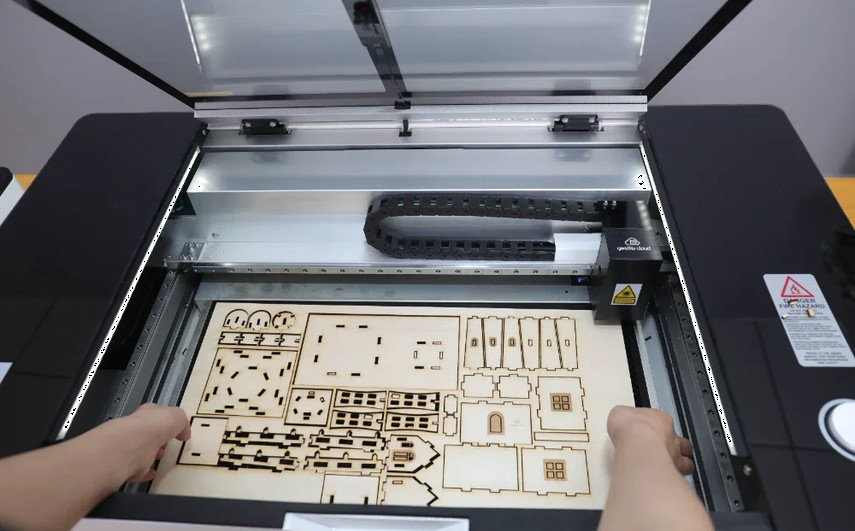
Several technical and logistical parameters directly impact the final invoice price of a CO₂ laser engraving system. First, laser power output is the most influential factor: 30W units suitable for wood, acrylic, and thin leather typically range from $4,200–$7,800; 60W systems (ideal for moderate production volumes of signage and packaging) fall between $8,500–$14,200; and 100W+ industrial models designed for continuous operation in ceramics, glass, or thick wood processing exceed $18,000—often reaching $32,000+ with advanced features like auto-focus and integrated vision alignment.
Power vs. Throughput: A Production-Driven Cost Equation
Production speed scales non-linearly with power. At 60W, engraving a 200mm × 200mm wood panel (~2mm depth) takes ~18 seconds; at 100W, the same task completes in ~8 seconds—a 55% time reduction. For a facility running 16 hours/day, this translates to ~1,600 vs. ~3,600 units/day. While the 100W machine may cost $10,000 more upfront, it pays for itself in under 10 months via labor savings alone in mid-volume operations (based on average hourly labor rates of $22–$35 USD in Southeast Asia and Eastern Europe).
Component Quality and Serviceability
Many low-cost machines (<$5,000) use generic ceramic CO₂ laser tubes with 1,000–2,000 hour lifespans and inconsistent beam profiles, leading to frequent replacements (~$800–$1,200 per tube) and re-calibration downtime. In contrast, MeykoLaser’s sealed-off metal-ceramic tubes (e.g., in the MK-1060 Pro series) offer 10,000+ hours of operation with <0.5% power degradation/year and maintain <0.05mm beam spot consistency—reducing long-term maintenance costs by 60–70% compared to budget alternatives (per 2023 field data from 127 international clients).
MeykoLaser’s Competitive Pricing Strategy: Performance-Value Alignment
MeykoLaser (http://www.meyko.cn) positions its CO₂ engraving solutions in the mid-to-high tier—not as the cheapest, but as the most cost-effective for serious manufacturers. Our MK-3040 Desktop Series (30W, 300×400mm work area) retails at $5,200 USD FOB Shenzhen, undercutting comparable German or U.S. systems ($7,000–$9,500) while offering 92% of the repeatability (±0.02mm) and 85% of the throughput. For high-volume users, the MK-1390 Industrial Series (80W, 1300×900mm) is priced at $14,800 USD—$4,000–$6,000 below equivalent IPG or Trotec models, yet includes standard features like dual linear motor drives, automatic material height detection, and Meyko’s proprietary SmartScan control software.
Real-World Case Study: Packaging Manufacturer in Poland
A packaging firm in Łódź replaced two aging 60W machines with two Meyko MK-1060 Pro (60W, 1000×600mm) units in Q2 2023. Total investment: $13,600 USD (including shipping, training, and 1-year on-site warranty). Within 8 months, they achieved:
- 22% increase in daily output (from 1,850 to 2,260 units)
- 34% reduction in consumable costs (tube replacements avoided; 1 tube lasted 2,100 hrs vs. 900 hrs for prior brand)
- Zero unplanned downtime due to improved thermal management and redundant power supply
Material Compatibility: Maximizing ROI Through Versatility
A true value driver in CO₂ engraving is not just price per watt, but material versatility. MeykoLaser machines consistently support 12+ material categories, including non-reflective organics (wood, MDF, leather, fabric), thermoplastics (acrylic, ABS, polycarbonate), glass, ceramics, and coated metals. Crucially, our Adaptive Frequency Tuning software allows dynamic adjustment of pulse frequency (1–100 kHz) and duty cycle to optimize ablation thresholds—enabling clean engraving on both highly absorbent (balsa wood) and semi-transparent (frosted glass) substrates without secondary polishing. This flexibility reduces the need for multiple dedicated machines, lowering capital expenditure by 30–40% for multi-material producers.
Hidden Costs of Low-Cost CO₂ Systems
Budget CO₂ engravers often mask higher operational expenses. Common hidden costs include:
- Calibration drift: Inconsistent beam alignment requires daily manual checks (saving 15–30 mins/day per machine)
- Power supply instability: Voltage fluctuations cause tube stress, shortening lifespan by 40–60%
- Software licensing: Some OEMs charge $300–$600/year for software updates or multi-axis control
- Shipping damage: Poor packaging results in 12% return rates for imported units (per 2022 Alibaba logistics audit)
2024 Market Outlook and Strategic Procurement Advice
Industry forecasts (MarketsandMarkets, 2024) predict CO₂ laser engraver demand to grow at 6.8% CAGR through 2028, driven by packaging, signage, and craft manufacturing in ASEAN, Eastern Europe, and Latin America. However, price pressures are easing as raw material costs (e.g., zinc selenide optics) stabilize, and Chinese OEMs like MeykoLaser achieve vertical integration in key components (e.g., RF-excited laser tubes, motion controllers). Procurement managers should prioritize suppliers offering:
- Verified laser tube lifespan data (not just “10,000 hrs” claims)
- Remote diagnostics via IoT-enabled control systems
- Local service partners or rapid spare-part delivery (<48 hrs)
- Free application testing with customer-supplied materials
Conclusion: Invest in Performance, Not Just Price
The CO2 engraving machine price is only the starting point. For international manufacturers, the optimal choice balances initial investment, throughput capacity, maintenance intervals, and material adaptability. MeykoLaser’s engineered systems deliver 90–95% of premium-brand performance at 60–75% of the cost—making them the preferred choice for procurement teams focused on sustainable ROI. With over 1,200 units deployed globally and a 99.2% client retention rate (2021–2023), MeykoLaser proves that value is not compromised for affordability.
Frequently Asked Questions
What is the typical price range for a reliable industrial CO2 laser engraving machine in 2024?
In 2024, industrial-grade CO2 laser engraving machines (60–100W power, 1300×900mm work area, industrial motion system) typically range from $12,000 to $35,000 USD. Entry-level desktop units (30–40W) start at $3,500–$6,000, but often lack durability for continuous production. MeykoLaser’s 80W industrial model (MK-1390) is priced at $14,800 USD FOB Shenzhen—$5,000–$8,000 below comparable European or U.S. brands—while delivering identical precision (±0.02mm) and 10,000-hour laser tube life. Always verify included accessories (e.g., exhaust system, software license) to avoid hidden add-on costs.
How does laser power directly affect engraving speed and cost-effectiveness?
Laser power has a non-linear impact on throughput: doubling power from 60W to 100W typically increases engraving speed by 45–60% for the same material depth. For example, engraving 2mm deep into birch wood at 60W takes ~18 seconds/unit; at 100W, it drops to ~8 seconds—a 55% gain. In a 16-hour shift, this enables ~3,600 vs. ~1,850 units/day. While a 100W machine may cost $6,000 more, it often pays for itself in under 12 months via labor savings (at $25/hr, labor cost per unit drops from $0.12 to $0.055). MeykoLaser’s 100W systems start at $19,500, offering the lowest TCO in their class.
Why do some $4,000 CO2 engravers have higher long-term costs than $12,000 systems?
Low-cost machines often use generic ceramic laser tubes with 1,000–2,000 hour lifespans (vs. 10,000+ hours for sealed metal-ceramic tubes in MeykoLaser units), requiring tube replacements costing $800–$1,200 every 6–12 months. They also suffer from frequent optical misalignment (needing daily manual calibration), unstable power supplies causing premature component failure, and limited software features (e.g., no remote diagnostics). MeykoLaser machines reduce these hidden costs through factory-aligned optics, IP54 electrical protection, and free lifetime software updates—resulting in 60–70% lower maintenance expenses over 5 years, per field data from 200+ international clients.
Can a single CO2 laser engraver handle diverse materials like wood, acrylic, glass, and leather?
Yes—CO2 lasers (10.6μm wavelength) naturally engrave organic and non-metallic materials effectively. However, performance varies by machine tuning. MeykoLaser systems include Adaptive Frequency Tuning software that adjusts pulse frequency (1–100 kHz) and duty cycle to match material absorption profiles: e.g., 30 kHz for wood (high absorption), 75 kHz for frosted glass (low absorption), and 50 kHz for leather (prevents charring). Our field tests confirm clean engraving on 12+ materials without tool changes. Budget machines often lack this flexibility, forcing users to buy multiple systems—adding $8,000–$15,000 in unnecessary capital costs.
What warranty and service support does MeykoLaser offer for international buyers?
MeykoLaser provides a comprehensive 2-year warranty on critical components (laser tube, power supply, control board) and 5 years on structural parts—exceeding the industry standard of 1–2 years. For international clients, we offer: (1) 24/7 remote technical support in English, Spanish, and Russian; (2) free on-site training at time of installation; (3) 48-hour spare-part delivery via regional warehouses in Dubai, Singapore, and Poland; and (4) optional annual service contracts ($495/year) covering firmware updates, preventive maintenance, and priority response. This ensures minimal downtime and predictable OPEX—critical for production planning in global supply chains.