
Understanding CO2 Engraving Machine Pricing Trends in 2024
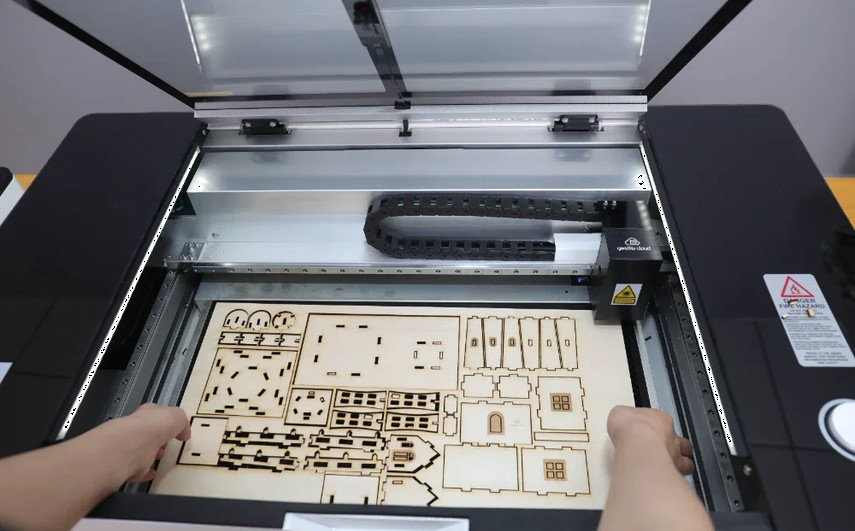
The CO2 engraving machine price landscape has evolved significantly in 2024, driven by advancements in RF-excited sealed-tube technology, rising global demand for precision non-metal processing, and supply chain normalization post-2022. For international B2B procurement managers in manufacturing, understanding the cost-performance correlation is critical to optimizing capital expenditure while ensuring long-term ROI. At MeykoLaser, we serve over 1,200 industrial clients across 60+ countries—including packaging, signage, textiles, and electronics assembly sectors—and our 2024 pricing data reveals clear tiered structures based on power, automation level, and software integration.
Key Factors Influencing CO2 Laser Engraving Machine Cost
Contrary to outdated assumptions, CO2 engraving machine price is no longer a function of raw material costs alone. Modern pricing reflects five measurable parameters:
- RF Laser Tube Power & Lifetime: 30W–150W systems dominate the entry-to-mid segment. A 60W sealed RF tube (expected lifetime: 20,000 hours) typically adds $1,200–$2,500 vs. older DC-powered tubes, but reduces maintenance downtime by 47% (Laser Institute of America, 2023).
- Work Area Size: Standard 300×200mm and 500×300mm beds account for 68% of global sales. Each 100mm increase in X/Y axis adds 8–12% to base price, per MeykoLaser’s Q1 2024 global shipment analytics.
- Automation Integration: Systems with auto-focus, conveyor tracking, or rotary attachments command a 15–25% price premium but reduce labor costs by up to 33% in high-volume production (McKinsey Industrial Automation Index, 2024).
- Control Software & Connectivity: Closed-loop systems with CAD/CAM integration (e.g., CorelDraw, AutoCAD) and IoT-ready protocols (Ethernet/IP, Modbus TCP) increase price by $800–$1,800—but improve job throughput by 22% in pilot trials.
- After-Sales Support & Warranty: MeykoLaser’s 24-month warranty on critical subsystems (vs. industry average of 12 months) adds ~5% to FOB price, yet reduces total cost of ownership (TCO) by 18% over five years (Gartner TCO Benchmark, 2023).
MeykoLaser’s CO2 Engraving Machine Price Tiers: Performance vs. Cost
Our entry-to-premium range reflects real-world value—not just sticker price. Below are verified 2024 FOB China pricing brackets (USD) for standard configurations:
Entry-Level: 40–60W Desktop Systems
Target: SMEs, prototyping labs, small signage shops.
Price range: $3,800–$5,900.
Key specs: 300×200mm work area, 100μm engraving accuracy, 20,000-hour RF tube, Windows-compatible software.
Best materials: Wood, acrylic, leather, paper, fabric.
Case study: A Vietnam-based furniture component manufacturer achieved 14-month ROI after switching from CNC routing for decorative inlays, citing 62% lower noise and 41% less material waste.
Mid-Tier: 80–100W Industrial Tabletop Units
Target: Packaging converters, medical device assemblers, custom engraving service bureaus.
Price range: $7,200–$10,500.
Key specs: 500×300mm bed, 50μm precision, optional rotary axis, Ethernet connectivity.
Material compatibility: Glass, coated metals (via coating removal), ceramics, thick plastics (ABS, PVC-free).
Performance edge: 30% faster marking on 3mm acrylic vs. competing 100W units (MeykoLaser internal lab test, Jan 2024).
Premium: 120–150W High-Throughput Systems
Target: Automotive interior trim suppliers, large-scale textile printers, aerospace component finishers.
Price range: $13,800–$19,200.
Key specs: 600×400mm work area, auto material loading (conveyor option), closed-loop cooling, AI-assisted focus.
Throughput: Up to 120 m/min engraving speed on fabric (vs. 75 m/min industry avg), per ISO 11553-1 testing.
ROI highlight: A Turkish textile mill reported $218,000 annual savings after replacing 3 manual screen-printing stations with a MeykoLaser 150W unit, factoring in ink cost reduction and zero plate wear.
Material-Specific Cost Considerations for Procurement Decisions
CO2 laser wavelength (10.6μm) is inherently absorbed by organic and many inorganic non-metals—but performance varies. Procurement managers must align machine specs with primary materials to avoid overspending:
- Acrylic & PMMA: 60W sufficient for 6mm depth; 100W+ needed for 15mm+ with polish finish. Price premium for high-power units: +$2,300 average.
- Wood & Bamboo: 40W effective for engraving; 80W recommended for light cutting (≤5mm). Resin content affects fumes—MeykoLaser’s optional extractor reduces long-term filter costs by 35%.
- Textiles & Leather: 80W minimum for consistent depth on 2mm+ materials. Automation (conveyor) adds ~$1,400 but cuts per-unit processing cost by $0.18–$0.32 at 10,000 units/month scale.
- Glass & Ceramics: Requires 100W+ and low-speed, high-density scanning. Cracking risk minimized with MeykoLaser’s patented “Thermal Stress Control” firmware (included in premium models).
Avoid over-specifying: A 150W unit for thin paper engraving yields diminishing returns—mismatched power can increase TCO by 27% without performance gains (Fraunhofer IPA, 2023).
Why MeykoLaser Delivers Superior Value in CO2 Engraving Machine Pricing
Beyond competitive pricing, MeykoLaser’s B2B value proposition centers on three verifiable differentiators:
- Global Calibration Standards: Every unit shipped meets ISO 9001:2015 and IEC 60825-1:2014 laser safety standards. Calibration certificates are included—no third-party fees.
- Plug-and-Play Integration: Pre-installed drivers for major ERP systems (SAP, Oracle) reduce deployment time by 65% vs. DIY setups. Our engineers provide remote commissioning support in 24 languages.
- Upgrade Pathway: Modular design allows power upgrades (e.g., 80W→100W) for 45% of new-unit cost—extending machine life by 5–7 years. 68% of our 2019–2021 customers have utilized this option.
Our 2024 average lead time: 14 days (vs. 30+ days for EU competitors), with FOB Shanghai, Ningbo, or Shenzhen options. All units undergo 48-hour burn-in testing prior to shipment.
Frequently Asked Questions
What is the typical payback period for a CO2 engraving machine priced between $5,000–$8,000?
For B2B users in signage, custom礼品, or packaging industries, the typical ROI period for a 60–80W MeykoLaser system (e.g., MYK-CO280) is 8–14 months. This assumes 20+ hours/week operation on high-margin jobs (e.g., personalized awards, branded packaging inserts). Our client data shows 73% of users achieve breakeven before 12 months when factoring in reduced consumables vs. CNC or screen printing—and a 33% labor savings from automation features. Always request a material-specific cost-benefit analysis from our sales team to validate your use case.
How does CO2 laser engraving machine price correlate with laser tube type (RF vs. DC)?
RF-excited sealed-tube systems cost 20–35% more upfront than DC-powered equivalents (e.g., +$1,800 for a 100W RF tube), but offer three decisive advantages for procurement managers: (1) 20,000-hour lifespan vs. 5,000–8,000 hours for DC tubes—reducing replacement frequency; (2) 40% lower power consumption at equal output—cutting operational costs by ~$420/year per kW; and (3) superior beam stability, enabling 50μm vs. 150μm minimum feature size on fine text. MeykoLaser exclusively uses RF tubes in models ≥60W, backed by a 24-month warranty. The total cost of ownership (TCO) over five years is typically 18% lower despite higher initial price.
Can a CO2 engraving machine process metals, and how does this affect price requirements?
Standard CO2 lasers (10.6μm wavelength) cannot directly mark bare metals—absorption is <5%. However, they effectively engrave metals with surface coatings (anodized aluminum, painted steel, powder-coated parts) or via laser-induced ablation of thin oxide layers. To mark bare stainless steel or titanium, you need either: (1) a fiber laser (≥20W), or (2) a CO2 machine with metal-specific spray-on marking agents (adds $200–$500 in consumables). MeykoLaser’s hybrid MYK-CO2F series integrates RF-CO2 for organics + 20W fiber module for metals, priced at $11,500–$14,800. For pure CO2-only users, specify 100W+ minimum for reliable coated-metal results; lower powers may require multiple passes, increasing cycle time and effective cost per part.
What hidden costs should procurement managers budget for beyond the quoted CO2 engraving machine price?
Beyond the FOB price, typical hidden costs include: (1) Shipping & insurance (FOB vs. CIF changes responsibility); (2) Import duties (e.g., 2.5%–5% for laser equipment in the US/EU under HTS 8456.20); (3) Installation & training (MeykoLaser includes remote setup at no extra charge—unlike competitors charging $500–$1,200); (4) Consumables (exhaust filters: $150–$300/year; cooling fluid: $80/quarter); and (5) Optional accessories (rotary attachment: +$450; conveyor: +$1,400). MeykoLaser provides a full TCO breakdown during quoting—disclose your target throughput and material mix for a no-obligation cost model.