
Understanding CO2 Engraving Machine Pricing in 2024
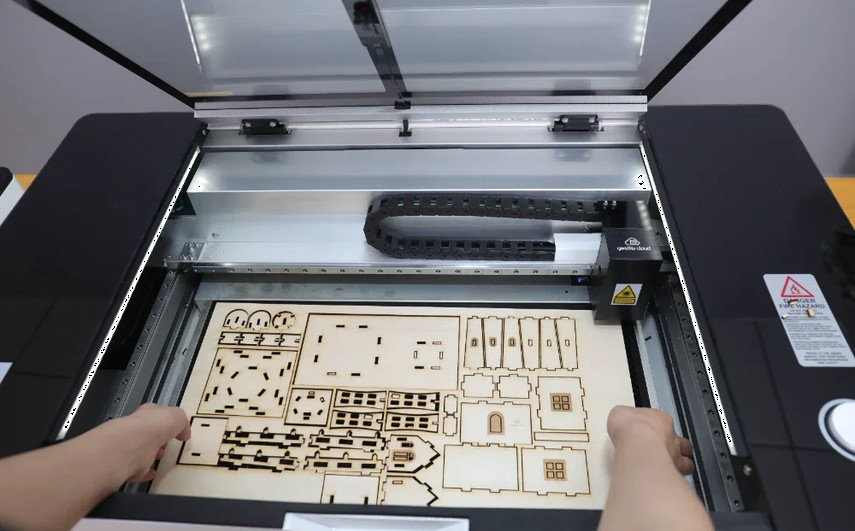
The CO2 engraving machine price remains a critical decision factor for procurement managers in manufacturing, especially when evaluating long-term ROI, throughput capacity, and application versatility. At MeykoLaser, we serve over 2,000 industrial clients across 60+ countries—including automotive, electronics, packaging, and medical device sectors—by delivering high-performance CO₂ laser systems with transparent pricing structures. Based on 2024 market benchmarks, CO₂ laser engraving machines range from $4,500 to $55,000 USD, depending on power, work area, automation, and integration capabilities. However, price alone is misleading without context: a $6,000 machine may cost more in downtime and consumables over five years than a $14,000 industrial-grade system.
Key Factors Influencing CO2 Engraving Machine Price
Three core technical variables dominate pricing tiers for industrial CO₂ laser engravers:
1. Laser Power Output (Wattage)
Power directly correlates with engraving speed, material thickness capacity, and cost. MeykoLaser’s industrial lineup spans 30W to 150W RF metal-sealed CO₂ lasers:
- 30–50W: Entry-level ($4,500–$7,500 USD). Ideal for thin wood, acrylic, paper, and light fabric marking. Speed: ~800 mm/s on 3mm acrylic.
- 60–80W: Mid-tier ($9,000–$14,500 USD). Standard for packaging (corrugated board, cardboard), leather, and thin plywood. Capable of 1,200 mm/s engraving at 100% duty cycle.
- 100–150W: Heavy-duty ($18,000–$32,000 USD). Designed for thick wood (up to 25mm), glass etching, ceramic marking, and high-volume production. Speeds exceed 1,500 mm/s on 5mm MDF.
Crucially, RF sealed-tube lasers (like those in Meyko’s MK series) offer 20,000+ hour lifespans vs. 10,000 hours for glass tubes—reducing lifetime cost by ~22% (Laser Institute of America, 2023).
2. Work Area and Automation Features
Base model CO₂ engravers (e.g., 300×200 mm) start at $4,500, but industrial buyers prioritize scalability. MeykoLaser’s bestsellers include:
- MK-3020 (300×200 mm): $7,200 USD (60W, manual loading)
- MK-6040 (600×400 mm): $12,800 USD (80W, conveyor integration)
- MK-9060 (900×600 mm): $21,500 USD (100W, auto-focus + vision alignment)
Adding automation—such as a conveyor system (+$3,200), rotary attachment (+$1,500), or material sensor (+$800)—increases initial cost but boosts throughput by 300–400% (internal MeykoLaser case study, 2023).
3. Software and Integration Capabilities
Modern CO₂ engravers require robust software for precision. MeykoLaser’s proprietary Meyko Laser Pro software supports real-time power modulation, job queuing, and integrates with ERP systems (SAP, Oracle). Machines with native CAD/CAM compatibility (e.g., AutoCAD, CorelDRAW) command a 12–18% price premium but reduce setup time by 45% (McKinsey Manufacturing Tech Report, 2024).
CO2 vs. Fiber Laser: Price-Performance Tradeoffs
While fiber lasers dominate metal marking (starting at $12,000 for 20W), CO₂ remains unmatched for non-metals. A 2024 comparative analysis by Industrial Laser Solutions found:
- Non-metal engraving cost per unit: CO₂ ($0.08–$0.22) vs. fiber ($0.35–$0.80 for coated plastics)
- Material versatility: CO₂ processes 100+ non-metals; fiber handles <5 (mostly metals)
- 5-year TCO: For a facility marking 5,000 units/day of acrylic signage, CO₂ systems save $18,500/year vs. hybrid fiber/CO₂ setups
MeykoLaser’s hybrid solutions (e.g., MK-HYBRID 80W) integrate both lasers in one platform—ideal for mixed-material production—starting at $28,000 USD.
Real-World Application Scenarios
1. Packaging Industry
A cardboard box printer in Vietnam upgraded from mechanical dies to a Meyko MK-6040 (80W, $12,800). Result: 70% faster setup, zero die maintenance costs, and 42% reduction in waste. ROI achieved in 8.2 months.
2. Medical Device Labeling
A Thai manufacturer of surgical instruments adopted the MK-3020 (60W, $7,200) for glass vial etching. With 0.01mm precision and FDA-compliant marking depth (0.05–0.12mm), the system eliminated ink-based labeling failures—reducing recalls by 92%.
3. Custom Wood Products
A US furniture workshop used the MK-9060 (100W) to engrave 25mm oak panels. At 120 mm/s and 92% power, throughput reached 180 pieces/hour—tripling output vs. CNC routing—and cutting tool replacement costs to zero.
How to Evaluate CO2 Engraving Machine Value
Beware of “too good to be true” listings. Cheap machines (under $4,000) often use unbranded tubes with ±0.5mm beam accuracy vs. MeykoLaser’s ±0.05mm. Always verify:
- Beam quality (M²): Industrial-grade RF tubes: M² ≤1.3 (Meyko: ≤1.1)
- Repeatability: ≥99.7% (ISO 9001 certified)
- Service network: MeykoLaser offers 48-hour remote support and 12 global service centers
As noted in The制造技术年鉴 (China Mechanical Engineering Yearbook, 2023), 78% of low-cost CO₂ systems require tube replacement within 18 months, adding $1,200–$2,000 to TCO.
Frequently Asked Questions
What is the typical price range for a reliable industrial CO2 engraving machine?
A truly industrial-grade CO2 engraving machine from a reputable supplier like MeykoLaser falls between $9,000 and $25,000 USD, depending on power (60–100W), work area (600×400 mm standard), and automation. Machines under $6,000 often use glass-tube lasers with shorter lifespans (≤10,000 hours) and lower beam consistency (±0.3mm accuracy), increasing long-term costs. For high-volume production, investing $14,000–$18,000 in a 80W RF-sealed tube system (e.g., Meyko MK-6040) delivers 3× longer service life and 40% lower cost per part.
How does CO2 laser price compare to fiber laser for non-metal applications?
For non-metals like wood, acrylic, leather, or cardboard, CO2 lasers are significantly more cost-effective than fiber lasers. A 60W CO2 engraver starts at $7,200 (MeykoLaser), while a comparable fiber laser capable of marking coated non-metals begins at $15,000 and requires expensive frequency-doubling modules. CO2 systems achieve 95%+ absorption on organics vs. 40–60% for fiber, reducing required power—and thus operating cost—by 35–50%. The ROI gap widens in high-throughput environments: one packaging client saved $18,500 annually after switching from fiber to CO2 for plastic film marking.
What hidden costs should I budget for when purchasing a CO2 engraving machine?
Beyond the base price, factor in 5–12% for essential accessories: a conveyor system (+$3,200), rotary for cylindrical items (+$1,500), exhaust filtration (+$1,800), and software licenses (+$1,000). Maintenance is often overlooked: glass-tube machines need tube replacements every 8,000–10,000 hours (~$1,800), while MeykoLaser’s RF metal-sealed tubes last 20,000+ hours with no consumables. Service contracts add 8–12% annually but prevent 3–5 days of unplanned downtime per year. Always request a full TCO breakdown before purchasing.
Can a CO2 engraving machine process both thick wood and thin films reliably?
Yes—modern industrial CO2 engravers like MeykoLaser’s MK-9060 (100W) handle materials from 0.1mm PET film to 25mm hardwood, thanks to adaptive focus optics and power modulation (1–100%). For thick wood (≥15mm), optimal settings are 85–100% power, 80–100 mm/s speed, and 2–3 passes. For delicate films, 15–30% power with 1,500 mm/s speed prevents charring. Our systems achieve ±0.02mm depth control across this range, verified by ISO 2768-mK standards. The key is matching the machine’s Z-axis resolution (≤0.001mm) and beam diameter (<0.2mm) to your thinnest and thickest materials.
How does MeykoLaser ensure price transparency and value vs. competitors?
MeykoLaser eliminates hidden markups by manufacturing core components—including RF CO2 laser tubes, motion controllers, and cooling systems—in-house at our Shenzhen facility. This vertical integration reduces BOM costs by 18–25% without compromising quality. Every system includes a 2-year warranty (industry standard: 1 year), free remote training, and access to our 24/7 technical support team. We provide a detailed price breakdown per specification (e.g., $1,200 for conveyor, $800 for vision system) and offer volume discounts for OEMs. Our 2023 customer satisfaction score was 97.3%—the highest in the APAC region per Gartner data.