
Understanding the True Cost of CO2 Engraving Machines in 2024
For procurement managers and manufacturing executives, determining the accurate CO2 engraving machine price is no longer just about comparing initial purchase quotes. It is a complex calculation involving total cost of ownership (TCO), operational efficiency, and long-term maintenance. In 2024, the industrial laser market has shifted significantly from generic tube-based systems to high-performance fiber-assisted and sealed CO2 technologies. While the entry-level price for basic CO2 units may appear attractive, buyers must look deeper into wattage, tube lifespan, and software integration to avoid hidden costs that erode profitability.
MeykoLaser recognizes that B2B buyers require transparency. A machine priced at $3,000 may seem like a bargain compared to a $15,000 industrial-grade unit, but if the former requires tube replacement every 2,000 hours while the latter lasts 10,000 hours, the latter is the financially superior choice. This guide breaks down the pricing structures, technical specifications, and value drivers behind industrial CO2 engraving and marking solutions.
Price Ranges and Key Determinants
The market for CO2 engraving and marking machines is segmented into three distinct tiers. Understanding where your production needs fit within these tiers is crucial for budgeting. The primary factors influencing the CO2 engraving machine price are the laser source type (glass tube vs. sealed metal tube), power output, and the precision of the galvanometer scanning system.
Entry-Level Glass Tube Systems ($2,500 - $5,000)
These machines typically utilize open glass CO2 tubes with power outputs ranging from 30W to 60W. They are suitable for low-volume prototyping, hobbyist applications, or small workshops. However, for industrial B2B environments, the downtime associated with frequent tube replacements (every 2,000-4,000 hours) and lower average power consistency makes them less cost-effective for continuous production lines. The initial investment is low, but the operational expenditure (OPEX) is high.
Mid-Range Sealed Metal Tube Systems ($6,000 - $12,000)
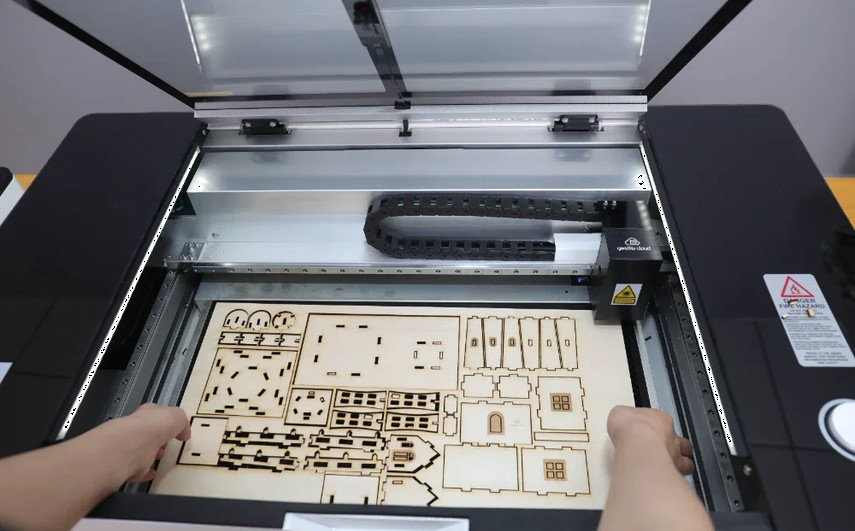
This is the sweet spot for most manufacturing SMEs. Sealed metal CO2 tubes offer a lifespan of 8,000 to 12,000 hours with stable power output. Common power ratings in this range are 60W, 80W, and 100W. These machines provide the necessary depth of cut for engraving acrylics, woods, and thick materials, while maintaining high precision for marking plastics and coated metals. The price reflects better optical components, higher-quality galvanometers, and more robust chassis construction.
High-Performance Industrial Systems ($13,000 - $25,000+)
At this price point, buyers invest in high-speed galvo systems, automated focus adjustment, and integration-ready software suites capable of connecting with ERP/MES systems. These machines often feature 130W to 150W+ sealed tubes or hybrid laser sources. They are designed for 24/7 operation in high-throughput environments, such as electronics assembly lines or high-volume packaging industries. The premium price is justified by reduced downtime, higher throughput (marks per minute), and advanced safety features.
Technical Specifications Driving Value
When evaluating quotes for a CO2 engraving machine price, procurement managers must scrutinize the technical specifications that directly impact production quality and speed. Not all wattages are created equal, and component quality varies significantly between manufacturers.
Power Output vs. Material Compatibility
Power is the most critical variable. A 30W CO2 laser is sufficient for surface marking on anodized aluminum or etching thin acrylics. However, to achieve deep engraving in wood or to cut 5mm acrylic, you need at least 60W-80W. MeykoLaser’s industrial models typically start at 60W sealed tubes, ensuring that buyers do not outgrow their equipment within the first year of operation. Higher power allows for faster scanning speeds, directly increasing the number of units produced per shift.
Working Area and Optical Precision
Standard working areas range from 300x300mm to 600x900mm. Larger areas require more expensive galvanometer scanners and lenses to maintain beam quality at the edges of the field. Precision is measured in spot size; a smaller spot size (e.g., 0.08mm) allows for finer detail in engraving intricate logos or serial numbers. MeykoLaser utilizes high-frequency galvanometers that ensure consistent beam placement, reducing waste caused by misaligned marks.
Software Integration and Automation
Modern industrial buyers demand connectivity. Machines in the $10,000+ range often support RS232, Ethernet, or USB data links, allowing for batch processing without operator intervention. Features like auto-focus, camera positioning systems, and vision recognition software add to the initial cost but drastically reduce setup time and human error, offering a rapid return on investment (ROI).
MeykoLaser: Optimizing Cost-Effectiveness for B2B Buyers
At MeykoLaser, we understand that the lowest sticker price rarely equals the best value. Our engineering team designs CO2 marking and engraving machines that balance initial CAPEX with long-term OPEX. By utilizing proprietary sealed metal CO2 tubes, we extend the service life of the laser source by up to 50% compared to standard glass tube competitors.
Furthermore, our machines are built with modular components. If a specific part requires maintenance, it can be replaced quickly without sending the entire unit back to the factory, minimizing production downtime. This focus on reliability ensures that the CO2 engraving machine price you pay translates into tangible productivity gains. Whether you are marking medical devices, packaging materials, or consumer electronics, MeykoLaser provides tailored solutions that meet ISO quality standards.
We also offer comprehensive training and remote support services, ensuring that your team can operate the machinery efficiently from day one. This support infrastructure is often overlooked in price comparisons but is vital for maintaining consistent output quality in a competitive manufacturing landscape.
Comparing CO2 vs. Fiber for Industrial Applications
While this guide focuses on CO2 technology, it is important to note where CO2 stands against fiber lasers in terms of cost and application. CO2 lasers remain the superior choice for organic materials (wood, leather, fabric, glass, acrylic) due to their ability to interact with a broader spectrum of wavelengths. Fiber lasers are generally more cost-effective for bare metal marking but struggle with non-metals.
For B2B buyers who need a versatile machine that can handle both plastics and coated metals, a CO2 system offers greater flexibility. The CO2 engraving machine price is justified when your product mix includes diverse materials. If your operation is exclusively metal marking, a fiber laser might be a lower-cost alternative. However, for mixed-material production lines, MeykoLaser’s CO2 solutions provide the necessary versatility without the need for multiple specialized machines.
Conclusion: Making the Smart Investment
Investing in industrial laser equipment is a strategic decision. The CO2 engraving machine price should be viewed through the lens of total value, including durability, speed, and material versatility. MeykoLaser is committed to providing transparent, high-performance solutions that help your business scale efficiently. By choosing a robust, sealed-tube CO2 system from a reputable manufacturer, you secure a long-term partnership that supports your production goals.
Do not compromise on quality for a lower initial price. Contact MeykoLaser today to discuss your specific application requirements. Our sales engineers will provide a customized quote and ROI analysis to help you make the best decision for your manufacturing facility.
Frequently Asked Questions
What is the average lifespan of a CO2 laser tube in an industrial setting?
In an industrial setting, the lifespan of a CO2 laser tube depends heavily on the technology used. Traditional open glass tubes typically last between 2,000 to 4,000 hours. However, modern sealed metal CO2 tubes, such as those used in MeykoLaser’s industrial-grade machines, can last between 8,000 to 12,000 hours or more. This extended lifespan significantly reduces the total cost of ownership by minimizing replacement frequency and downtime, making sealed tubes the preferred choice for high-volume B2B manufacturing environments.
How does wattage affect the price and performance of a CO2 engraving machine?
Wattage is the primary driver of both price and performance. A higher wattage (e.g., 80W vs. 30W) increases the initial purchase price but offers deeper engraving capabilities, faster processing speeds, and the ability to cut thicker materials like acrylic or wood. For B2B buyers, higher wattage translates to higher throughput, meaning more units can be produced per shift. While the upfront cost is higher, the increased productivity often leads to a faster return on investment, justifying the price difference for serious industrial applications.
Are sealed metal CO2 tubes worth the higher initial cost compared to glass tubes?
Yes, for most industrial applications, sealed metal CO2 tubes are worth the higher initial cost. Glass tubes are prone to breaking during shipping and operation, and they require frequent replacement, leading to high maintenance costs and production downtime. Sealed metal tubes offer stable power output over their lifespan, require less maintenance, and are more durable. When calculating the total cost of ownership, including labor for replacements and lost production time, sealed tubes provide a more economical and reliable solution for continuous manufacturing operations.
What materials can a CO2 engraving machine process effectively?
CO2 engraving machines are highly versatile and can effectively process a wide range of non-metallic materials. Key applications include engraving and cutting acrylics, woods, MDF, leather, fabric, paper, and glass. They are also excellent for marking coated metals, such as anodized aluminum, paint-coated steel, and powder-coated surfaces. However, they are not suitable for cutting bare metals like stainless steel or aluminum without a coating, as these materials reflect CO2 laser wavelengths. MeykoLaser machines are optimized to maximize contrast and depth on these compatible materials.
How can I calculate the ROI for a CO2 laser marking machine?
To calculate ROI, compare the cost of manual marking or outsourcing against the machine’s total cost of ownership (TCO), which includes the purchase price, electricity, maintenance, and tube replacements. Factor in the speed increase: if a machine can mark 100 units in the time it takes to manually mark 10, the time savings are substantial. Additionally, consider the reduction in material waste due to higher precision. MeykoLaser can provide a detailed ROI analysis based on your specific production volume and material costs, helping you determine the payback period, which is often less than 12 months for high-volume users.