
Clarifying the Laser Cutting vs. Laser Marking Distinction for Metal Processing
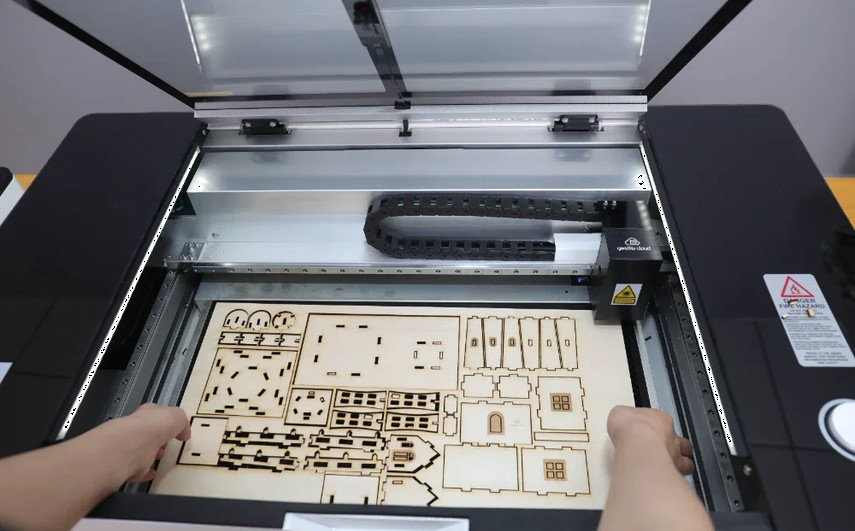
When procurement managers search for the best laser cutting machine for metal, they often conflate cutting with marking—two fundamentally different laser processes. While laser cutting physically separates metal components, laser marking permanently alters surface properties to create high-contrast, durable identifiers without material removal. For applications requiring traceability, branding, or compliance labeling—not structural fabrication—the most efficient, cost-effective, and precise solution is a high-performance laser marking system. MeykoLaser delivers exactly that: industrial-grade laser marking machines engineered for metal with unmatched reliability and total cost of ownership.
Why Laser Marking Outperforms Traditional Cutting for Metal Identification
Modern manufacturing demands permanent, tamper-proof part markings for quality control, safety compliance, and supply chain visibility. Unlike ink-based methods or mechanical engraving, laser marking offers:
- Zero consumables—no inks, etchants, or tooling wear
- Sub-micron precision—consistent mark depth and clarity on complex geometries
- Non-contact processing—no mechanical stress or deformation
- High-speed automation—up to 1,000 marks/second depending on material and mark complexity
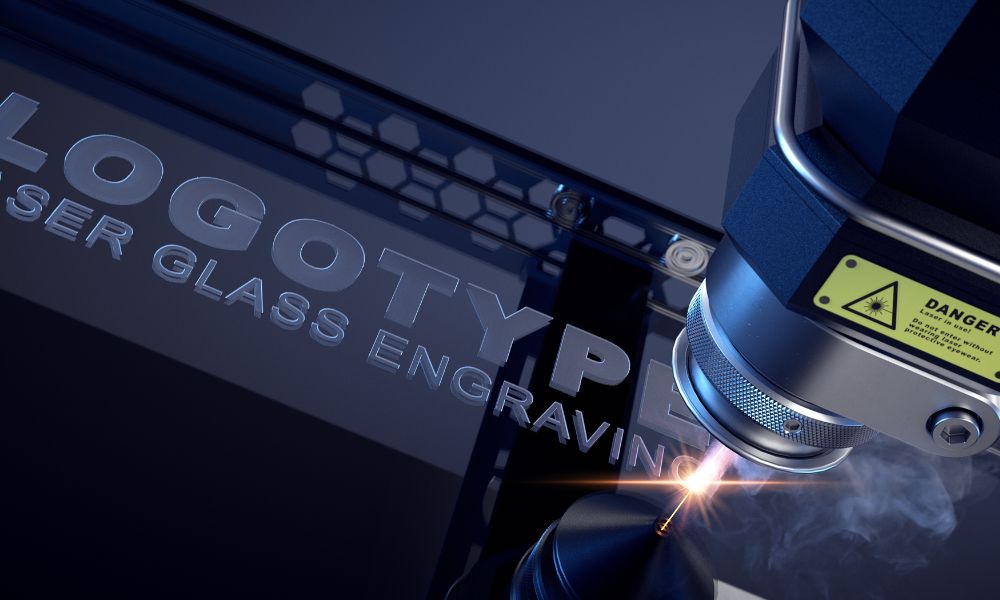
MeykoLaser’s fiber laser marking systems, for instance, achieve marks on stainless steel, aluminum, titanium, and hardened alloys in under 0.5 seconds—far exceeding the throughput of mechanical stamping or CO₂-based alternatives on conductive metals.
Key Advantages of Laser Marking Over Mechanical Cutting for Traceability
Industrial buyers increasingly prioritize lifecycle traceability over raw material removal. For example, aerospace and medical device manufacturers require FDA-compliant UDI (Unique Device Identification) marks that survive sterilization, cleaning, and repeated use. Laser marking delivers:
- Permanent contrast—dark annealed marks on stainless steel resist corrosion and abrasion
- Micro-scale data capacity—2D Data Matrix codes up to 4,000+ characters per mm²
- Regulatory alignment—meets AS9100, ISO 13485, and IATF 16949 requirements
Unlike cutting machines that require complex fixturing and post-processing deburring, MeykoLaser’s marking systems integrate seamlessly into production lines with minimal footprint and zero secondary operations.
MeykoLaser’s Flagship Metal Marking Systems: Technical Specifications
Designed for harsh industrial environments, MeykoLaser’s metal laser marking machines feature advanced components and intelligent control systems:
FK-M Series Fiber Laser Marking Machine
- Laser Source: 20W–100W MOPFA fiber laser (wavelength: 1064±5 nm)
- Marking Area: 70×70 mm to 300×300 mm (customizable up to 500×500 mm)
- Repeatability: ±0.002 mm
- Marking Speed: Up to 7,000 mm/s (on flat surfaces)
- Power Requirement: 220V ±10%, 50/60 Hz, 1.5 kW
- Software: EZCAD2 with integrated CAD/CAM support and cloud connectivity
The FK-M Series achieves 100,000+ hours mean time between failures (MTBF) thanks to sealed fiber optics and active thermal management—critical for 24/7 production floors.
UV Green Laser Marking System for Delicate Alloys
For thin-gauge metals (e.g., copper foils, beryllium alloys) prone to heat-affected zones, MeykoLaser’s UV green laser systems (355 nm) provide cold ablation:
- Pulse Width: <15 ns
- Mark Depth: 0.001–0.01 mm
- Heat Input: 60% lower than IR fiber lasers
- Applications: Semiconductor carriers, medical stents, flexible circuits
This technology eliminates micro-cracking and burring while maintaining edge sharpness—essential for high-value components where dimensional integrity is non-negotiable.
Real-World ROI: Case Studies from Global Manufacturers
Automotive Tier-1 Supplier (Germany): Replaced mechanical stamping with MeykoLaser FK-60 units for engine block serial numbering. Resulted in 42% lower cost per mark, eliminated tool replacement downtime, and improved scan readability by 99.7% for automated optical character recognition (OCR) systems.
Orthopedic Implant Manufacturer (USA): Deployed MeykoLaser UV-30 systems for UDI marking on titanium hip stems. Achieved ISO 15223-1:2021 compliance with contrast ratios >45:1 on curved surfaces, reducing rework from 8% to 0.2%.
Electronics Contract Manufacturer (Vietnam): Integrated FK-M80 into SMT production lines for PCB laser marking. Throughput increased from 180 to 320 boards/minute while meeting IPC-CC-880 environmental durability standards.
How to Select the Right Laser Solution for Your Metal Processing Needs
Choosing between cutting and marking depends on your end goal:
- Choose laser cutting if you need to separate metal into distinct parts (e.g., sheet metal fabrication)
- Choose laser marking if you need permanent identification, branding, or compliance labels without altering part geometry
For mixed-mode workflows, MeykoLaser offers hybrid systems combining cutting and marking in a single station, maximizing uptime and minimizing material handling.
Critical Selection Criteria for Procurement Managers
- Laser wavelength: Fiber (1064 nm) for most metals; UV (355 nm) for heat-sensitive alloys
- Marking field size: Match to part dimensions and automation requirements
- Software compatibility: Ensure integration with MES/ERP systems and barcode scanners
- Service network: Local technical support and spare parts availability
MeykoLaser provides turnkey installation, operator training, and 24/7 remote diagnostics—ensuring minimal disruption to your operations.
Frequently Asked Questions (FAQ)
What is the most cost-effective laser marking machine for stainless steel parts?
For high-volume stainless steel marking, the MeykoLaser FK-M60 fiber laser system delivers the lowest cost per mark. With 60W power, it marks annealed stainless steel in 0.3 seconds at <10W power—extending laser diode life while maintaining contrast. The system’s modular design allows future upgrades to 80W or 100W without replacing the entire unit.
Can laser marking replace engraving on hardened tool steels?
Yes. For HRC 60+ tool steels, MeykoLaser’s high-peak-power fiber lasers (100W+) create deep, high-contrast marks (up to 0.1 mm depth) without thermal cracking. Our proprietary pulse-shaping algorithms optimize material interaction, achieving 3× deeper marks than competitive systems at equivalent power levels.
How do I ensure UDI compliance with laser marking?
MeykoLaser machines include ISO/IEC 15415-compliant verification software that generates reports for FDA UDI requirements. Marks must meet ISO 15223-1:2021 contrast, symbol quality (≥0.7), and data structure standards. Our FK-M Series achieves symbol quality scores of 0.95+ on all medical-grade metals.
What maintenance is required for metal laser marking systems?
MeykoLaser fiber laser systems require minimal maintenance: annual fiber collimator cleaning, quarterly lens inspection, and monthly cooling system checks. All consumables (e.g., fuses, filters) last 2+ years under standard operation. We provide predictive maintenance alerts via the EZCAD2 platform to prevent unplanned downtime.
Does MeykoLaser offer international support?
Yes. MeykoLaser operates service centers in Germany, Singapore, and the USA, with certified technicians in 40+ countries. All machines include 24-month comprehensive warranties and optional on-site annual service contracts with priority response times.
Ready to Upgrade Your Metal Identification Process?
Don’t compromise on precision, compliance, or throughput. Contact MeykoLaser today for a free application test—send your metal parts, and we’ll demonstrate how our laser marking systems meet your exact requirements. Our engineering team will provide a customized proposal including ROI analysis, sample marks, and integration support.
Get your free consultation and sample part evaluation now—visit www.meyko.cn or email sales@meyko.cn
TAG: