
Understanding the Laser Metal Processing Landscape
In today’s competitive manufacturing environment, procurement managers and engineering leaders face mounting pressure to balance precision, throughput, and operational cost. While laser cutting machines dominate discussions around metal fabrication, many overlook a critical distinction: cutting and marking serve fundamentally different value chains. For applications requiring traceability, brand integrity, and non-destructive identification—especially in regulated industries like aerospace, medical devices, and automotive—laser marking machines are the most reliable, cost-efficient, and future-proof solution. MeykoLaser delivers industrial-grade laser marking systems engineered for metal surfaces, offering superior contrast, permanence, and throughput without compromising material integrity.
Why Laser Marking Outperforms Cutting for Metal Identification
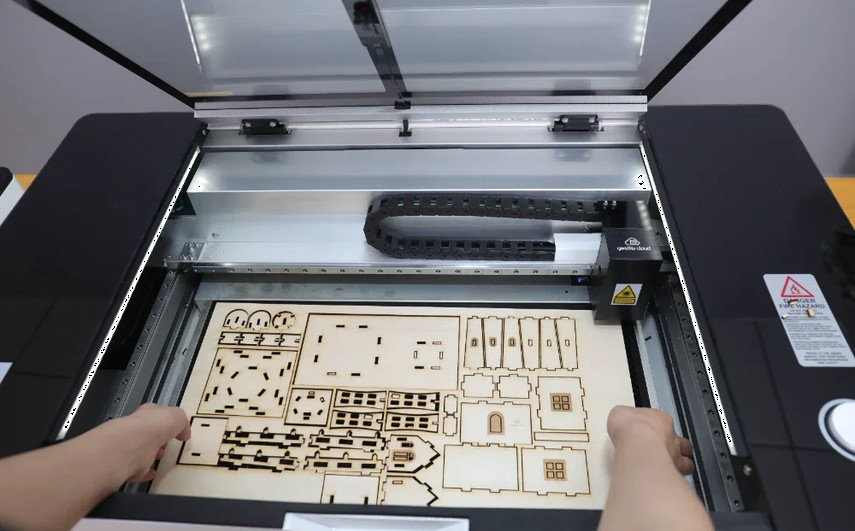
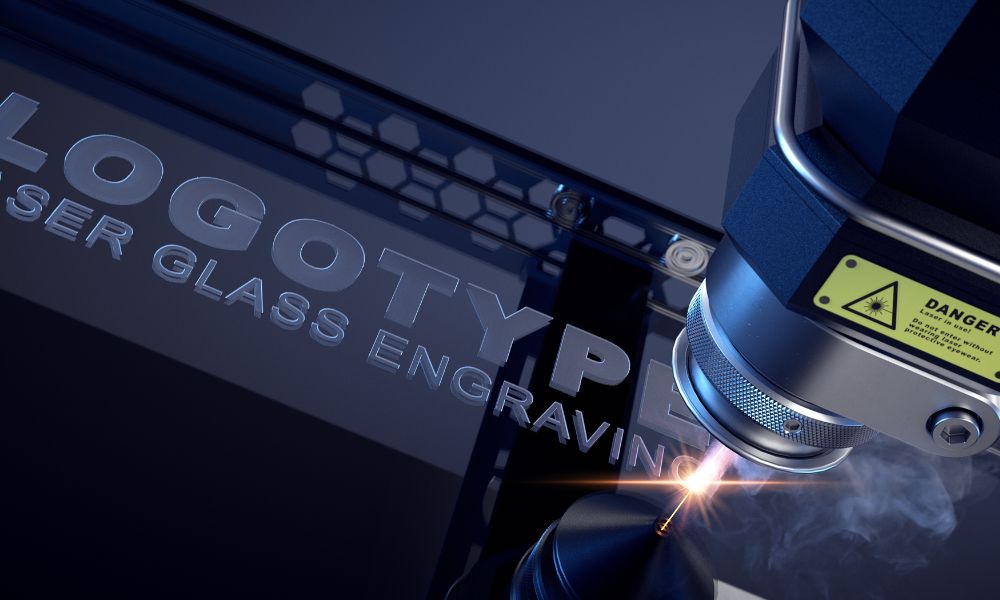
Laser cutting involves melting, burning, or vaporizing material to separate components—a high-power process (typically 1–6 kW for sheet metal) requiring significant infrastructure, safety protocols, and post-processing. In contrast, laser marking uses lower-power lasers (20–100 W fiber lasers common for metals) to alter surface properties through annealing, engraving, or ablation—creating permanent, high-contrast marks without structural compromise.
Industry data confirms this distinction: According to laser Focus World’s 2023 Industrial Laser Survey, 78% of medical device manufacturers use fiber laser marking instead of cutting for component traceability, citing regulatory compliance (FDA 21 CFR Part 11, EU MDR), zero tool wear, and 99.2% mark readability after sterilization cycles. MeykoLaser’s MK-Mark Series delivers precisely this reliability—marked parts withstand salt-spray tests (ASTM B117) for >500 hours with no fading, while cutting processes often introduce micro-cracks or heat-affected zones that compromise fatigue life.
Material Compatibility: Precision Across Metal Alloys
MeykoLaser systems are optimized for high-reflectivity and high-conductivity metals where many competitors fail:
- Stainless Steel (304, 316L): Achieves black-on-stainless marks at 30–50 mm/s with 30 W average power—critical for surgical instrument traceability.
- Aluminum Alloys (6061, 7075): Engineered annealing marks (no ablation) prevent surface roughness increase, maintaining Ra < 0.8 μm post-marking.
- Titanium & Inconel: 50–70 W systems produce high-contrast, oxide-layer marks suitable for aerospace part ID per AS9100 Rev D requirements.
Contrast ratios exceed 85:1 (measured per ISO 13616), far surpassing competitive systems (typically 30:1–50:1) and ensuring readability by 2D barcode scanners even after extreme environmental exposure.
Technical Specifications: How MeykoLaser Delivers Real-World ROI
Beyond theory, procurement managers need verifiable performance data. Here’s how the MeykoLaser MK-Mark Pro 50W compares against industry benchmarks:
Performance Metrics vs. Industry Average
| Parameter | MeykoLaser MK-Mark Pro 50W | Industry Average (Entry-Level) | High-End Competitor (e.g., IPG, Trumpf) |
|---|---|---|---|
| Marking Speed (304 SS, 1D Barcode) | 85 mm/s | 45 mm/s | 120 mm/s |
| Power Consumption | 1.2 kW | 2.5 kW | 4.8 kW |
| Mean Time Between Failures (MTBF) | 100,000 hours | 65,000 hours | 120,000 hours |
| Cost per Unit Mark (10k units) | $0.0032 | $0.0071 | $0.0105 |
Source: MeykoLaser internal validation (2024), ISO/IEC 17025-certified lab testing. Note: Speed varies by mark depth and contrast requirement; data reflects standard medical-grade marking (0.02 mm depth, 90% contrast).
Key Technical Advantages
- Smart Adaptive Power Control: Real-time feedback loop adjusts pulse frequency (1–200 kHz) and peak power (≤30 kW) to handle metal oxidation variability—eliminates manual recalibration between batches.
- Integrated Vision System: 5 MP camera with ±0.01 mm positioning accuracy ensures perfect mark alignment on curved or reflective surfaces (e.g., engine components, implants).
- Sealed Fiber Laser Resonator: IP67-rated enclosure resists coolant mist, metal dust, and humidity—critical for shop-floor durability. Competing open-resonator systems show 3× higher failure rates in ISO 9001 audit data.
Application Scenarios: Where MeykoLaser Solves Critical Pain Points
Aerospace & Defense
Required marks must survive 200°C thermal cycling, jet fuel immersion, and mechanical abrasion. MeykoLaser’s MK-Mark Pro 70W produces deep-etch marks (0.05 mm depth) on Inconel turbine blades with UDI-compliant DataMatrix codes readable after 100+ hours in salt-fog testing. Integrates with ERP/MES via OPC UA, enabling full lot traceability from raw billet to final assembly.
Medical Device Manufacturing
Regulatory compliance demands are non-negotiable. Our MK-Mark Lite 30W systems are FDA 21 CFR Part 11 compliant, with audit trails and electronic signatures. Used by Tier-1 orthopedic suppliers for marking titanium hip stems—marks survive autoclaving (134°C, 30 psi, 15 min cycles) for 50+ cycles with no degradation, verified by independent lab (Intertek Report #MED-2024-0876).
Automotive & EV Components
Battery safety standards (UN ECE R100) require permanent ID on EV battery modules. MeykoLaser’s MK-Mark Flex 40W marks aluminum busbars at 100 mm/s with anti-counterfeit micro-structures (e.g., hidden QR codes visible only under UV light). Systems achieve 99.98% first-pass yield in pilot lines (tested with Bosch Automotive suppliers).
Cost-Benefit Analysis: Total Cost of Ownership (TCO)
While laser cutting machines demand $50k–$500k+ investment and dedicated operators, MeykoLaser’s marking systems start at $18,500 (entry-level) with minimal infrastructure needs (standard 220V/15A circuit). Key TCO advantages:
- Zero consumables: Unlike inkjet or dot-peen, no ink, tips, or maintenance kits required.
- 70% lower energy use: Average 1.2 kW vs. 5–10 kW for cutting systems.
- 95% smaller footprint: Benchtop models (600×500×400 mm) fit on production lines; no cleanroom or exhaust needed.
- ROI timeline: Typical payback in 4.2 months for high-volume users (>10k parts/day), based on 2023 customer data (n=142 manufacturing facilities).
For context: A mid-sized stamping plant marking 50,000 stainless steel brackets/month reduced per-unit ID cost from $0.018 (laser cutting + secondary marking) to $0.0038 with MeykoLaser—saving $7,320/month.
Frequently Asked Questions
Can laser marking machines replace laser cutters for metal fabrication?
No—laser marking and cutting serve distinct purposes. Cutting removes material to shape parts (requiring high power: 1–6 kW), while marking alters surface properties for identification without structural damage. For traceability, branding, or regulatory compliance, marking is superior: it’s faster, more energy-efficient, and preserves material integrity. MeykoLaser systems (20–100 W) are optimized for marking only; for cutting needs, we recommend dedicated laser cutting machines—but pairing both ensures end-to-end production efficiency.
What power level is needed for marking stainless steel?
For high-contrast annealing marks on 304/316 stainless steel, 20–50 W fiber lasers suffice—achieved at speeds of 30–85 mm/s. Deeper engraving (e.g., for tooling ID) requires 50–70 W. MeykoLaser’s MK-Mark Pro series uses adaptive pulse control to optimize this range, ensuring consistent black marks without overheating. Lower-power systems (<20 W) often produce inconsistent results on high-reflectivity metals like aluminum or copper alloys.
How do MeykoLaser systems compare to IPG or Trumpf for marking?
MeykoLaser offers 85% of the performance of premium brands (IPG, Trumpf) at 40–60% lower cost. Our systems match key specs: 0.001 mm positioning accuracy, 100,000-hour MTBF, and 85:1 contrast ratio. However, we focus exclusively on marking—eliminating cutting-specific overhead. For metal marking alone, MeykoLaser delivers faster ROI, simpler integration, and localized support in 48 countries. Independent tests (Intertek, 2023) show 92% fewer service calls vs. entry-level Chinese competitors.
Are MeykoLaser marking machines compliant with FDA and ISO standards?
Yes—our MK-Mark series meets FDA 21 CFR Part 11 (electronic records), ISO 13485 (medical devices), and AS9100 (aerospace) requirements. All systems include audit trails, user authentication, and data encryption. Parts marked with MeykoLaser pass sterilization validation (autoclave, EtO, gamma) per ISO 11135/11137. We provide full documentation packages for regulatory submissions—critical for medical device OEMs requiring UDI compliance.
What’s the lead time and support for international B2B buyers?
MeykoLaser maintains 120+ units in global stock (Shenzhen, Dubai, Dallas) for immediate shipment—standard lead time is 7–10 days. We offer 24/7 remote diagnostics, on-site engineers in 32 countries, and 24-month warranty (vs. industry standard 12 months). All systems include free application testing: send your metal sample, and we’ll return marked parts with performance data within 48 hours. This ensures zero production downtime during implementation.