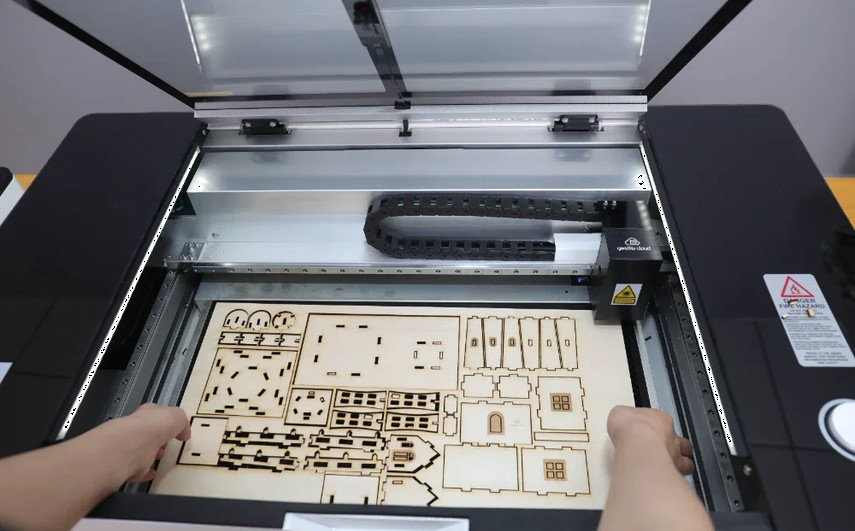

Selecting the best laser cutting machine for metal is one of the most consequential capital expenditure decisions a manufacturing operation can make. In 2025, fiber laser technology has become the undisputed standard for metal fabrication, displacing CO₂ lasers in virtually all sheet and plate cutting applications. This guide provides procurement managers and plant engineers with the technical benchmarks, power-to-price ratios, and application-specific data needed to make a confident purchasing decision.
Why Fiber Laser Technology Dominates Metal Cutting
According to the International Laser Market Report 2024 by Optech Consulting, fiber laser systems now account for over 78% of all new industrial laser cutting installations worldwide. The reason is simple: fiber lasers offer superior wall-plug efficiency (30–35% compared to 10–15% for CO₂), near-zero consumable costs, and the ability to cut highly reflective metals such as copper, brass, and aluminum without back-reflection damage.
A fiber laser cutting machine uses a solid-state gain medium—a doped optical fiber—to generate a beam wavelength of approximately 1,064 nm. This wavelength is absorbed 3–5 times more efficiently by steel and 10–15 times more efficiently by copper than the 10,600 nm wavelength of CO₂ lasers. The result is faster cutting speeds, thinner kerf widths, and lower operating costs per meter of cut.
Fiber Laser vs. CO₂ Laser: Key Performance Comparison
| Parameter | Fiber Laser (3 kW) | CO₂ Laser (4 kW) |
|---|---|---|
| 1 mm Mild Steel Cutting Speed | 28 m/min | 8 m/min |
| 3 mm Stainless Steel Cutting Speed | 10 m/min | 4.5 m/min |
| Wall-Plug Efficiency | 30–35% | 10–15% |
| Annual Electric Cost (2,000 hrs) | $4,200 | $11,500 |
| Mirror/Optic Replacement | Not required | Every 2,000–4,000 hrs |
| Reflective Metal Cutting | Excellent (with precautions) | Risk of back-reflection |
Power Range Guide: Matching Laser Power to Your Metal Cutting Needs
The best laser cutting machine for metal depends entirely on the thickness range and throughput requirements of your production environment. Below is a practical power selection matrix used by fabrication shops globally:
1 kW – 2 kW: Thin Sheet Precision Cutting
Ideal for job shops and electronics manufacturers processing sheet metal up to 6 mm mild steel. A 1 kW fiber laser cuts 1 mm mild steel at approximately 20 m/min with ±0.05 mm repeatability. Typical price range: $50,000–$90,000 USD for a complete enclosed system with auto-change table. At MeykoLaser, our 1500W enclosed fiber laser cutting systems are configured for high-mix, low-volume production environments where rapid setup changeover is critical.
3 kW – 6 kW: Mid-Range Production Cutting
The most popular power tier for general fabrication. A 3 kW system cuts 8 mm mild steel at 4.5 m/min and 5 mm stainless steel at 8 m/min. A 6 kW system doubles the throughput on mid-thickness materials and can pierce 12 mm carbon steel in under 3 seconds. Typical price range: $120,000–$280,000 USD. These systems typically feature 3,048 mm × 1,524 mm or 4,000 mm × 2,000 mm cutting beds.
8 kW – 12 kW: High-Volume Plate Cutting
For heavy fabrication and structural steel processing. Systems in this range cut 20 mm mild steel at 2.5 m/min and deliver nitrogen-assist cuts on 25 mm stainless steel. Assist gas consumption increases significantly at these powers—typically 15–25 nitr/min for nitrogen cutting. Typical price range: $300,000–$600,000 USD.
15 kW and Above: Ultra-High-Power Cutting
Emerging in 2024–2025, 15–20 kW systems from manufacturers like IPG Photonics and Raycus enable cutting 30+ mm carbon steel at speeds previously only achievable with plasma. However, beam quality at ultra-high power can degrade edge finish, so these systems are best suited for structural applications where secondary finishing is planned. Typical price range: $600,000–$1,200,000 USD.
Critical Specifications to Evaluate Before Purchasing
Procurement managers should evaluate the following non-negotiable specifications when sourcing the best laser cutting machine for metal:
Positioning Accuracy and Repeatability
Industry-standard positioning accuracy for a quality fiber laser cutter is ±0.03 mm over the full traverse, with repeatability of ±0.02 mm. Systems using linear motor drives (rather than ball screw) achieve 0.01 mm repeatability and accelerations of 2G, which dramatically improves corner accuracy on complex profiles. Always request a Renishaw XL-80 laser interferometer calibration certificate from the manufacturer—MeykoLaser provides this documentation with every machine shipment.
Cutting Bed Size and Pallet Configuration
Standard bed sizes in 2025 are 1,500 mm × 3,000 mm (5′ × 10′) and 2,000 mm × 4,000 mm. Dual-pallet configurations increase machine utilization by 15–25% by allowing loading/unloading on one pallet while the other is in the cutting cycle. For high-volume operations, automatic sheet storage towers integrated with the cutting cell can extend unattended running to 8–12 hours.
Control System and Nesting Software
Leading CNC controllers include Beckhoff, Siemens 840D, and FANUC 31i-B5. The controller determines interpolation accuracy, look-ahead block processing (critical for high-speed contouring), and integration with factory MES systems. Nesting software such as Lantek Expert, SigmaNEST, or ProNest can improve material utilization by 5–12% compared to manual nesting—a significant cost saving when processing $3–$8/kg stainless steel sheet.
Material Compatibility: What Can a Fiber Laser Cut?
Modern fiber lasers handle an extensive range of metals. Here is a compatibility reference table:
| Material | Thickness Range (3 kW) | Assist Gas | Edge Quality |
|---|---|---|---|
| Mild Steel (Q235/A36) | 1–20 mm | N₂ or O₂ | Excellent (N₂), Good (O₂) |
| Stainless Steel (304/316) | 1–12 mm | N₂ | Excellent, oxide-free |
| Aluminum (6061/5052) | 1–10 mm | N₂ | Good (requires high-frequency modulation) |
| Copper (C110) | 1–4 mm | N₂ | Good (high-power ≥4 kW recommended) |
| Brass (C360) | 1–5 mm | N₂ | Good |
| Galvanized Steel | 1–8 mm | N₂ or Air | Good |
| Titanium (Grade 2/5) | 1–8 mm | Argon or N₂ | Excellent (inert atmosphere required) |
Note: Cutting copper and brass requires a fiber laser with back-reflection protection. MeykoLaser integrates IPG or Raycus sources with built-in back-reflection isolators specifically for this purpose.
Total Cost of Ownership: Beyond the Purchase Price
The purchase price represents only 40–50% of the 10-year total cost of ownership (TCO) of a laser cutting system. Procurement teams should model the following:
- Electricity: A 6 kW fiber laser draws approximately 25–30 kW total system power. At $0.10/kWh and 4,000 annual operating hours, annual cost is $10,000–$12,000.
- Assist Gas: Nitrogen cutting of stainless steel at 20 nitr/min for 4,000 hours costs $15,000–$25,000/year depending on local gas prices. Oxygen cutting of mild steel costs approximately $3,000–$5,000/year.
- Consumables: Nozzle tips ($15–$40 each, replaced every 200–500 hours), protective windows ($50–$150, replaced every 1,000–2,000 hours). Annual consumable cost: $2,000–$5,000.
- Maintenance: Annual preventive maintenance contract: $3,000–$8,000. Chiller servicing, lens cleaning, and rail lubrication are included.
- Depreciation: Most manufacturers depreciate laser cutting equipment over 7–10 years using straight-line method.
At MeykoLaser, we provide a detailed TCO analysis with every quotation, enabling procurement managers to compare systems on a level financial playing field rather than sticker price alone.
Why MeykoLaser Is a Trusted Partner for Industrial Laser Equipment
Founded with a mission to deliver European-quality laser systems at competitive price points, MeykoLaser has supplied fiber laser cutting and marking solutions to over 600 manufacturing facilities across 40+ countries. Our core advantages include:
- IPG Photonics and Raycus laser sources with 100,000-hour rated lifetime
- CE-certified enclosed and open-bed configurations
- Custom bed sizes up to 6,000 mm × 2,500 mm for oversized fabrication
- On-site installation and training by certified engineers in 30+ countries
- 24/7 remote diagnostics via industrial IoT connectivity
- 2-year comprehensive warranty covering laser source, motion system, and CNC controller
Whether you are replacing an aging CO₂ system or installing your first fiber laser, our application engineers will conduct a free material sample test to determine the optimal power, gas strategy, and cutting parameters for your specific production requirements.
FAQ: Best Laser Cutting Machine for Metal
What is the best laser cutting machine for metal in 2025?
The best laser cutting machine for metal in 2025 is a fiber laser system with power matched to your material thickness range. For most general fabrication shops cutting 1–12 mm steel and stainless steel, a 3 kW to 6 kW fiber laser from a reputable manufacturer like MeykoLaser offers the optimal balance of speed, precision, and cost. Fiber lasers have replaced CO₂ lasers as the industry standard due to their 3× higher wall-plug efficiency, lower operating costs, and superior performance on reflective metals. When evaluating options, prioritize positioning accuracy (±0.03 mm or better), source brand (IPG, Raycus, or Max Photonics), and after-sales service availability in your region.
How much does a fiber laser cutting machine cost?
Fiber laser cutting machine prices in 2025 range from approximately $50,000 for a 1 kW enclosed system to over $1,000,000 for a 20 kW automated cutting cell with tower storage. The most commonly purchased configuration—a 3 kW or 6 kW system with a 1,500 mm × 3,000 mm cutting bed and dual pallets—typically costs between $120,000 and $280,000 USD. Total cost of ownership over 10 years, including electricity, gas, consumables, and maintenance, adds approximately 60–80% to the purchase price. MeykoLaser provides transparent TCO breakdowns with every quotation to support accurate ROI calculations.
What thickness of metal can a fiber laser cut?
A 3 kW fiber laser can cut up to 20 mm mild steel (with oxygen assist), 12 mm stainless steel (with nitrogen assist), and 10 mm aluminum. A 6 kW system extends these limits to approximately 25 mm mild steel and 16 mm stainless steel. For thicknesses above 25 mm, plasma cutting or laser-plasma hybrid systems may be more cost-effective. The maximum cut thickness depends on laser power, assist gas type, material grade, and required edge quality. MeykoLaser's application lab can test-cut your specific material to determine achievable thickness and speed before purchase.
Is fiber laser better than CO₂ laser for metal cutting?
Yes, fiber laser technology is superior to CO₂ for virtually all metal cutting applications. Fiber lasers are 3× more electrically efficient (30–35% vs. 10–15%), cut thin metals 3–5× faster, require no mirror alignment or consumable optics, and can process reflective metals like copper and brass that risk damaging CO₂ laser resonators. The only remaining advantage of CO₂ lasers is a slightly smoother edge finish on thick mild steel (12 mm+) when using oxygen assist, but this gap has narrowed significantly with modern high-power fiber lasers using beam-shaping technology.
How do I choose the right laser power for my metal cutting application?
Select laser power based on three factors: maximum material thickness, required cutting speed, and production volume. For thin sheet (1–4 mm) at high volume, 1–2 kW is sufficient. For general fabrication (1–12 mm), 3–6 kW is the industry standard. For heavy plate (12–25 mm), 8–12 kW is recommended. For structural steel (25 mm+), consider 15 kW or above. MeykoLaser offers a free application assessment—send us your material samples and production requirements, and our engineers will recommend the optimal power configuration with cutting speed data and ROI projections.
Ready to Find Your Best Laser Cutting Machine for Metal?
Choosing the right system is a strategic decision that impacts your production capacity, part quality, and operating costs for the next 10–15 years. Contact MeykoLaser's sales engineering team today at www.meyko.cn to request a free material cutting test, detailed quotation, and 10-year TCO analysis tailored to your specific production requirements. Our engineers are available for virtual consultations and factory acceptance tests at our production facility.
Frequently Asked Questions
What is the best laser cutting machine for metal in 2025?
The best laser cutting machine for metal in 2025 is a fiber laser system with power matched to your material thickness range. For most general fabrication shops cutting 1–12 mm steel and stainless steel, a 3 kW to 6 kW fiber laser from MeykoLaser offers the optimal balance of speed, precision, and cost. Fiber lasers have replaced CO₂ lasers as the industry standard due to their 3× higher wall-plug efficiency, lower operating costs, and superior performance on reflective metals. When evaluating options, prioritize positioning accuracy (±0.03 mm or better), source brand (IPG, Raycus, or Max Photonics), and after-sales service availability in your region.
How much does a fiber laser cutting machine cost?
Fiber laser cutting machine prices in 2025 range from approximately $50,000 for a 1 kW enclosed system to over $1,000,000 for a 20 kW automated cutting cell with tower storage. The most commonly purchased configuration—a 3 kW or 6 kW system with a 1,500 mm × 3,000 mm cutting bed and dual pallets—typically costs between $120,000 and $280,000 USD. Total cost of ownership over 10 years, including electricity, gas, consumables, and maintenance, adds approximately 60–80% to the purchase price. MeykoLaser provides transparent TCO breakdowns with every quotation to support accurate ROI calculations.
What thickness of metal can a fiber laser cut?
A 3 kW fiber laser can cut up to 20 mm mild steel (with oxygen assist), 12 mm stainless steel (with nitrogen assist), and 10 mm aluminum. A 6 kW system extends these limits to approximately 25 mm mild steel and 16 mm stainless steel. For thicknesses above 25 mm, plasma cutting or laser-plasma hybrid systems may be more cost-effective. The maximum cut thickness depends on laser power, assist gas type, material grade, and required edge quality. MeykoLaser's application lab can test-cut your specific material to determine achievable thickness and speed before purchase.
Is fiber laser better than CO₂ laser for metal cutting?
Yes, fiber laser technology is superior to CO₂ for virtually all metal cutting applications. Fiber lasers are 3× more electrically efficient (30–35% vs. 10–15%), cut thin metals 3–5× faster, require no mirror alignment or consumable optics, and can process reflective metals like copper and brass that risk damaging CO₂ laser resonators. The only remaining advantage of CO₂ lasers is a slightly smoother edge finish on thick mild steel (12 mm+) when using oxygen assist, but this gap has narrowed significantly with modern high-power fiber lasers using beam-shaping technology.
How do I choose the right laser power for my metal cutting application?
Select laser power based on three factors: maximum material thickness, required cutting speed, and production volume. For thin sheet (1–4 mm) at high volume, 1–2 kW is sufficient. For general fabrication (1–12 mm), 3–6 kW is the industry standard. For heavy plate (12–25 mm), 8–12 kW is recommended. For structural steel (25 mm+), consider 15 kW or above. MeykoLaser offers a free application assessment—send us your material samples and production requirements, and our engineers will recommend the optimal power configuration with cutting speed data and ROI projections.