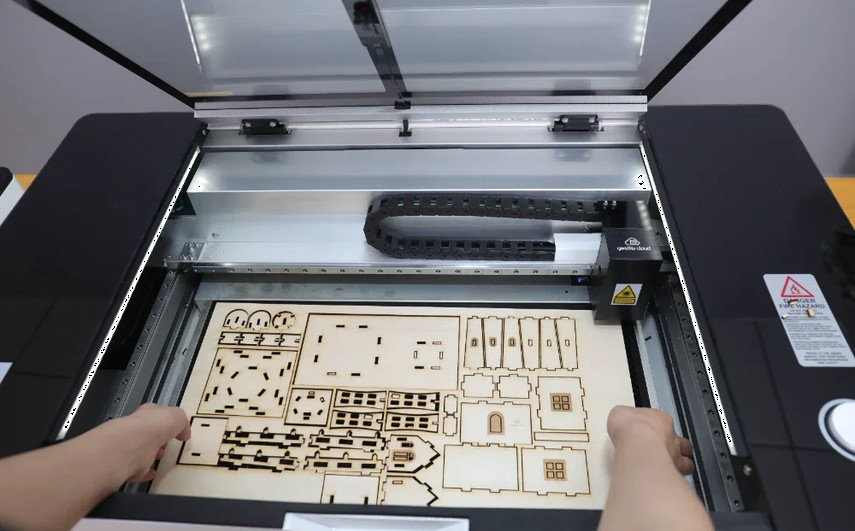

When sourcing industrial equipment for metal fabrication, procurement managers are constantly searching for the best laser cutting machine for metal to improve throughput, reduce waste, and lower long-term operating costs. Laser cutting has replaced traditional plasma and mechanical cutting methods in most modern manufacturing facilities, thanks to its unbeatable precision, speed, and versatility. At MeykoLaser, we supply a full range of industrial laser equipment including laser marking machines and fiber laser cutting machines for metal, serving global B2B buyers across dozens of manufacturing sectors. In this guide, we break down key factors to consider when selecting the best laser cutting machine for metal, compare different laser types, and share verifiable industry data to help you make an informed purchasing decision.
Key Factors to Select the Best Laser Cutting Machine for Metal
When evaluating options, there are several critical specifications that will determine if a machine meets your production requirements. The first and most impactful is laser power, which directly correlates to the maximum thickness of metal you can cut and the cutting speed.
Laser Power and Metal Thickness Compatibility
Industry data shows that laser power requirements follow a clear correlation with metal thickness for most common ferrous and non-ferrous metals:
- 0.5-5mm thin metal (sheet): 1000-2000W
- 6-12mm medium thickness: 3000-6000W
- 13-25mm thick metal plate: 8000-12000W
For example, a 1000W fiber laser can cut 5mm carbon steel at 3 meters per minute, while a 6000W machine cuts 12mm carbon steel at 1.2 meters per minute. Price also correlates directly with power: entry-level 1000W machines start at ~$20,000, 6000W mid-range machines average $60,000, and 12000W high-power industrial machines can cost up to $120,000. It is critical to match power to your typical material thickness to avoid overspending on unused capacity or underbuying and limiting production.
Precision and Tolerance Specifications
Depending on your application, precision requirements can vary dramatically. Entry-level machines typically offer positioning accuracy of ±0.1mm, which is sufficient for low-tolerance general fabrication. However, for aerospace components, medical devices, and automotive parts that require tight fits, industrial-grade machines like MeykoLaser’s fiber laser cutters deliver ±0.03mm repeatable positioning accuracy. This level of precision reduces scrap rates and eliminates secondary finishing operations, saving time and material costs over the life of the machine.
Another key consideration is material compatibility. The best laser cutting machine for metal will handle all common metals including carbon steel, stainless steel, aluminum, copper, brass, and titanium. Fiber lasers are particularly effective at cutting reflective non-ferrous metals like copper when equipped with proper back-reflection protection, a feature standard on all MeykoLaser cutting machines.
Laser Type Comparison: Which Is Best for Cutting Metal?
There are three main types of laser used for industrial metal cutting: CO2, fiber, and YAG. According to the Industrial Laser Solutions 2023 Market Report, fiber lasers now account for over 70% of all new industrial metal cutting machine sales, thanks to their superior performance and lower total cost of ownership.
CO2 vs Fiber Lasers
CO2 lasers have a 10.6μm wavelength, which is poorly absorbed by most metals, leading to slower cutting speeds and higher heat affected zones. They are also less energy efficient (around 10% wall plug efficiency vs 30% for fiber) and require regular maintenance including laser tube replacement every 1-2 years, adding to long-term costs. Fiber lasers have a shorter 1.06μm wavelength that is highly absorbed by metals, leading to 2-3x faster cutting speeds for thin to medium thickness metal, lower operating costs, and minimal maintenance. For almost all metal cutting applications, fiber lasers are the better choice, with the exception of very thick metal over 25mm where high-power CO2 still has some niche use.
YAG Lasers
YAG lasers are similar to fiber in wavelength, but are typically limited to lower power ranges (under 500W) and are used primarily for ultra-precision cutting of very thin metal foils. They are not suitable for general sheet metal fabrication or high-volume production.
Overall, for most manufacturing operations looking for the best laser cutting machine for metal, a fiber laser is the optimal choice. MeykoLaser’s full line of fiber laser cutting machines ranges from 1000W entry-level models to 12000W high-power industrial models, covering all common use cases.
Common Application Scenarios for Metal Laser Cutting
Different industries have different requirements for metal laser cutting, which impacts which machine is the best fit. Here are some of the most common applications and recommended specifications:
Automotive Manufacturing
Automotive producers cut a wide range of metal components from chassis parts to body panels to engine components, most commonly 1-8mm carbon steel and aluminum. The ideal machine for this application is a 2000-4000W fiber laser with automated material handling, which can handle high-volume production with consistent precision. MeykoLaser’s 3000W fiber cutter is a popular choice for automotive tier 1 suppliers, offering the right balance of power, speed, and price.
Aerospace and Defense
Aerospace requires cutting high-strength alloys like titanium and Inconel, with extremely tight precision tolerances. For these applications, 6000-12000W fiber lasers with ±0.03mm precision are standard. These machines can cut thick alloy plates while maintaining the tight tolerances required for flight-critical components.
General Sheet Metal Fabrication (Job Shops)
Job shops handle a wide variety of orders from thin to medium thickness metal, so a versatile 1000-3000W machine is typically the best investment. It can handle most common orders, deliver fast turnaround, and deliver a strong return on investment in 12-24 months for most small to mid-sized job shops.
Medical Device Manufacturing
Medical devices require extremely high precision for cutting stainless steel and titanium surgical tools and implants. A 500-1500W fiber laser with ultra-tight precision is ideal, delivering the clean edges and tight tolerances required for medical regulatory compliance.
Total Cost of Ownership Considerations
When comparing options for the best laser cutting machine for metal, it is important to look beyond the upfront purchase price and consider total cost of ownership (TCO). Upfront purchase price typically accounts for only 60-70% of the TCO over a 10-year lifespan, with the remainder coming from energy, maintenance, consumables, and downtime.
Fiber lasers have a 30-50% lower TCO than CO2 lasers over 10 years, thanks to higher energy efficiency, fewer consumables, and longer service life. For example, a fiber laser source has a typical lifespan of 100,000 hours, compared to 10,000-20,000 hours for a CO2 laser tube. MeykoLaser includes a 2-year full warranty on all our laser cutting machines, with extended warranty options available, and our global technical support team minimizes downtime for international buyers.
Entry-level 1000-2000W fiber machines range from $18,000 to $35,000, mid-range 3000-6000W machines are $40,000 to $75,000, and high-power 8000-12000W machines are $80,000 to $150,000. This pricing aligns with global industry standards, with MeykoLaser offering competitive pricing for high-quality industrial machines without compromising on build quality or features.
If you’re ready to select the best laser cutting machine for metal for your manufacturing operation, contact MeykoLaser’s sales team today at http://www.meyko.cn to request a custom quote, review detailed specification sheets, or discuss your unique application requirements. We provide global shipping, on-site installation support, and 24/7 technical assistance for all international B2B buyers.
Frequently Asked Questions
What power laser do I need to cut 10mm thick carbon steel?
For cutting 10mm thick carbon steel, a 3000W fiber laser is the industry sweet spot, balancing speed, cost, and capability. A 3000W fiber laser can cut 10mm carbon steel at approximately 1 meter per minute, producing a clean edge with minimal heat affected zone that requires little to no secondary finishing. While a 2000W machine can technically cut 10mm carbon steel, it operates at roughly half the speed, which limits throughput for high-volume operations and increases per-part production costs. MeykoLaser’s 3000W fiber laser cutting machine is priced competitively between $48,000 and $52,000, offers ±0.05mm positioning accuracy, and can also handle 8mm stainless steel and 6mm aluminum easily, making it a versatile choice for general fabrication.
Are fiber laser cutting machines better than CO2 for cutting metal?
For the vast majority of industrial metal cutting applications, yes, fiber laser cutting machines are superior to CO2 machines. The 1.06μm wavelength of fiber lasers is absorbed much more efficiently by most metals than the 10.6μm wavelength of CO2 lasers, resulting in 2-3x faster cutting speeds for thin to medium thickness metals, which are the most common in manufacturing. Fiber lasers also have much higher electrical efficiency (around 30% wall-plug efficiency vs 10% for CO2), lower maintenance requirements (no need to replace expensive laser tubes or regularly align mirrors), and a smaller footprint on your factory floor. MeykoLaser’s full line of fiber laser cutting machines leverages these advantages to deliver higher throughput and lower total cost of ownership for metal cutting operations compared to equivalent CO2 machines.
What is the typical price range for an industrial metal laser cutting machine?
The price of an industrial metal laser cutting machine varies dramatically based on laser power, worktable size, automation features, and brand. Entry-level 1000-2000W fiber laser cutting machines for small to medium manufacturing operations typically range from $18,000 to $35,000. Mid-range 3000-6000W machines, which are the most popular choice for general sheet metal fabrication and automotive applications, range from $40,000 to $75,000. High-power 8000W to 12000W machines designed for thick metal and heavy industrial use like aerospace manufacturing range from $80,000 to $150,000. MeykoLaser offers transparent, upfront pricing for all our machines, and works with international procurement teams to include shipping, installation, and training in custom quotes, ensuring no hidden costs for buyers.
Can a laser cutting machine cut reflective metals like copper and brass?
Older laser technologies struggled with cutting reflective metals like copper and brass because back-reflection of the laser beam could damage the laser source. However, modern fiber laser cutting machines with advanced protective features can cut copper and brass effectively and safely. The shorter wavelength of fiber lasers reduces the amount of back-reflection compared to CO2 lasers, and modern machines like MeykoLaser’s include proprietary back-reflection protection systems that prevent damage to the laser diode during cutting of reflective metals. For 1-5mm copper and brass, a 2000W fiber laser is sufficient for clean, fast cutting, while 6-10mm requires a 3000-4000W machine. Cutting reflective metals with a fiber laser produces clean, burr-free edges that require minimal secondary finishing, reducing overall production time compared to alternative methods like plasma or waterjet cutting.