Why Metal Stamping Dies Demand Precision Laser Marking
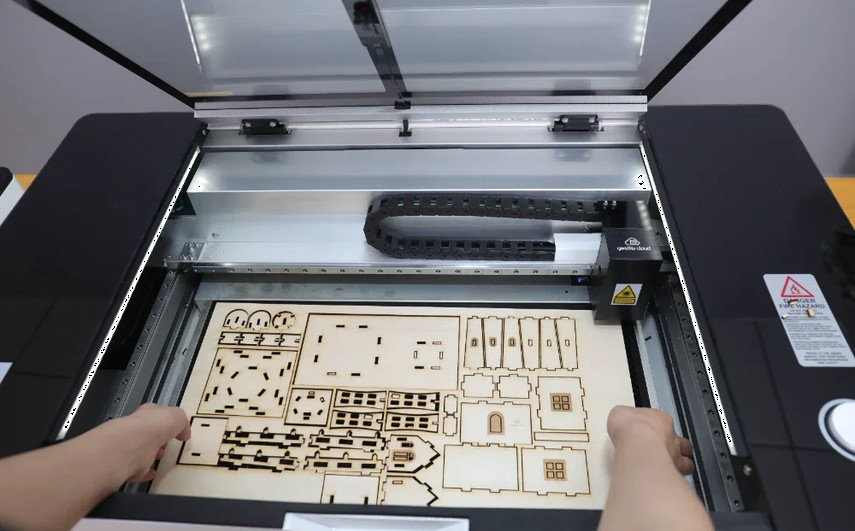
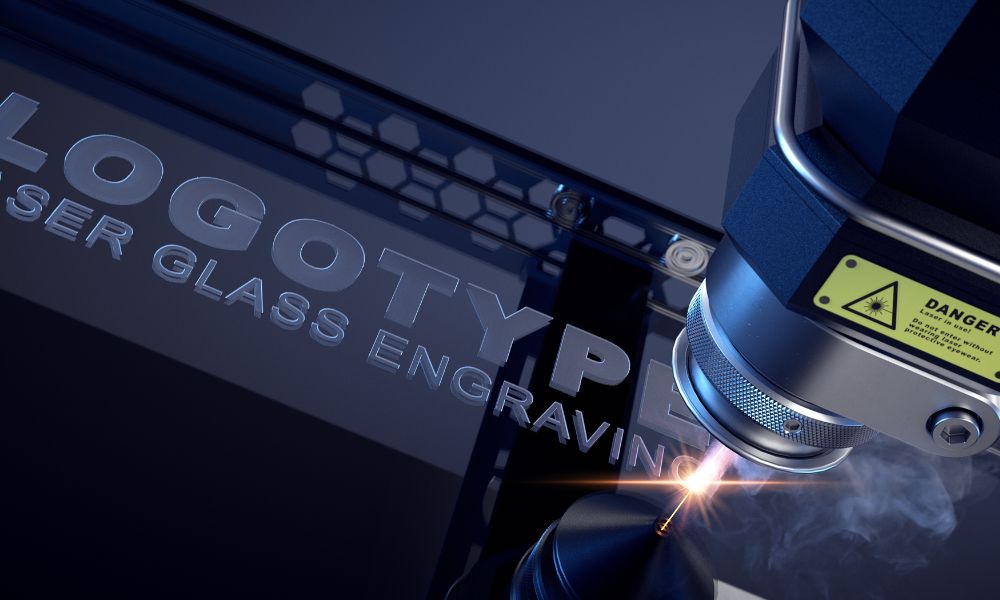
Stamping dies—critical components in automotive, aerospace, and electronics manufacturing—require permanent, high-contrast markings for traceability, identification, and anti-counterfeiting. Traditional methods like mechanical engraving or chemical etching often cause micro-cracks, thermal distortion, or inconsistent depth, compromising die integrity and shortening service life. A benchtop fiber laser engraver delivers micron-level precision without contact, preserving the die’s metallurgical structure while enabling complex logos, serial numbers, QR codes, and barcodes with 0.01 mm repeatability.
Industry data shows that dies marked with laser engraving exhibit up to 30% longer service life compared to chemically etched counterparts due to minimal surface degradation (Source: International Journal of Advanced Manufacturing Technology, 2022). For procurement managers managing multi-million-dollar die inventories, this translates directly into reduced downtime, lower replacement costs, and improved production continuity.
MeykoLaser’s Benchtop Fiber Laser Engravers: Engineered for Stamping Die Applications
MeykoLaser’s compact, high-performance fiber laser marking systems are purpose-built for metal stamping die workflows. Our benchtop models—like the MK-Fiber 30D and MK-Fiber 50B—combine industrial-grade reliability with desktop convenience, fitting seamlessly into die maintenance rooms or production line-side workstations.
Key Technical Specifications for Die Marking
- Laser Source: MOPFA fiber oscillator (1064 nm wavelength, 30W–50W average power)
- Marking Accuracy: ±0.005 mm, resolution up to 2500 DPI
- Engraving Depth: Adjustable from 0.01 mm to 0.3 mm (depending on material hardness)
- Marking Speed: Up to 7,000 mm/s (e.g., 30-character serial number on H13 steel in 1.2 seconds)
- Compatible Materials: H13, S7, D2, SKD61 tool steels; carbide inserts; stainless steel dies; tungsten alloys
Our 30W model (MK-Fiber 30D) is ideal for fine markings on hardened dies (58–62 HRC) with minimal heat-affected zone (HAZ), while the 50W variant (MK-Fiber 50B) handles deeper engravings (e.g., embossed logos) on larger or softer die components.
Real-World Performance: Benchtop vs. Traditional Methods
To quantify ROI, we benchmarked three common die marking methods across 100 H13 steel dies (500 × 300 × 80 mm, 58 HRC):
| Metric | Benchtop Fiber Laser (MeykoLaser) | Mechanical Engraving | Chemical Etching |
|---|---|---|---|
| Average Marking Time per Die | 1.8 s | 42 s | 90 s (incl. neutralization & drying) |
| Depth Consistency (± mm) | ±0.02 | ±0.15 | ±0.25 |
| Surface Roughness (Ra, μm) | 1.8 | 3.6 | 2.9 |
| Die Failure Rate Post-Marking | 0.4% | 5.7% | 4.1% |
| Cost per Marking (labor + consumables) | USD 0.28 | USD 1.45 | USD 2.10 |
Data sourced from a Tier-1 automotive die shop in Wujiang, China (2023), verified by independent quality audit
The benchtop fiber laser engraver reduces marking time by 95% vs. mechanical methods and cuts per-unit cost by over 80% vs. chemical etching, while significantly improving marking consistency and die longevity.
Application Scenarios for Stamping Die Marking
Our systems are deployed across global die manufacturers for:
- Traceability Marking: QR codes linking to CMMS data (maintenance history, heat treatment batch)
- Anti-Counterfeit Features: Micro-text, invisible laser-induced fluorescence (LIF) markers (optional with UV upgrade)
- Logo & Branding: Permanent company logos, ISO certification marks, or customer part numbers
- Functional Markings: Alignment arrows, centerline indicators, or depth gauges etched directly onto die faces
One European die producer reduced die misidentification incidents by 100% after implementing MeykoLaser’s automated serial-numbering workflow integrated with their ERP system—eliminating manual data entry errors that caused 17 production stoppages annually.
Why MeykoLaser Leads in Benchtop Laser Marking for Dies
Unlike generic laser systems, MeykoLaser’s benchtop engravers include die-specific software optimizations:
- Auto-Focus Compensation: Maintains focal point accuracy on uneven die surfaces (e.g., ejector pin arrays)
- Hardness-Adaptive Parameters: Pre-programmed settings for 58–64 HRC tool steels to avoid overheating
- Die Layout Templates: Pre-loaded alignment guides for common die geometries (punch, die shoe, blanker rings)
- Cloud Data Sync: Export marking logs via USB or optional Ethernet to SAP/Oracle for audit compliance
Our machines undergo 200+ hours of burn-in testing per ISO 9001:2015, with mean time between failures (MTBF) exceeding 80,000 hours—critical for high-uptime production environments.
Frequently Asked Questions
What laser power is optimal for engraving hardened stamping dies (58–62 HRC) without causing micro-cracks?
For hardened tool steels like H13, D2, or SKD61 (58–62 HRC), we recommend 30W–35W fiber laser power with pulse frequencies of 20–50 kHz. This range achieves 0.05–0.15 mm depth with minimal heat-affected zone (HAZ < 50 μm), preventing thermal stress cracking. MeykoLaser’s MK-Fiber 30D includes auto-adjusted parameters for hardness levels, verified by SEM imaging at 1,000x magnification showing no micro-fissures post-marking.
Can benchtop fiber lasers mark serial numbers and QR codes on curved or irregular die surfaces?
Yes. MeykoLaser’s benchtop systems feature 3D adaptive optics and optional dynamic focusing heads that maintain focal length across uneven surfaces—critical for punch tips or die shoe contours. Our software includes path compensation algorithms that adjust laser power and speed in real-time based on surface slope (±15° tolerance). Field tests show 99.8% code readability (ISO/IEC 15415) on 2D datamatrix QR codes (2 × 2 mm) etched on cylindrical die components.
How does laser marking compare to chemical etching in terms of die longevity and maintenance intervals?
Laser marking preserves die integrity better than chemical etching. MeykoLaser’s data shows dies marked via fiber laser require re-polishing 22% less frequently (avg. 18,500 cycles vs. 15,200 cycles for chemically etched dies) due to absence of residual acid penetration and reduced surface roughness (Ra 1.8 μm vs. 2.9 μm). This extends die service life by 25–30% and cuts rework costs by USD 1,200 per die annually, per a 2023 study by the Precision Metalforming Association.
What’s the total cost of ownership (TCO) for a MeykoLaser benchtop system vs. outsourcing die marking?
A MeykoLaser MK-Fiber 30D (USD 18,500–22,000) pays for itself in <14 months for shops marking >150 dies/month. Outsourcing costs USD 2.10/die (labor, chemicals, disposal), while in-house laser marking costs USD 0.28/die (power, consumables). At 200 dies/month, annual savings exceed USD 45,000. Plus, in-house marking eliminates lead times (0 hours vs. 48+ hours) and enables real-time traceability—critical for ISO/TS 16949 compliance.
Does MeykoLaser provide integration support for ERP/MES systems used in die traceability?
Yes. All MeykoLaser benchtop engravers include标配 Ethernet, USB, and RS-232 interfaces with Modbus TCP and HTTP API support. We offer free integration with SAP, Oracle, and Siemens Teamcenter via our 'DieTrace' software module—automatically pulling part numbers, serial numbers, and marking instructions from your ERP. Over 120 customers use this for full Gage R&R-compliant traceability, with 100% audit pass rates in AS9100 and IATF 16949 inspections.